

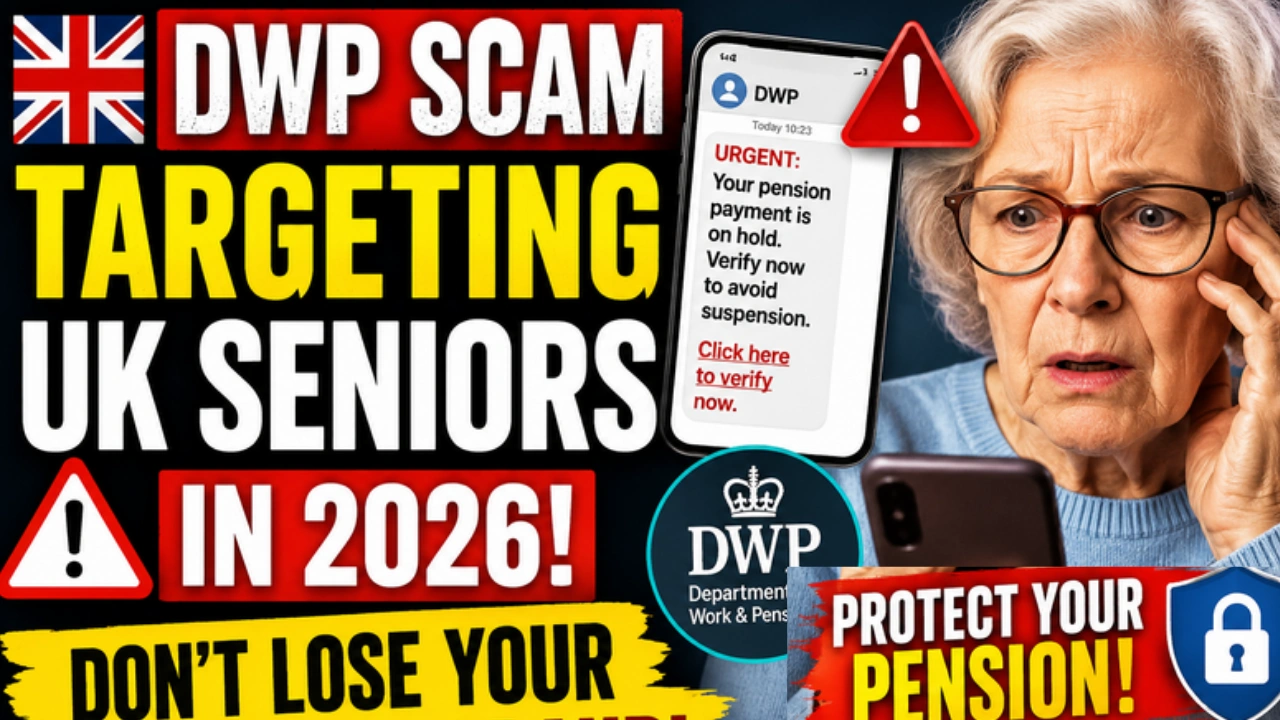
A dangerous wave of scams pretending to come from the DWP, HMRC, and pension support departments is spreading rapidly across the UK in 2026, with fraud experts warning that pensioners are among the biggest targets.
Financial safety experts say many scammers are now using fear tactics connected to:
- Pension reviews
- Cost-of-living payments
- Winter fuel support
- Benefit checks
- Tax refunds
- Bank account verification
to trick pensioners into handing over personal and banking information.
How the Latest DWP Scams Work
According to fraud investigators, scammers are increasingly impersonating:
- The Department for Work and Pensions (DWP)
- HM Revenue & Customs (HMRC)
- Pension providers
- Banks
- Energy support schemes
Victims often receive:
- Fake text messages
- Phone calls
- Emails
- WhatsApp messages
- Social media advertisements
claiming urgent action is required to protect pension payments.
Common scam messages include:
- “Your pension account has been suspended”
- “Verify your bank details now”
- “Claim your DWP bonus payment”
- “You qualify for a refund”
- “Urgent pension review required”
Many messages are designed to create panic and pressure people into reacting quickly.
Why Pensioners Are Being Targeted
Experts say scammers target older adults because many pensioners:
- Depend heavily on monthly benefits
- Worry about payment interruptions
- Are less familiar with digital fraud tactics
- Trust official-looking government messages
At the same time, ongoing discussions around:
- State Pension increases
- DWP reviews
- Tax allowance changes
- Cost-of-living support
have created confusion that fraudsters are exploiting aggressively online.
The Most Dangerous Scam Tactic Right Now
One of the biggest fraud trends in 2026 involves fake links sent through text messages pretending to be from:
- DWP
- HMRC
- Gov.uk
- Pension departments
These links often lead to professional-looking fake websites designed to steal:
- Banking information
- National Insurance numbers
- Passwords
- Card details
Cybersecurity experts warn many scam websites now look extremely convincing.
Could Pension Payments Actually Be Stopped?
Scammers frequently claim pension payments will be frozen unless victims “verify” their information immediately.
However, experts stress:
- DWP does not randomly threaten suspension through text messages
- HMRC does not demand urgent payment through gift cards
- Official departments do not pressure people into instant action
Real government communication is usually handled through:
- Official letters
- Verified online accounts
- Secure government channels
not random panic-inducing messages.
How To Spot a Fake DWP or HMRC Message
Fraud experts say common warning signs include:
- Urgent deadlines
- Spelling mistakes
- Suspicious links
- Requests for passwords
- Unexpected payment promises
- Threatening language
Pensioners should never:
- Share banking passwords
- Reveal one-time security codes
- Click unknown links
- Transfer money to “safe accounts”
even if the caller claims to represent a government agency.
What Pensioners Should Do Right Now
Security experts recommend:
- Ignoring suspicious links
- Checking messages directly through official websites
- Contacting banks immediately if fraud is suspected
- Reporting scams to Action Fraud
- Discussing suspicious messages with trusted family members
Pensioners should also consider:
- Strong passwords
- Two-factor authentication
- Fraud alerts from banks
to improve online protection.
Families Are Also Being Urged To Help
Experts say family members should regularly help older relatives:
- Review suspicious messages
- Check banking activity
- Verify official communications
- Understand modern online scams
Many fraud victims only realise they were targeted after money has already disappeared.
Could Scam Attacks Increase Further in 2026?
Cybersecurity analysts warn fraud campaigns may continue increasing due to:
- Growing digital banking use
- Rising pension discussions online
- AI-generated scam messages
- Sophisticated fake websites
Some scams are now reportedly using artificial intelligence to create more believable emails and voice calls.
Conclusion
The latest DWP and HMRC scam wave is creating growing fear among UK pensioners as fraudsters increasingly target retirees with fake payment alerts, tax refund claims, and urgent pension warnings. Experts say understanding how these scams operate is becoming more important than ever as criminals use more advanced digital tactics to steal personal information and retirement savings.