

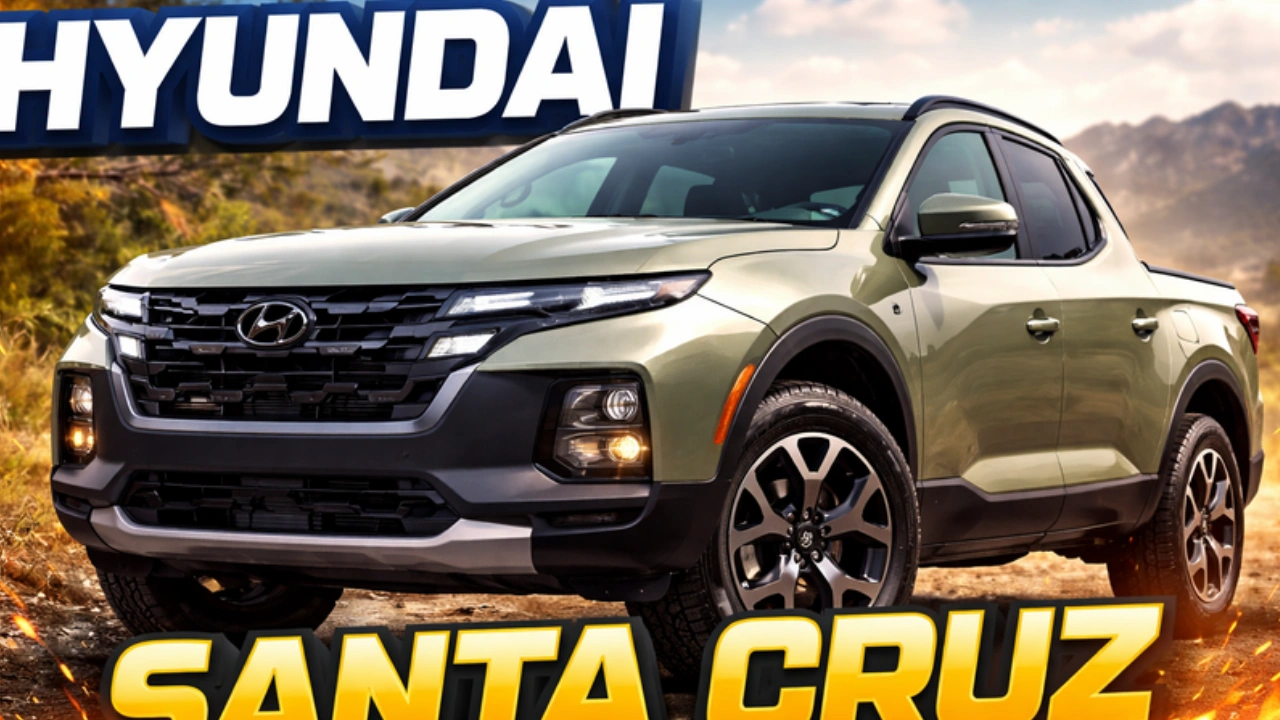
You’ll find the 2026 Hyundai Santa Cruz mixes SUV comfort with a small truck bed so you can haul gear without giving up daily driving ease. The lineup offers trims from basic to premium, and you’ll see choices in drivetrains, tech, and price that matter if you want utility plus everyday comfort.
If you want a compact truck that’s easy to drive, reasonably efficient, and packed with modern safety and infotainment features, the 2026 Santa Cruz is a strong contender to consider.
This post breaks down trims, engines, fuel economy, safety systems, connectivity, and value so you can decide which Santa Cruz fits your needs and budget.
Model Overview and Key Features
The 2026 Santa Cruz blends truck utility with SUV comfort. You get a crew-cab layout, a short 4.3-foot bed, and a choice of trims that balance power, fuel use, and features.
Trim Levels and Variants
You can pick from SE, SEL, SEL Activity, XRT, and Limited. SE and SEL offer front-wheel drive or optional all-wheel drive. XRT and Limited come standard with all-wheel drive.
The base 2.5L inline‑4 makes about 191 hp and 181 lb‑ft of torque with an 8‑speed automatic. Expect the same engine across trims, but higher trims add creature comforts: the SEL adds upgraded infotainment and driver aids, XRT brings rugged exterior trim, and Limited focuses on leather, advanced safety, and premium audio.
Standard seating fits five. Payload and towing vary by drivetrain and options, so check the specific trim’s towing package if you plan to tow trailers or carry heavy loads.
Exterior Design Highlights
The Santa Cruz keeps a low, SUV-like profile with a short pickup bed that sits behind a roomy cabin. You’ll notice a wide stance, sculpted hood, and integrated bed features that make loading easier.
Higher trims add practical exterior upgrades: roof rails on SEL Activity, protective cladding and unique wheels on XRT, and chrome accents and LED matrix headlights on Limited. The bed includes tie‑down points and an available bedliner to protect against wear.
Wheel sizes range from compact alloys to larger, more aggressive designs on the XRT and Limited. Ground clearance is higher than a crossover but lower than a full-size truck, helping fuel economy while keeping some off-road capability.
Interior Comfort and Technology
You sit in a cabin designed for daily comfort and simple controls. Cloth seats come on base trims; the Limited upgrades to heated and ventilated leather with power adjustments for the driver.
A central touchscreen handles infotainment, Apple CarPlay, Android Auto, and available navigation. Driver assists like adaptive cruise control, lane‑keeping, blind‑spot monitoring, and automatic emergency braking are available depending on trim and packages.
Storage options include a center console, under‑seat compartments, and bed access through a fold‑down rear window on select models. The cabin’s layout keeps frequently used controls within reach and reduces clutter for a straightforward user experience.
Performance and Efficiency
The 2026 Santa Cruz balances power and practicality. It offers two 2.5-liter engine choices, good towing for its class, and fuel ratings that suit daily driving and longer trips.
Engine Options
You can choose a naturally aspirated 2.5‑liter four‑cylinder or a turbocharged 2.5‑liter four‑cylinder. The base engine focuses on smooth low‑end torque and efficiency for city use and light hauling. The turbo engine delivers stronger acceleration and higher towing capacity when you need more performance.
A notable mechanical change for 2026: turbo models now use a traditional 8‑speed automatic instead of the previous dual‑clutch unit. That improves shift smoothness and long‑term durability. All engines drive the front wheels as standard, with all‑wheel drive available on most trims for better traction.
Towing and Payload Capabilities
Towing capacity depends on engine and equipment. With the turbocharged 2.5‑liter and proper towing package, expect the highest towing rating in the lineup, suitable for small boats or a utility trailer. The base 2.5‑liter still offers respectable towing for campers and lighter loads.
Payload varies by trim and options. Higher trims with added equipment reduce payload slightly. Use the sticker and owner’s manual for exact figures on the vehicle you plan to buy. Trailer‑sway control, a tow mode, and upgraded cooling are available to help when you pull heavier loads.
Fuel Economy Ratings
EPA ratings differ by engine and drivetrain. The non‑turbo 2.5‑liter typically posts the best mpg numbers in city and highway driving, making it the most economical daily driver choice. The turbo model sacrifices some efficiency for quicker acceleration and greater towing capability.
All‑wheel‑drive versions and heavier trim levels lower fuel economy compared with front‑drive models. Real‑world fuel use will vary with load, trailer towing, and driving habits, so expect mpg to fall below EPA highway numbers when you tow or carry heavy payloads.
Safety and Driver Assistance
You get a long list of built-in crash protections and active systems that help prevent crashes. The Santa Cruz combines standard passive safety gear with driver aids that handle braking, lane control, and blind-spot monitoring.
Standard Safety Features
The Santa Cruz comes standard with many collision-avoidance and occupant-protection items. You get front and side airbags, full-length side curtain airbags, and a driver knee airbag. These protect you and passengers in most crash types.
Seat belts include pretensioners and load limiters. The structure uses high-strength steel zones and multiple airbags to limit intrusion in impacts. Child-seat anchors (LATCH) sit in the rear seats for secure child restraint installation.
Electronic stability control, traction control, and anti-lock brakes are standard. You also get a driver attention monitor and automatic high-beam assist to help reduce nighttime risks. These features work continuously without input from you.
Advanced Driver Aids
Hyundai SmartSense is the suite name for the Santa Cruz driver assists. Standard features include Forward Collision Warning with Automatic Emergency Braking (AEB) that detects vehicles and pedestrians ahead and applies brakes if you don’t react.
Lane Keeping Assist and Lane Following Assist help keep the truck centered in lanes on marked roads. Blind-Spot Collision-Avoidance assists by warning you and applying steering/braking when a lane-change would hit a vehicle in your blind spot.
Other available aids include Rear Cross-Traffic Alert, Safe Exit Warning, and adaptive cruise control with stop-and-go capability. Most of these systems rely on radar and camera sensors, so keep sensors clean for best performance.
Crash Test Results
The Insurance Institute for Highway Safety (IIHS) gave the 2022–2026 Santa Cruz a mixed set of small-overlap ratings; the combined rating follows the lower of driver- and passenger-side results. For frontal, side, roof strength, and head-restraint tests, the Santa Cruz has generally strong scores in IIHS programs.
The Santa Cruz earned a 2025 TOP SAFETY PICK designation from IIHS, reflecting strong crashworthiness plus acceptable or better headlights and front-crash prevention. NHTSA scores vary by model and equipment; check your specific trim for updated star ratings.
If you prioritize crash ratings, inspect the specific trim and optional lighting or safety-pack details. Ratings can change with headlights, wheel size, and optional safety packages, which affect the final grade.
Connectivity and Infotainment
You get a large, central touchscreen, standard wireless phone pairing, and several audio choices depending on trim. Settings and controls aim to be reachable with physical knobs for climate and volume.
Touchscreen Interface
The Santa Cruz uses a 12.3-inch touchscreen as the main controller for navigation, vehicle settings, and the backup camera. The screen supports split views so you can see navigation and media at the same time.
Menus are laid out in clear tiles and offer shortcut buttons for common tasks. Physical volume and climate knobs remain below the screen so you can adjust things without hunting through menus while driving. Some higher trims add built-in navigation and faster processor performance, which reduces lag when switching apps or loading maps.
You can customize the home screen with frequently used functions. System updates are delivered over the air on supported models, keeping maps and software current without a dealer visit.
Smartphone Integration
The Santa Cruz supports wireless Apple CarPlay and Android Auto on all trims, so you can mirror compatible apps from your phone without plugging in. Pairing is straightforward: enable Bluetooth and follow the prompts on the touchscreen.
Wireless charging is available on many trims, letting you keep your phone powered without cables. Multiple USB-C ports appear in the cabin for fast charging and data connectivity, including at least one in the rear for passengers.
Hands-free voice controls work through the infotainment system and your phone’s assistant. For apps not supported wirelessly, a wired connection still provides full functionality and faster media streaming.
Audio System Options
Base trims come with a capable multi-speaker setup that handles radio, Bluetooth audio, and streaming services cleanly. The soundstage is tuned for clarity, with emphasis on midrange vocals and road-noise masking.
Higher trims upgrade to a branded premium audio system with additional speakers and a dedicated amplifier. This package improves bass response and fills the cabin more evenly, which is noticeable on complex tracks.
Audio controls include EQ presets and a simple balance/fade interface. You can save preferred audio settings to driver profiles so the system recalls them when you unlock the vehicle.
Pricing and Value
You can expect the 2026 Santa Cruz to start in the low $30,000s for the base trim. Higher trims, like Limited, push the price toward the mid-$40,000s depending on options and packages.
Hyundai backs the Santa Cruz with a strong warranty: 5 years/60,000 miles limited and 10 years/100,000 miles powertrain. That warranty adds value by cutting potential long-term repair costs.
Estimated 5-year cost-to-own for a Santa Cruz Limited lands around $73,400, with about $20,700 in depreciation over five years. These figures help you compare ownership costs versus rivals.
Key price points and ownership facts:
- Starting price: ~ $31,100 (base)
- Limited trim 5-year cost-to-own: ~$73,442
- Typical residual after 5 years (Limited): ~$24,597
You should weigh standard equipment and warranty against rivals when judging value. The Santa Cruz often undercuts comparable small trucks on sticker price while offering generous coverage and practicality.