

The IECEE CB Scheme Continues to Streamline Global Product Certification in 2026, Offering Manufacturers a Single Testing Pathway for International Market Access Through Updated Accreditation Criteria for Quality, Environmental, and AI Management Systems Effective January and February 2026…
The CB Scheme 2026 remains a cornerstone of international electrical and electronic product certification, enabling manufacturers to obtain test reports in one country that gain acceptance across dozens of global markets without retesting.
Administered by the IECEE (International Electrotechnical Commission System for Conformity Testing and Certification of Electrical Equipment), the scheme reduces duplication of testing, cuts certification costs, and accelerates time-to-market for products ranging from household appliances to industrial machinery.
In 2026, the CB Scheme introduced revised accreditation criteria and procedures for multiple management system certifications, including QMS, EMS, OH&S, and AIMS, aligning with updated ISO/IEC standards.
What Is the CB Scheme and Who Can Use It?
The CB Scheme operates as a mutual recognition arrangement among participating National Certification Bodies (NCBs) worldwide.
Any manufacturer producing electrical or electronic goods within the scheme’s scope can apply through an NCB in their home country to obtain a CB Test Certificate. Laboratories seeking to issue CB Test Certificates must first achieve accreditation from their national body under ISO/IEC 17025 and demonstrate competence in specific product testing areas.
The scheme covers a broad product range, including switches, cables, transformers, lighting, IT equipment, and medical devices, with detailed categories listed in the IECEE Catalogue.
Key Benefits for Manufacturers and Test Laboratories
Manufacturers leveraging the CB Scheme avoid repeating tests in every target country, significantly lowering certification expenses.
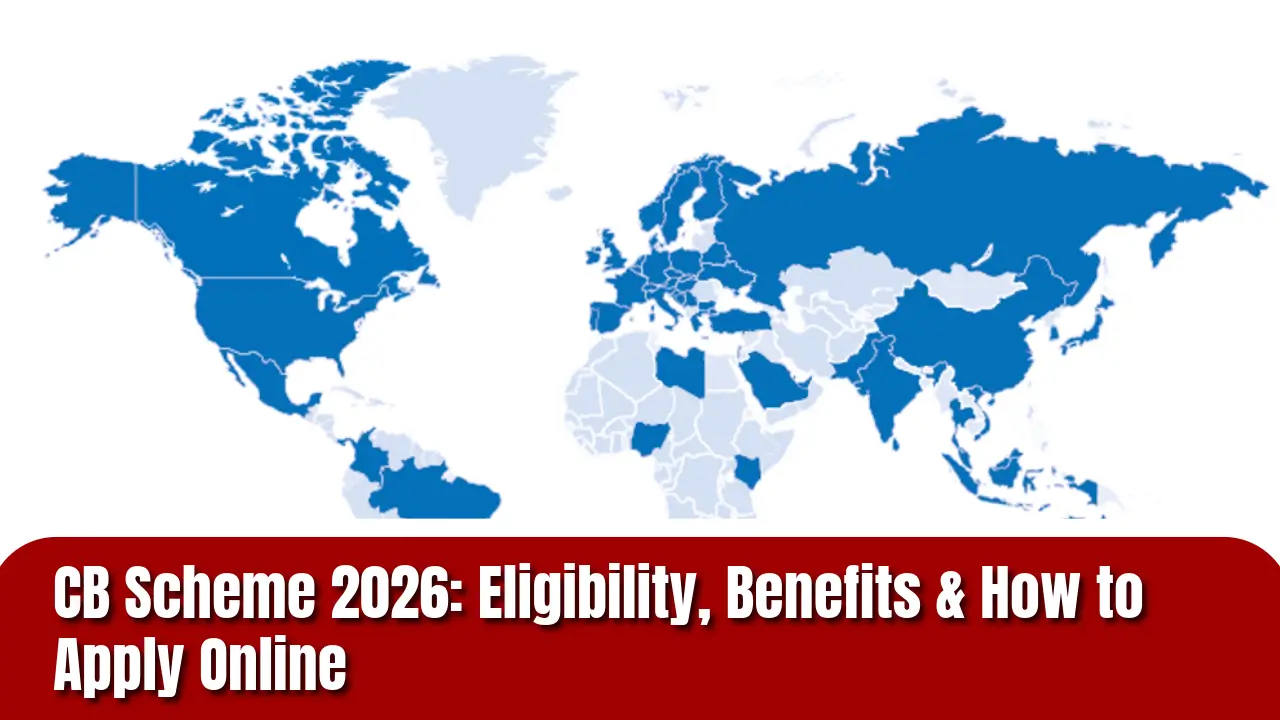
A single CB Test Certificate, supported by a CB Test Report, facilitates national certifications in over 50 participating countries, including Argentina, Australia, China, Germany, India, Japan, and the United States.
This efficiency proves especially valuable for companies launching products simultaneously in multiple regions.
For laboratories, CB Scheme accreditation enhances global credibility, opens doors to international testing contracts, and demonstrates compliance with internationally recognised competence standards.
The scheme’s framework also promotes consistent safety evaluation practices across borders, contributing to safer products in the marketplace.
Step-by-Step Guide to Apply Online in 2026
Applying for CB Scheme certification follows a streamlined digital process through an accredited NCB:
- Select an Accredited NCB: Choose a National Certification Body authorised by the IECEE to operate in the CB Scheme for your product category (e.g., UL, TÜV SÜD, Bureau Veritas, or an Indian NCB like STQC).
- Submit Application Documents: Provide the NCB with completed application forms, product specifications, technical documentation, a list of critical components, and sample test units via their online portal.
- Sample Testing and Evaluation: The NCB tests the submitted samples against relevant IEC standards in its laboratory and evaluates the results.
- Issue of CB Test Certificate: Upon successful testing, the NCB issues a CB Test Certificate and Report, which the manufacturer can use to pursue national certifications in member countries.
Applicants should ensure all documentation is complete and accurate to avoid delays. Many NCBs now offer electronic submission portals, allowing end-to-end online processing from application to certificate receipt.
2026 Updates: New Accreditation Criteria and Procedures
The CB Scheme refreshed its accreditation framework in early 2026 to reflect updates in management system standards. Key changes effective from January 2026 include:
- Updated criteria for Quality Management Systems (QMS) under ISO 9001:2015 (BCB 101)
- Revised procedures for Environmental Management Systems (EMS) under ISO 14001:2015 (BCB 105)
- New accreditation standards for Artificial Intelligence Management Systems (AIMS) (BCB 195)
- Updated requirements for Occupational Health and Safety Management Systems (OHSMS) under ISO 45001:2018 (BCB 130)
Corresponding accreditation procedures for most schemes became active in February 2026, including BCB 201 (MS) for management system evaluations and BCB 201A for specialised QMS assessments. These updates ensure that NCBs assessing CB Scheme applicants operate under the latest international benchmarks for competence and impartiality. Manufacturers should verify that their chosen NCB holds current accreditation for the specific standards relevant to their product and management system needs.
Required Documents for a Successful Application
A complete CB Scheme application package includes:
- Completed IECEE CB Scheme Application Forms (Forms 1-6)
- Detailed product description and user manual
- Electrical circuit diagrams and schematic drawings
- List of critical components requiring special attention
- Samples of the product for laboratory testing
- Signed Terms of Agreement for Testing and Certification Services
- Manufacturing factory list and declaration of product identicality across factories
- Power of Attorney if applying through a representative
Applicants can download the latest form packages directly from the IECEE or NCB websites. Ensuring that technical documentation matches the physical sample submitted prevents testing discrepancies and accelerates the evaluation phase.