

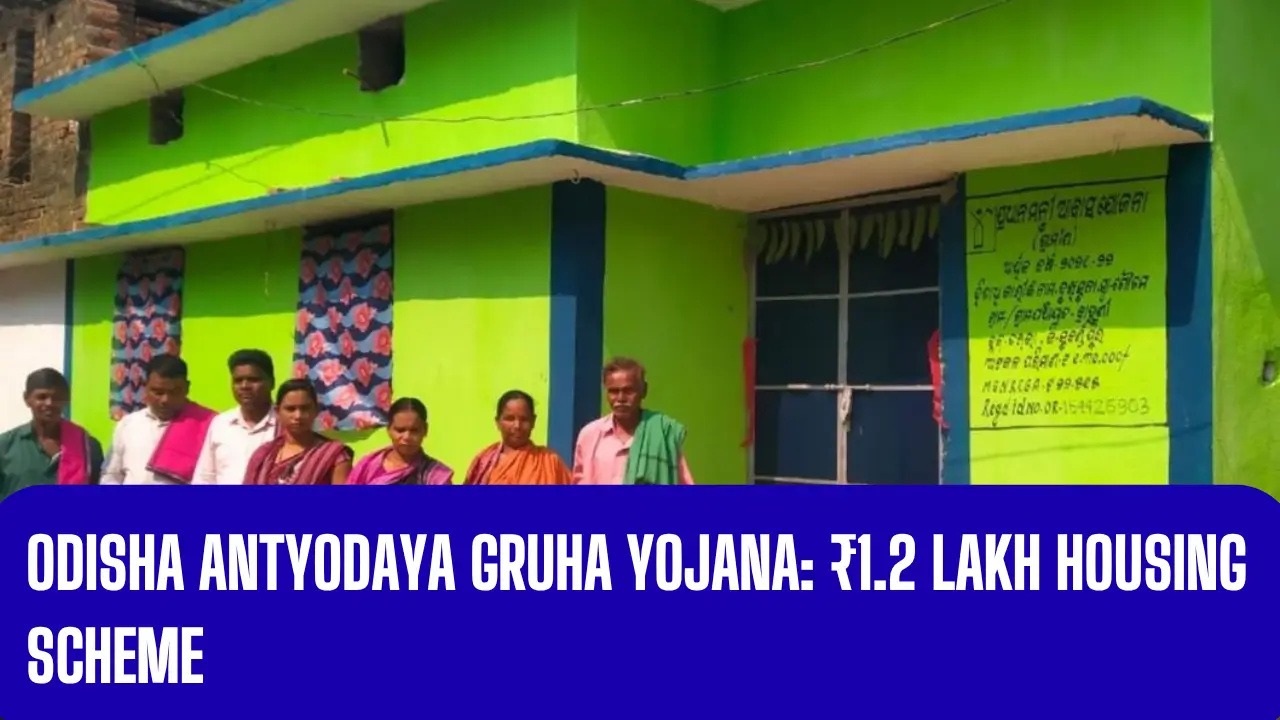
The Odisha government’s Antyodaya Gruha Yojana delivers a fixed financial grant of ₹1.2 lakh to construct pucca houses for rural families lacking proper shelter, with clear installment rules, early‑completion incentives, and a survey‑based beneficiary selection process...
Odisha Antyodaya Gruha Yojana
The Odisha Antyodaya Gruha Yojana targets houseless families and those living in kutcha houses across the state’s rural regions, offering a one‑time housing assistance of ₹1.2 lakh for building a new pucca dwelling. This assistance is credited directly to the beneficiary’s bank account through the Direct Benefit Transfer (DBT) mode, ensuring transparency and reducing delays.
The scheme focuses on providing a minimum carpet area of 25 square metres, which must include a hygienic cooking space but excludes the toilet area from the calculation.
Key Features of the Scheme
Odisha Antyodaya Gruha Yojana aims to guarantee shelter security for every eligible rural household by funding pucca house construction. The scheme operates under the Panchayati Raj and Drinking Water Department, which serves as the nodal department for implementation and monitoring.
It also absorbs ongoing work from the Biju Pucca Ghara Yojana, ensuring continuity of housing benefits for previously sanctioned projects. Benefits are limited to house construction only and cannot be used for other purposes such as renovation or land purchase.
Eligibility Criteria
Applicants must be domiciled residents of Odisha who are either houseless or residing in kutcha houses to qualify for the scheme. In addition, they must belong to at least one of the following categories: beneficiaries of the Forest Right Act, 2006; households where the main earning member has a disability of 40 percent or more; or lower‑income families left out of any ongoing government rural housing programmes.
The guidelines also list households affected by sea inundation, government‑led relocation projects, or forest‑area displacement as eligible groups. Families owning more than 2.5 acres of irrigated land or five acres of non‑irrigated land are excluded from the scheme.
Financial Assistance and Installment Structure
The scheme sanctions a total housing assistance of ₹1.2 lakh per eligible beneficiary for constructing a pucca house. This amount is released in three installments tied to construction milestones to ensure proper utilization of funds. The first installment of ₹40,000 is issued upon the issuance of the work order, allowing beneficiaries to begin foundation work.
The second installment of ₹65,000 is released once the construction reaches the roof level, verifying progress before further funding. The final installment of ₹15,000 is disbursed after the house is completed and verified by the implementing agency.
Incentive for Early Completion
Beneficiaries who finish house construction within a shortened timeline receive additional monetary incentives under the scheme. If the pucca house is completed within four months from the date of the first installment, the beneficiary earns an incentive of ₹20,000. Completion within six months qualifies for a reduced incentive of ₹10,000, encouraging timely yet flexible building schedules.
These incentives are credited via DBT alongside the final housing installment, provided all verification steps are satisfied. No incentive is awarded for constructions exceeding six months, maintaining focus on prompt delivery of shelters.
Application Process and Documentation
Unlike many welfare schemes, Odisha Antyodaya Gruha Yojana does not require beneficiaries to submit a separate application form. Instead, the Block Development Officer (BDO), under the supervision of the nodal department, conducts a survey to identify eligible households left out of other rural housing programmes.
During the survey, officials may request documents such as Aadhaar card, ration card, income certificate, disability certificate (if applicable), bank passbook, mobile number, and a passport‑size photograph. Self‑declaration forms are also used to confirm houselessness or kutcha dwelling status. After verification, a list of eligible beneficiaries is prepared, and landless families are allotted sites for house construction.
Implementation and Monitoring
The Panchayat Samitis in respective rural areas act as the implementing agencies responsible for issuing work orders and overseeing construction. To ensure transparency, the authority geo‑tags the beneficiary’s existing house before sanctioning a new one, using the Ama Ghara Mobile App linked to the Odisha Rural Housing portal.
Construction stages are monitored through the same app, allowing officials to verify roof‑level completion and final building status before releasing installments. Beneficiaries receiving land allotments are notified by the revenue officer, and houses cannot be sanctioned on government land until clear title is transferred. Regular field visits by BDOs and periodic audits help maintain compliance with scheme guidelines.