

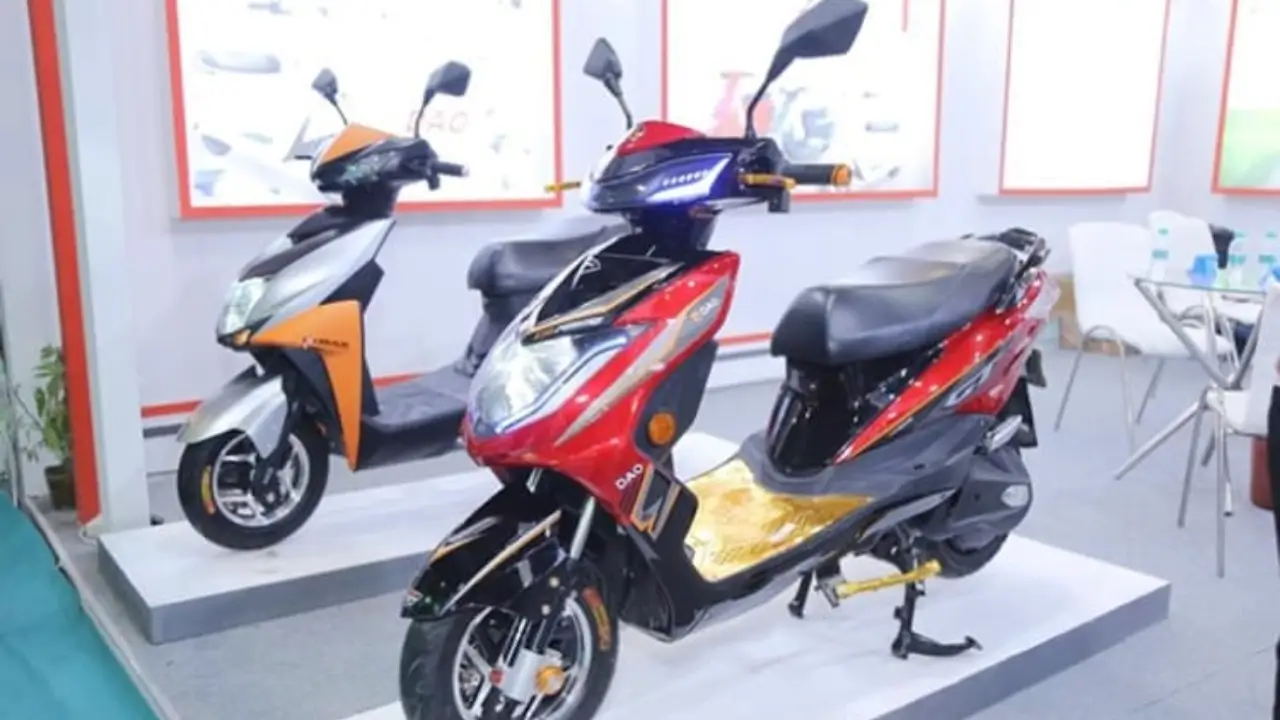
Free Electric Scooty Telangana scheme has emerged as one of the most discussed welfare initiatives under the state government’s broader women’s empowerment and green mobility agenda, with reports suggesting that the Congress-led government is finalising the implementation framework to distribute electric scooters to eligible women students and working women across the state.
The initiative, if fully rolled out, could benefit hundreds of thousands of women across Telangana’s 33 districts who currently face daily mobility challenges due to limited and unreliable public transport in semi-urban and rural areas.
Reports suggest the scheme draws inspiration from similar programmes implemented in Rajasthan and Tamil Nadu, where free or heavily subsidised two-wheelers were distributed to college-going girls with measurable impact on attendance and academic completion rates.
Free Electric Scooty Telangana
Under the proposed scheme, eligible women beneficiaries would receive an electric scooter either fully subsidised by the state government or at a token cost, with the vehicle registered in the beneficiary’s name.
Reports suggest the scheme targets women students enrolled in government degree colleges, polytechnic institutes and ITIs across Telangana, with preference given to students from SC, ST, BC and economically weaker general category families. The electric scooter variant under consideration is a standard 48V–60V lithium-ion battery model capable of travelling 60–80 kilometres per charge, suitable for daily commutes between home and educational institutions.
Not publicly disclosed are the exact brand partnerships, procurement model or whether the state will issue vouchers, direct benefit transfers or physical vehicle distribution through nodal agencies.
Why the Telangana Government Is Focusing on Electric Scooties
The shift toward electric two-wheelers rather than petrol scooters reflects two converging policy priorities. First, Telangana’s EV Policy 2023–2027 sets aggressive targets for electric vehicle adoption, and a large-scale government distribution programme would dramatically accelerate two-wheeler EV numbers in the state.
Second, electric scooters carry significantly lower running costs approximately ₹0.15–₹0.25 per kilometre compared to ₹2.50–₹3.50 per kilometre for petrol variants — making them genuinely affordable for students and low-income working women over a three-to-five-year ownership period.
The state government has also factored in the environmental impact: replacing even one lakh petrol two-wheelers with EVs could reduce CO₂ emissions by an estimated 45,000–60,000 tonnes annually, contributing meaningfully to Telangana’s clean air commitments under the National Clean Air Programme.
Who Is Likely to Be Eligible for the Scheme
Based on reports from state government sources and the structure of comparable schemes in other states, the following eligibility parameters are likely to apply:
- Gender: Women beneficiaries only (girls aged 18 and above)
- Residency: Must be a domicile resident of Telangana with local address proof
- Educational Status: Enrolled in a government or government-aided college, ITI or polytechnic in Telangana
- Income Criteria: Annual family income below ₹2.5 lakh (reports suggest; not publicly confirmed)
- Caste Category: Priority to SC, ST, BC and EWS women; general category inclusion not publicly disclosed
- Driving Licence: A valid driving licence or learner’s licence for a two-wheeler may be required at the time of delivery
- Existing Vehicle: Applicants must not already own a four-wheeler registered in their household
How the Application Process May Work
Reports suggest the application process will run through an online portal managed by either the Telangana Social Welfare Department or the Telangana State BC Welfare Department, consistent with how similar welfare scheme applications are processed in the state.
Applicants will likely need to upload income certificate, caste certificate (where applicable), Aadhaar card, college enrollment certificate, bank account details linked to Aadhaar, and a passport-size photograph. The final application portal link, required documents list and physical application centre details are not publicly disclosed as of March 25, 2026.
Potential Impact Across Telangana Districts
Telangana operates 272 government degree colleges and over 450 government ITIs and polytechnics, with a combined enrolment of more than 6 lakh women students. A scheme covering even 40–50 percent of this population would represent one of the largest welfare-linked EV distribution drives in South India. Districts such as Mahbubnagar, Nalgonda, Adilabad and Khammam which have historically recorded higher female dropout rates at the college level due to mobility gaps stand to benefit disproportionately from improved last-mile transport access.
Urban districts including Hyderabad, Rangareddy and Medchal-Malkajgiri already have stronger public transport networks, but women in peripheral areas of these districts still face long travel times to colleges, making electric scooties a practical and time-saving solution.
What the Scheme Means for Telangana’s EV Industry
The procurement order for a large-scale electric scooty distribution scheme would represent a significant business opportunity for EV manufacturers with assembly or service infrastructure in Telangana. Companies such as Ola Electric, TVS Motor, Hero Electric and Ampere Vehicles — several of which already operate in Hyderabad — would likely compete for the supply contract. Official confirmation of the procurement process, tender publication or empanelled vendor list is awaited.
The scheme also aligns with Telangana’s Industrial Policy 2025, which offers capital subsidies and land incentives to EV manufacturers setting up facilities in the state, creating a policy ecosystem where both EV supply and demand are simultaneously stimulated through government action.
Key Conditions and Usage Restrictions
Reports suggest the scheme will include conditions to prevent resale or misuse of the distributed scooties. Common restrictions in comparable state schemes include a lock-in period of three to five years during which the vehicle cannot be sold or transferred, mandatory registration in the beneficiary’s name and periodic verification of continued educational enrollment. Insurance coverage and one free annual service may be provided by the government for the first two years, based on the model adopted in Tamil Nadu’s similar initiative.
Also Read: Telangana Inter 1st Year Results 2026
FAQs — Free Electric Scooty Scheme Telangana 2026
Is the Telangana Free Electric Scooty scheme officially launched?
Reports suggest the scheme is in the finalisation stage. Official announcement and launch date are awaited; the scheme has not been formally notified through the Telangana government gazette as of 25 March 2026.
Who qualifies for the Free Electric Scooty in Telangana?
Reports suggest eligibility targets women students aged 18 and above enrolled in government colleges, ITIs and polytechnics in Telangana, with priority to SC, ST, BC and EWS category families with annual income below ₹2.5 lakh. Official eligibility criteria are not publicly disclosed.
Q3. How do I apply for the Free Electric Scooty Telangana scheme?
The application portal, required documents and process are not publicly disclosed as of March 2026. Official confirmation is awaited. Monitor the Telangana government’s official website at telangana.gov.in for updates.
Will working women also be eligible, or only students?
Reports suggest the scheme initially targets college-going students. Whether it will extend to employed women or homemakers in a subsequent phase is not publicly disclosed.
What type of electric scooty will be distributed?
Reports suggest a standard 48V–60V lithium-ion battery electric scooter with a range of 60–80 km per charge. The brand, model and specifications have not been publicly disclosed.
Can beneficiaries sell the electric scooty after receiving it?
Based on comparable state schemes, a resale restriction lock-in period of three to five years is likely to apply. The exact conditions for the Telangana scheme are not publicly disclosed.
Is a driving license required to receive the free electric scooty?
Reports suggest a valid two-wheeler driving license or learner’s license will be required at the time of vehicle delivery. Official confirmation is awaited.
Where can I get official updates on the scheme?
Monitor telangana.gov.in, the official portals of the Telangana Social Welfare Department and BC Welfare Department, and Telangana government press releases for the latest confirmed information.