

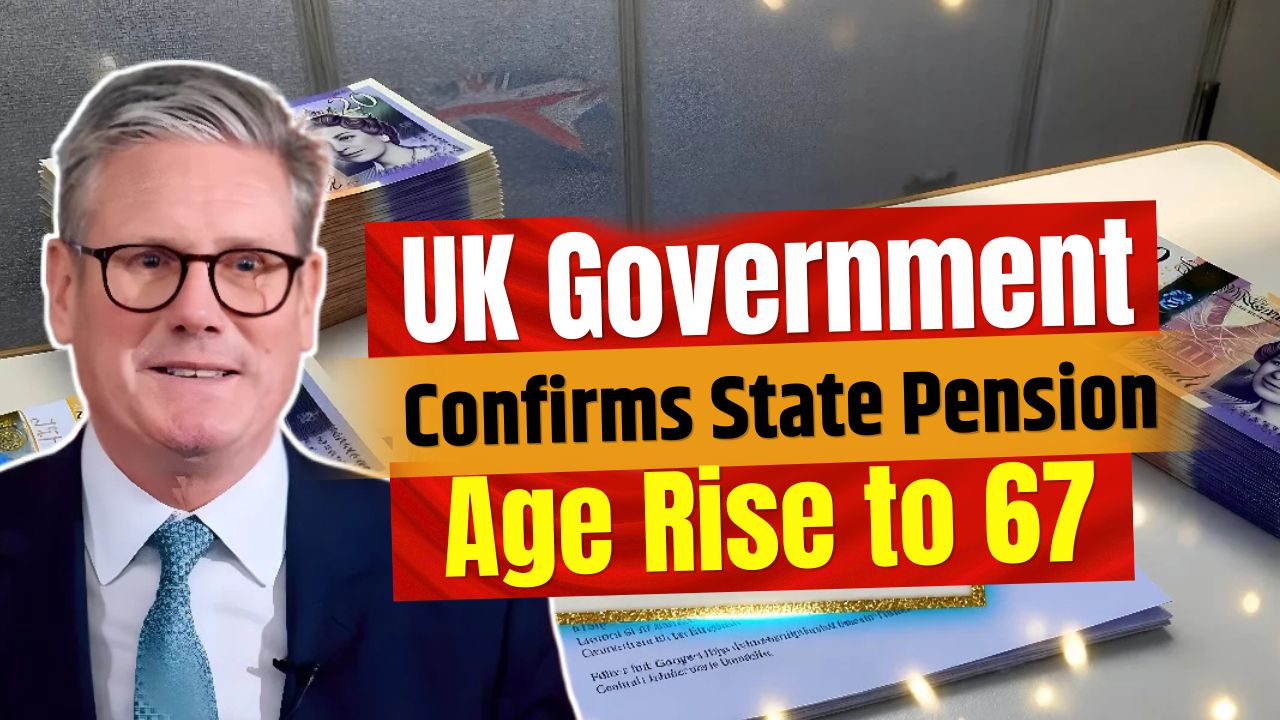
The UK Government has officially confirmed that the State Pension age will rise to 67, affecting millions of workers who need to urgently check when they can retire and start claiming their pension. If you were born after April 1960, this change directly impacts you.
What Is the State Pension Age in the UK Right Now?
The current State Pension age in the UK is 66 for both men and women. However, the Government has legislated a phased increase to age 67, which will be rolled out between 2026 and 2028. This means anyone born between 6 April 1960 and 5 April 1977 will need to wait longer before they can claim their State Pension.
The rise was originally legislated under the Pensions Act 2014 and has been reaffirmed by the current Government as part of long-term pension sustainability planning.
State Pension Age Timeline: Who Is Affected?
| Date of Birth | State Pension Age |
|---|---|
| Before 6 April 1960 | 66 |
| 6 April 1960 – 5 April 1977 | 67 (transitional, rising gradually) |
| After 5 April 1977 | Likely 67 or higher |
The transition from age 66 to 67 is being introduced gradually — not as a sudden overnight change — to give workers time to adjust their retirement plans accordingly.
When Will the State Pension Age Rise to 67?
The phased increase from 66 to 67 is scheduled to take place between 6 May 2026 and 6 March 2028. During this transitional window, people’s State Pension age will fall somewhere between 66 and 67, depending on their exact date of birth.
After 2028, the State Pension age will be 67 for everyone born after 5 April 1960. The Government is also conducting an ongoing review into a potential further rise to age 68, which could affect those born from the 1970s onwards.
Why Is the UK Raising the State Pension Age?
The Government cites several key reasons for increasing the State Pension age:
- Increasing life expectancy — people are living significantly longer than when the pension system was first designed
- Sustainability of the pension system — the cost of paying State Pensions is rising as the UK population ages
- More people reaching retirement age — the post-war baby boom generation is now reaching pension age in large numbers
- Fiscal pressure on public finances — delaying pension age reduces the overall pension bill for the Treasury
The DWP has emphasised that the change is about ensuring the long-term affordability of the State Pension for future generations.
How to Check Your State Pension Age
You can find out your exact State Pension age in three simple ways:
- Use the GOV.UK State Pension age calculator at gov.uk/state-pension-age
- Log into your Personal Tax Account on GOV.UK to see your forecast
- Contact the DWP Future Pension Centre directly on 0800 731 0175
It takes just a few minutes and gives you a clear picture of when you’ll receive your pension and how much you could get.
What Happens If You Have Gaps in Your National Insurance Record?
Your State Pension entitlement is based on your National Insurance (NI) contribution history. You need a minimum of 10 qualifying years to receive any State Pension and 35 qualifying years for the full amount of £241.30 per week (from April 2026).
If you have gaps in your NI record, you can voluntarily top up your contributions before you reach State Pension age. The deadline to fill gaps going back to 2006 has been extended — check GOV.UK for the latest deadline, as this can significantly boost your retirement income.
Could the State Pension Age Rise to 68?
Yes — the Government commissioned an independent review into whether the State Pension age should rise to 68 earlier than originally planned (currently legislated for 2044–2046). Some proposals suggest bringing this forward to affect people born from 1970 onwards.
No final decision has been confirmed for the age 68 rise, but experts and financial advisers strongly recommend that anyone in their 40s and 50s check their pension plans now to avoid being caught off guard by future changes.
Key Facts to Remember
- Current State Pension age: 66 (for both men and women)
- Confirmed rise to 67: Between May 2026 and March 2028
- Who is affected: Anyone born after 6 April 1960
- Full new State Pension (2026–27): £241.30 per week / £12,547.60 per year
- Qualifying NI years needed: 35 for full pension; 10 for partial pension
- Possible future rise to 68: Under review for those born from 1970s onwards
Frequently Asked Questions (FAQs)
1. What age can I get my State Pension in the UK in 2026?
For most people currently retiring, the State Pension age is 66. However, from May 2026, the age will begin rising gradually to 67 for those born after 6 April 1960. You can check your exact State Pension age using the free calculator on GOV.UK by entering your date of birth.
2. Who is affected by the State Pension age rise to 67?
Anyone born after 6 April 1960 is affected by the rise to 67. The change is being phased in between May 2026 and March 2028. If you were born before 6 April 1960, your State Pension age remains 66 and you are not affected by this particular change.
3. Can I retire before the State Pension age?
Yes — you can retire at any age, but you cannot claim your State Pension until you reach the official State Pension age. If you retire early, you will need to fund your retirement through savings, workplace pensions, or private pensions until your State Pension kicks in. You can also choose to defer your State Pension to receive a higher amount later.
4. Will the State Pension age rise to 68 in the future?
The rise to 68 is already legislated for between 2044 and 2046. However, the Government has been reviewing whether to bring this forward to affect those born from 1970 onwards, which could mean people in their mid-50s today may have to wait until 68 to claim. No final decision has been confirmed yet — check GOV.UK for the latest updates.
5. How do I know if I have enough National Insurance years for a full State Pension?
You need 35 qualifying National Insurance years to receive the full new State Pension of £241.30 per week. You can check your NI record and State Pension forecast by logging into your Personal Tax Account on GOV.UK. If you have gaps, you may be able to fill them by making voluntary NI contributions, which can significantly increase your retirement income.