

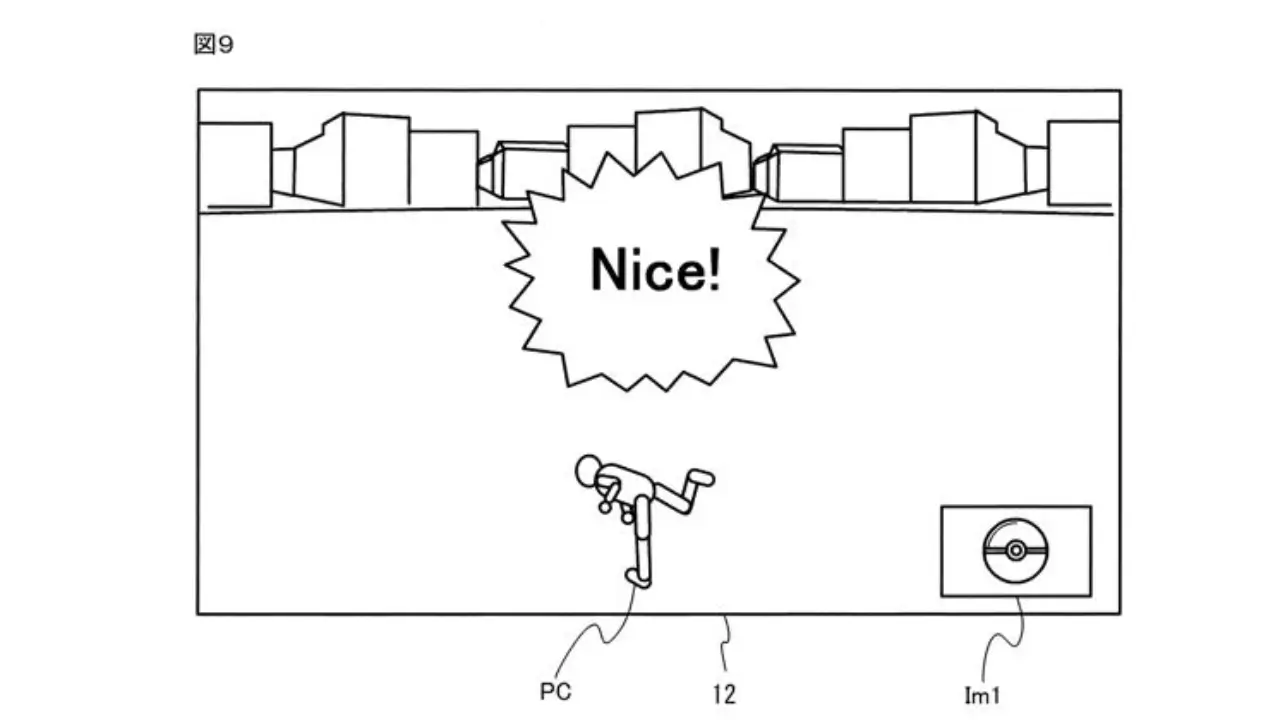
The latest development in the Nintendo patent controversy sees the United States Patent and Trademark Office (USPTO) reject all 26 claims of Nintendo’s “summon character and let it fight” patent a decision that effectively revokes one of the most disputed intellectual property claims in modern gaming history.
Nintendo Patent Controversy: The Core of the Rejection
The USPTO formally rejected all 26 claims of Nintendo’s US Patent No. 12,433,397 in April 2026, stripping the company of its broad legal protection over character summoning mechanics used in Pokémon-style combat systems.
The patent covered a mechanic in which a player directs a sub-character such as a Pokémon, creature, or companion to automatically locate and battle a non-player character enemy in a virtual world. Examiners at the USPTO determined that 18 of the 26 claims were simply obvious combinations of pre-existing concepts already documented in prior art.
Critically, the rejection came without the examiner needing to play or even view a single video game. The USPTO based its entire ruling on published patent application records alone — a detail that legal analysts have highlighted as particularly damaging to Nintendo’s position.
Why the USPTO Stepped In Without Being Asked
What makes this rejection unusually significant is how the reexamination process began. USPTO Director John A. Squires personally ordered the patent reexamination in November 2025 — a director-initiated action that has occurred only once before since 2012. Of the approximately 15,000 ex parte reexamination requests filed since 1981, the USPTO has granted only 175.
Squires’ intervention signalled that the USPTO considered the patent’s validity a matter of institutional credibility, not just a bilateral dispute between Nintendo and another party. Legal experts at Steptoe noted that the director’s action reflects the USPTO’s mandate under federal law to preserve integrity and prevent patents from functioning as anticompetitive weapons in fast-evolving industries.
Prior Art That Dismantled Nintendo’s Claims
The USPTO’s rejection rested on four specific prior art references that predated or overlapped with Nintendo’s patent claims:
- Konami’s 2002 Yabe Patent — Documented both automatic and manual mechanics for sub-character combat, directly undermining Nintendo’s novelty claims
- Nintendo’s Own 2020 Taura Patent — Created internal contradiction by overlapping with the 2025 patent’s claims, effectively invalidating them through Nintendo’s own earlier filings
- Motok Patent (2002) — Provided additional prior art establishing that similar mechanics already existed in the public domain
- Bandai Namco Shimom Patent — Contributed further documented prior art supporting the examiner’s obviousness finding
The examiner’s conclusion — that 18 claims qualified as obvious combinations of existing ideas — carries significant legal weight because obviousness under US patent law (35 U.S.C. § 103) represents one of the strongest grounds for invalidating a granted patent.
What “Non-Final” Rejection Actually Means
Despite the sweeping nature of the rejection, the current decision carries a “non-final” designation — a procedural status that leaves the dispute unresolved for now. Nintendo has a standard two-month window to file a formal response to the USPTO’s findings, and the company can request additional time beyond that if needed.
Nintendo can challenge the examiner’s prior art analysis, attempt to narrow its patent claims to survive the rejection, or ultimately appeal the decision to the Federal Circuit Court of Appeals. If even one of the 26 claims survives Nintendo’s response, the company retains the legal standing to pursue other developers who use similar mechanics. Nintendo has not publicly disclosed its planned response strategy as of April 2026.
The Palworld Connection: A Lawsuit Still in Motion
The USPTO rejection directly intersects with Nintendo’s ongoing lawsuit against Pocketpair, the developer of the creature-collecting survival game Palworld. Nintendo filed its Japanese lawsuit against Pocketpair in September 2024, accusing the company of infringing patents related to monster-catching mechanics and animal mount systems.
The Palworld legal battle in Japan involves three separate patents two covering creature-catching mechanics and one covering riding animals and characters. One of those Japanese patents, which covers using objects to catch creatures, already faced rejection by the Japan Patent Office earlier in the dispute. The US patent rejection adds international momentum to the legal challenges surrounding Nintendo’s IP strategy, though the Japanese and US proceedings operate independently of each other.
Game Developers React: Industry Relief Spreads
The gaming development community responded to the USPTO rejection with widespread relief. Nintendo’s original patent had alarmed independent and major developers alike because its language covered mechanics common across hundreds of existing games — not just Pokémon or Palworld.
Creative Bloq noted in September 2025 that Nintendo’s patent language covered any game in which a player character moves through a virtual world and can summon a companion to fight — a description broad enough to apply to franchise titles across multiple publishers. The University of Boar’s student publication described the original patents as “chilling for industry creativity,” arguing that mechanics like sub-character combat represent established industry conventions rather than genuine innovations.
What Happens Next: Key Dates to Watch
The Nintendo patent controversy enters its next critical phase over the coming months, with several procedural deadlines that will shape the outcome:
- April 2026 — Nintendo receives the non-final rejection; two-month response window opens
- June 2026 — Deadline for Nintendo’s initial response to the USPTO, subject to extension requests
- Ongoing — Japan lawsuit against Pocketpair continues independently; next hearing date not publicly disclosed
- Post-response — USPTO examiner reviews Nintendo’s reply and issues either a final rejection or an allowance on surviving claims
- Federal Circuit appeal — If Nintendo receives a final rejection, it holds the right to escalate to federal appellate courts, which could extend proceedings into 2027 or beyond