

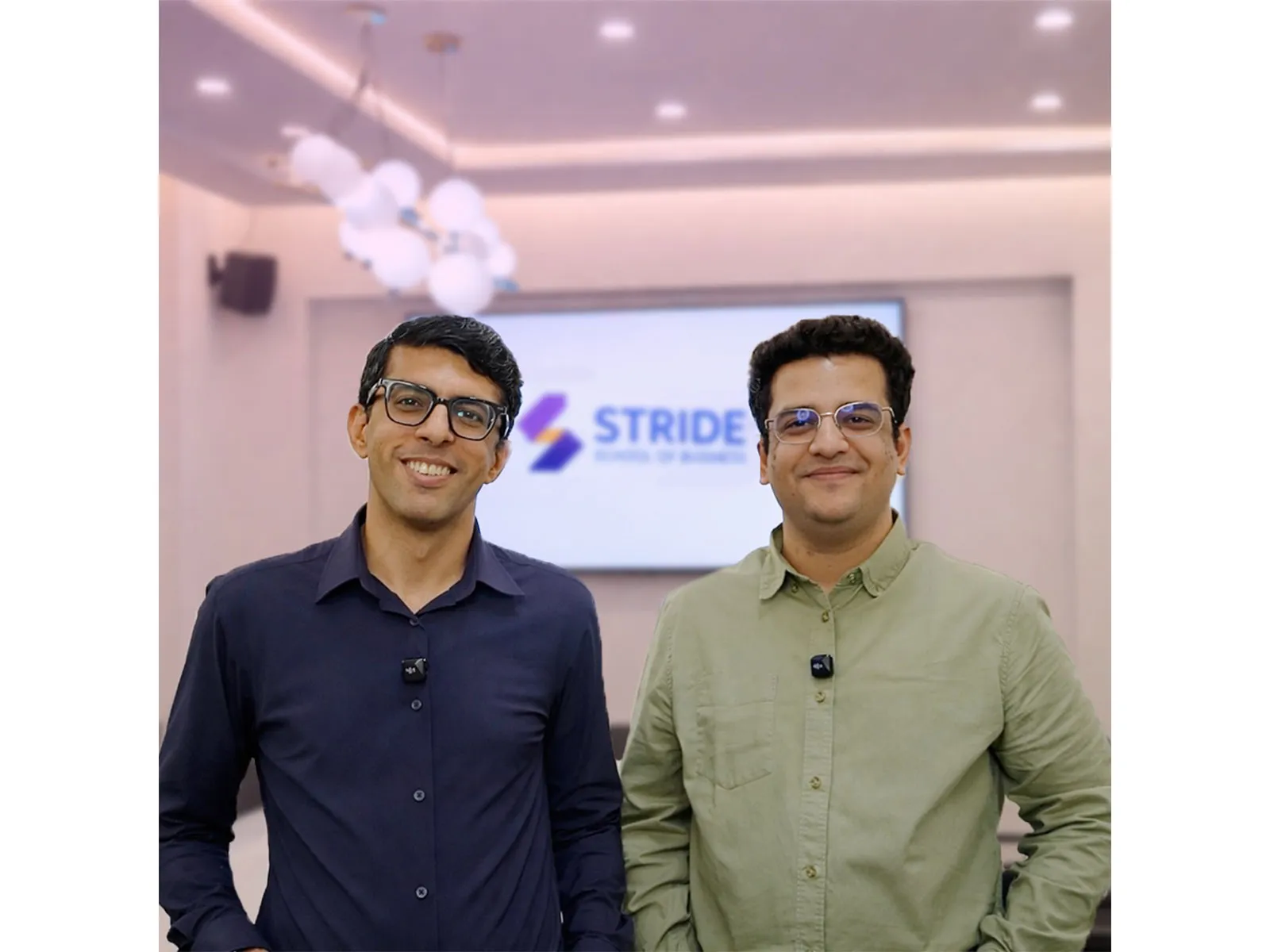
A new BBA programme built entirely around AI has arrived in India, and it signals a fundamental rethink of how business education delivers value to students and employers alike. Stride School of Business, headquartered in Gurgaon, Haryana, has officially launched India’s first AI-native undergraduate business programme a 3-year, on-campus BBA degree offered through AICTE-approved campuses. The institution positions AI not as an elective or supplementary module, but as the operating system through which every subject gets taught.
The launch comes at a defining moment for business education. According to the World Economic Forum, over 75% of organisations globally now integrate AI across core business functions making AI fluency a baseline requirement rather than a differentiator for new hires.
The Problem Stride Is Solving: A Clear and Growing Gap
Most traditional BBA programmes still organise their curriculum around theory-heavy textbooks, classical frameworks, and semester examinations with limited hands-on exposure to the tools that modern businesses actually use. This structural disconnect produces graduates who can discuss marketing theory fluently but struggle to run an AI-powered campaign brief or read a data dashboard with confidence.
Research from McKinsey & Company reinforces the scale of the problem: nearly 60% of organisations report difficulty finding talent with practical AI skills. Separately, only about 55% of business graduates currently meet employability benchmarks at the point of hiring a figure that suggests a large portion of management students leave university underprepared for day-one job performance.
Piyush Nangru, Founder of Stride School of Business, addresses this gap directly: “Traditional BBA programmes continue to prioritise theory, while the way work happens is driven by AI and hands-on execution. This creates a clear gap in readiness. Stride School of Business is built as that response, where AI is integrated into everyday learning, and students build practical capability by working on real business problems using AI tools.”
Why Industry Demand Has Reached This Point
The corporate world has not waited for universities to catch up. Genpact now embeds AI across finance, supply chain, and customer operations to automate decision cycles and reduce turnaround time. Accenture has committed $3 billion to expanding its AI capabilities and plans to grow its AI talent base to 80,000 professionals a signal that AI-driven delivery models now define how top consulting firms operate at scale.
These developments make clear that companies are building entire workflows around AI, using it to drive decisions, execute tasks, and improve operational efficiency at every level. Entry-level business hires who cannot participate in these workflows add friction instead of value from the first week of employment.
The 3-Year Programme: Year by Year
Stride structures its BBA across three distinct learning phases, each building on the last:
Year 1 — Discover: Students develop foundational business understanding while immediately applying AI in practice. They analyse companies, work with financial data, and create dashboards and content using AI tools. The emphasis is on building clarity across business functions through first-level application.
Year 2 — Execute: Students move into ownership mode. They design systems, develop growth strategies, and run real business projects — including launching ventures and managing operations with AI support. End-to-end responsibility becomes the norm, with AI accelerating speed and operational efficiency throughout.
Year 3 — Emerge: The final year focuses on outcome delivery. Students tackle real business problems, work on cross-functional challenges, and build and deploy advanced solutions. By graduation, each student completes 25+ real-world projects and carries a portfolio that demonstrates execution capability — not just academic knowledge.
Faculty Built From Industry, Not Just Academia
Stride’s faculty model reflects how modern business teams actually operate. The institution recruits industry professionals who have built and scaled businesses and who actively use AI in their daily work rather than academics whose primary output is research papers.
Current industry mentors include Radhesh Sirohiya, Co-Founder of Shyle (a D2C brand that appeared on Shark Tank India Season 4, IIT Roorkee alumnus); Nitisha Agarwal, Founder of DareAISearch in the AI Search and Growth Marketing space; Mayank Agarwal, Head of Marketing at The Man Company and former Reckitt professional (MDI Gurgaon); and Paurush Mittal, Head of Product Growth at TwinMind and former GroMo professional (IIT Delhi).
This faculty structure ensures that what students learn in the classroom aligns with what hiring managers actually expect in the workplace.
Selective Intake: Only the Top 20% Get In
Stride follows a deliberate selective admission model, accepting only the top 20% of applicants through its proprietary entrance test the Stride Business Aptitude Test (S-BAT). This selectivity serves a dual purpose: it creates a high-quality peer learning environment and signals to employers that Stride graduates have been filtered for aptitude and learning readiness from the start.
Anmol Jain, Founding Director, explains the institutional philosophy: “When AI becomes native to how teams operate, the impact is immediate. Work moves faster, decisions become sharper, and execution improves at every level. This is the baseline companies now expect from fresh business graduates. At Stride, this capability is developed early through hands-on work, real business problem-solving, and the consistent use of AI in everyday learning.”
What Students Get From Day One
Every enrolled student receives a personal MacBook and access to Stride’s AI suite from the first day of class removing the hardware and tool-access barriers that often slow AI adoption in traditional educational settings. The campus itself is designed for collaborative, AI-enabled work, mirroring the open, cross-functional work environments that technology-forward companies now favour.
The programme’s hands-on learning model includes 25+ AI-powered real-world projects across all three years, building a project portfolio that students can present directly to employers during placement season. Not publicly disclosed is the full list of corporate partners or placement record targets for the inaugural 2026 cohort.
Admissions Open for 2026 Cohort
Admissions for the 2026 intake are currently open through the S-BAT entrance test. Stride offers merit-based scholarships of up to 100% of tuition fees, based on aptitude test performance. The institution carries deep higher education experience — its founding team has worked with over 20,000 students and previously scaled a Series C-funded education company.
Not publicly disclosed is the annual fee structure or the specific AICTE-approved campus locations where the programme runs in its first cohort year.