

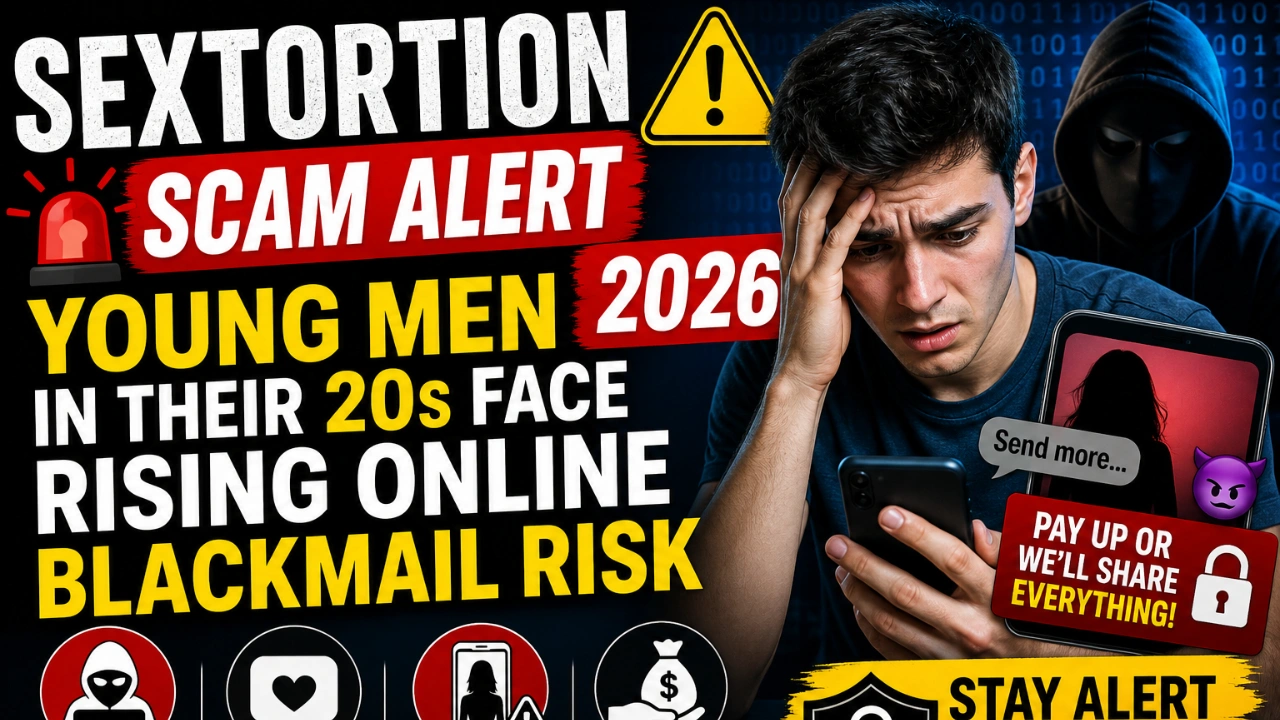
A fresh nationwide warning has put the spotlight on a fast-growing cyber threat—sextortion scams targeting young men, especially those in their 20s. With searches like “sextortion scam warning 2026”, “online blackmail scams UK”, and “how sextortion works” trending, this issue is quickly becoming a major online safety concern.
Here’s what’s happening and why young men are being targeted more than ever.
Why Young Men Are at Higher Risk
Recent analysis shows a clear pattern—young men aged 20–29 are the most targeted group in sextortion scams. In fact, nearly 47% of victims fall into this age bracket, and 98% are male.
Experts believe this group is more vulnerable due to:
- High social media and dating app usage
- Willingness to engage with unknown profiles
- Lower awareness of evolving online scams
Authorities also confirm that male adults aged 18–30 are particularly at risk, reinforcing the growing concern.
What Is Sextortion and How Does It Work?
Sextortion is a form of online blackmail where scammers trick victims into sharing private or explicit content and then demand money to keep it hidden.
Typically, the scam follows this pattern:
- A fake profile (often posing as an attractive person) initiates contact
- Conversations turn personal or sexual
- The victim is persuaded to share images or videos
- The scammer threatens to expose the content unless paid
This type of crime is often financially motivated and carried out by organized cybercriminals.
Why Cases Are Rising in 2026
Sextortion is no longer rare—it’s becoming a widespread digital threat. Reports show a sharp increase in cases globally, fueled by:
- Increased use of social media and messaging apps
- AI-generated fake images and profiles
- Easier access to personal data online
Even law enforcement agencies warn that this crime is evolving quickly, making it harder to detect early.
Common Red Flags to Watch
If you notice any of these signs, it could be a sextortion attempt:
- Someone quickly pushing conversations into private or sexual topics
- Requests to move chats off trusted platforms
- Pressure to send images or videos
- Sudden threats or demands for money
Scammers often rely on urgency, fear, and embarrassment to control victims.
How to Stay Safe Online
To avoid falling victim, follow these simple steps:
- Never share personal or explicit content with strangers
- Keep social media profiles private
- Avoid unknown friend requests or suspicious accounts
- Do not send money under threat
- Report and block suspicious users immediately
What to Do If You’re Targeted
If you’re caught in a sextortion attempt:
- Stop communication immediately
- Do not pay the scammer
- Save evidence (messages, screenshots)
- Report the incident to cybercrime authorities
- Talk to someone you trust—don’t handle it alone
Final Thoughts
The rise of sextortion scams in 2026 shows how online threats are evolving—and how young men are increasingly becoming prime targets. Awareness is the first line of defense.
Staying alert, protecting your digital privacy, and recognizing early warning signs can make all the difference.