

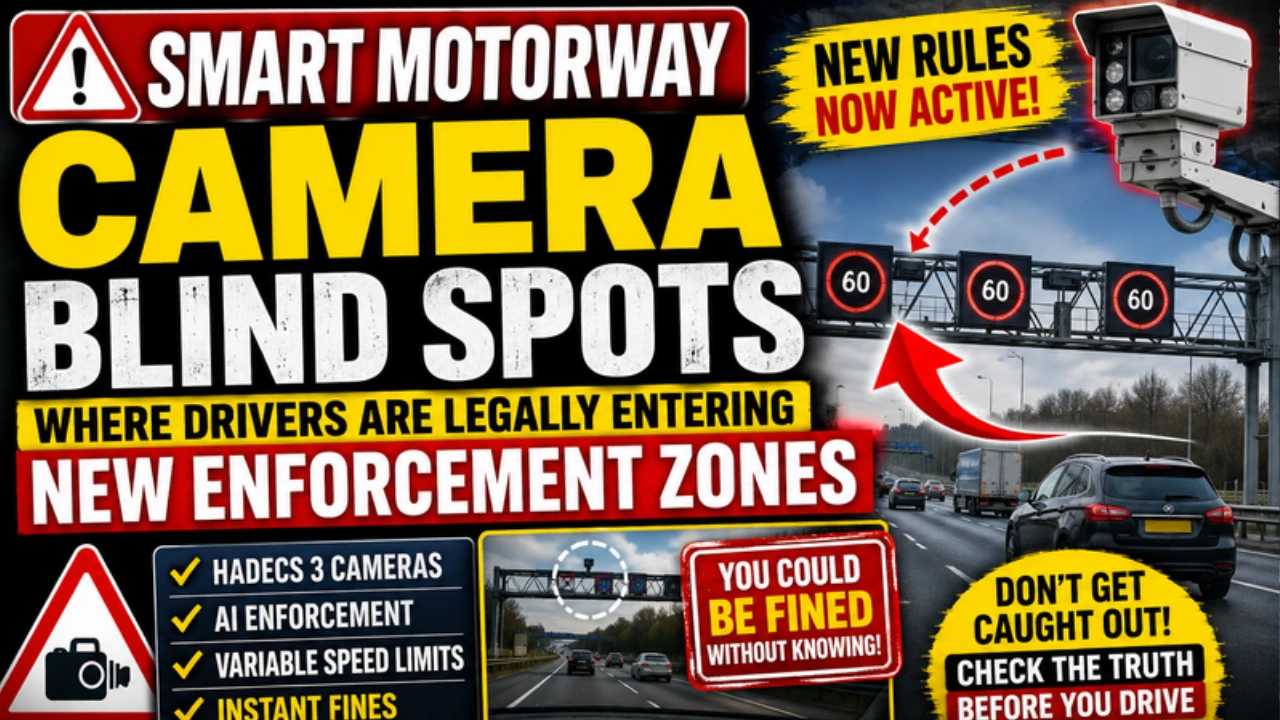
Millions of UK motorists are searching for answers after growing online debate surrounding so-called “smart motorway camera blind spots” and new enforcement technology rolling out across Britain’s motorway network in 2026.
Road safety experts warn many motorists wrongly assume there are “safe zones” or “camera gaps” on smart motorways — even as newer AI-powered systems and upgraded HADECS technology continue expanding nationwide.
Why Drivers Are Suddenly Talking About “Blind Spots”
The issue exploded online after motorists began sharing viral videos and Reddit discussions claiming certain motorway sections appear to have:
- Limited camera coverage
- Delayed enforcement activation
- “Hidden” enforcement zones
- Gantry gaps
- Inconsistent speed enforcement
However, experts warn many assumptions circulating online may be dangerously misleading.
HADECS 3 Cameras Can Monitor Multiple Lanes Simultaneously
Modern smart motorways increasingly use HADECS 3 camera systems, which can reportedly monitor up to five lanes at once using radar and digital enforcement technology.
Unlike older speed cameras, these systems are often:
- Smaller
- Grey-coloured
- Mounted on gantries
- Harder for drivers to notice
Many motorists now refer to them online as “stealth cameras.”
Variable Speed Limits Change Enforcement Instantly
One major source of confusion involves variable speed limits.
On smart motorways:
- Speed limits can change within seconds
- Cameras automatically adjust to new limits
- Enforcement thresholds may update rapidly
Experts say many drivers mistakenly believe cameras only operate during heavy congestion — but smart motorway systems can reportedly enforce both variable and national speed limits depending on configuration.
Reddit Drivers Continue Debating Camera Behaviour
Online communities remain filled with drivers discussing:
- Unexpected camera flashes
- Variable speed confusion
- Gantry enforcement timing
- “Invisible” motorway cameras
One Reddit user recently described being flashed moments after a speed limit change on the M60, creating uncertainty over whether the camera had updated properly.
Another Reddit discussion highlighted confusion about whether previous speed limits remain active when gantry signs go blank after displaying restrictions.
Smart Motorway Enforcement Zones Are Expanding
National motorway enforcement systems continue growing through:
- AI-powered traffic monitoring
- Variable speed cameras
- Red X lane enforcement
- ANPR vehicle tracking
- Average speed systems
Road safety groups argue the upgrades are designed to:
- Reduce congestion
- Improve traffic flow
- Increase motorway safety
Critics, however, continue raising concerns about:
- Driver confusion
- Camera visibility
- Enforcement transparency
The “10% + 2” Rule Still Causes Confusion
Many UK drivers still believe in the unofficial “10% + 2 mph” enforcement tolerance rule.
While police guidance has referenced threshold flexibility, experts warn motorists should never rely on specific margins because enforcement discretion varies between forces.
Smart Motorways Remain Highly Controversial
Public concern surrounding smart motorways remains intense due to ongoing debate around:
- Hard shoulder removal
- Emergency refuge areas
- Camera enforcement
- Breakdown safety
- Variable speed systems
with many drivers questioning whether enforcement systems are becoming too automated.
What Drivers Should Do Right Now
Road safety experts recommend motorists:
- Treat all motorway cameras as active
- Follow displayed speed limits immediately
- Never assume a gantry is inactive
- Watch for Red X lane closures
- Avoid relying on online “blind spot” myths
Experts also warn that camera visibility does not necessarily indicate whether enforcement is operating.
Conclusion
Growing debate around smart motorway camera blind spots and enforcement zones is creating major attention across the UK as drivers try to understand how newer AI-powered motorway systems operate. While many online claims suggest certain motorway areas may avoid detection, experts warn modern HADECS and smart motorway technology is becoming increasingly sophisticated and difficult to predict.