

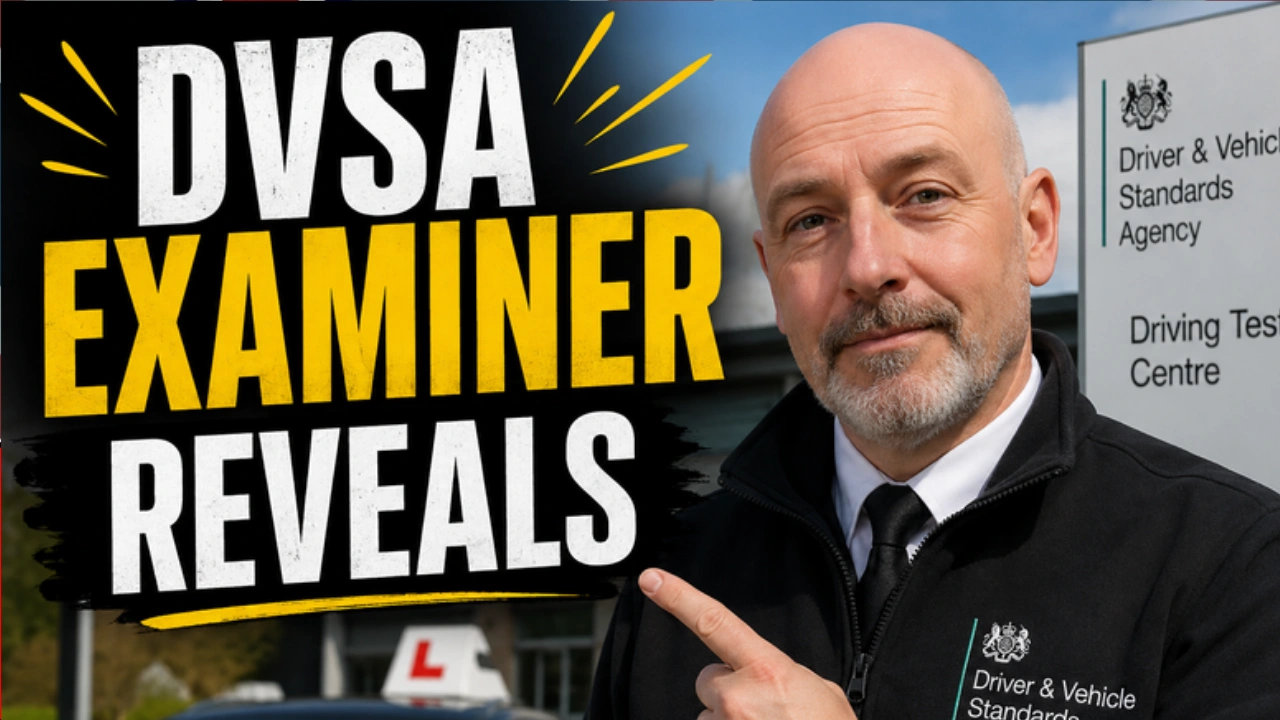
Every year, thousands of learner drivers in the UK walk out of their driving test feeling confident — only to be handed a failure slip. But what if you knew exactly what examiners are watching for? A DVSA (Driver and Vehicle Standards Agency) examiner has revealed the three most common mistakes that lead to an instant fail on the driving test in 2026 — and the answers might surprise you.
Whether you’re booked in for your test next week or still practising, this is the one article you need to read before you get behind the wheel.
Not Checking Mirrors at the Right Time
This sounds simple, but it catches more candidates than almost anything else. It’s not just about looking in your mirrors — it’s about looking at the right moment. Examiners watch closely for mirror checks before signalling, before changing speed, and before moving off. If you signal first and check mirrors second, that’s a serious fault. Do it at a critical moment, and it becomes an instant fail.
Many learners develop a habit of “fake checking” — glancing at the mirror without actually processing what they see. Examiners are trained to spot this. A genuine mirror check means your eyes visibly move, and your response to what you see actually influences your driving decision.
Lack of Proper Observation at Junctions
Pulling out at a junction without full, effective observation is one of the top reasons candidates fail on the spot in 2026. This includes T-junctions, roundabouts, and crossroads. The mistake isn’t always being reckless — sometimes it’s simply not looking far enough or not taking a second look before emerging.
DVSA data consistently shows that junction errors are among the leading causes of both test failures and real-world accidents. Examiners specifically look for candidates who pause, look both ways (sometimes twice), and only move when it is genuinely safe — not just when there’s a gap in traffic.
Incorrect Use of Speed — Too Fast or Too Slow
Driving too fast for the conditions is an obvious danger, but driving unnecessarily slowly is equally penalised in 2026. Hesitation at roundabouts, crawling on a 40 mph road, or refusing to commit to a manoeuvre all count as serious faults. The examiner is assessing whether you can drive safely and confidently.
Speed management also includes not slowing down enough near pedestrian crossings, schools, or when approaching a hazard. The key is matching your speed to the environment — something experienced drivers do naturally, but learners often struggle with under pressure.
The Bottom Line
These three mistakes — poor mirror discipline, weak junction observation, and poor speed management — account for a huge proportion of instant driving test failures across the UK every year. The good news is that all three are entirely fixable with the right practice and awareness.
Talk to your instructor about deliberately practising these areas in your remaining lessons. Go into your test knowing what the examiner is looking for, and you’ll already be one step ahead of the majority of candidates.
Good luck — you’ve got this.