

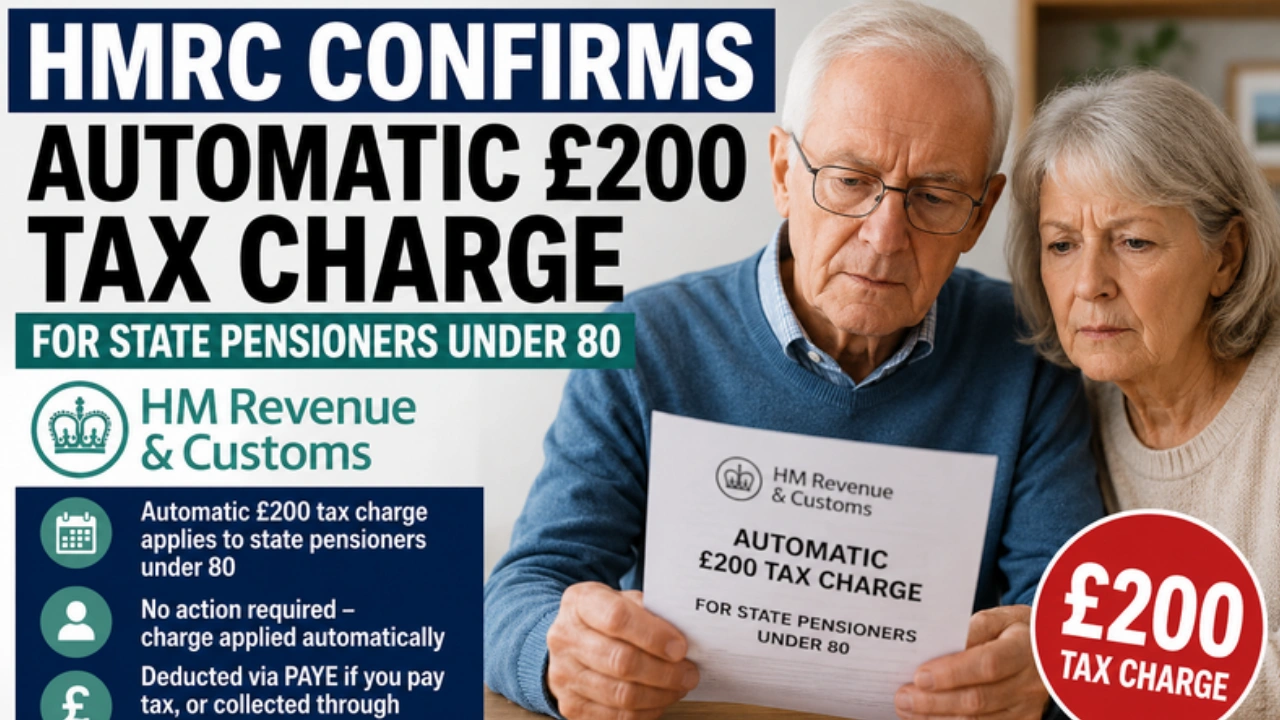
Thousands of state pensioners across the UK are facing an automatic £200 tax charge — and many of them don’t even know it’s coming. HM Revenue and Customs (HMRC) has confirmed that certain pensioners under the age of 80 will be hit with this charge, catching many retirees off guard.
Who Is Affected?
The charge applies to state pensioners who have income above the personal allowance threshold but are not currently paying tax through PAYE or self-assessment. If your total income — including the state pension — exceeds the tax-free personal allowance of £12,570, HMRC expects you to settle the difference.
For many pensioners, this situation arises because the state pension itself has increased significantly thanks to the triple lock guarantee, pushing more people over the threshold without them realising it.
Why £200?
The £200 figure isn’t random. It reflects the underpaid tax that accumulates when a pensioner’s state pension, combined with even a small additional income — like a private pension, rental income, or savings interest — nudges them just over the personal allowance. HMRC collects this by adjusting the tax code or issuing a Simple Assessment letter directly to the individual.
What Should Pensioners Do?
- Check your tax code letter from HMRC carefully — errors are more common than people think
- If you receive a Simple Assessment letter, you have 60 days to pay or dispute it
- Contact HMRC directly on 0300 200 3300 if you believe the charge is incorrect
- Consider speaking to a free tax adviser through charities like Tax Help for Older People
Don’t Ignore the Letter
The biggest mistake pensioners make is assuming the letter is a scam and ignoring it. HMRC does send legitimate tax demand letters by post, and ignoring them can lead to penalties on top of the original charge. If something feels unclear, always verify directly with HMRC rather than dismissing it.
For anyone living on a fixed pension income, an unexpected £200 bill can feel like a real blow. But the good news is — if you act quickly, stay informed, and check your figures, you may have grounds to reduce or challenge the charge entirely.