

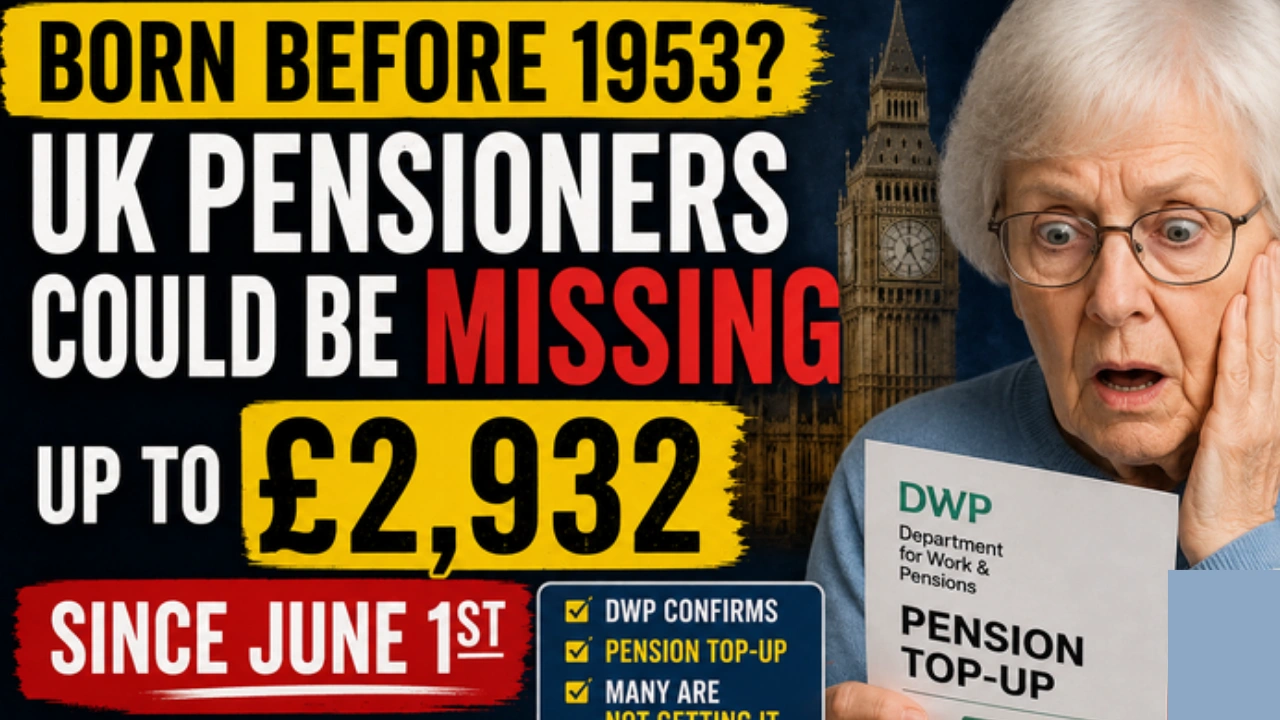
If you were born before 5 April 1953, there’s a real chance you could be missing out on money that should have been in your pocket months – or even years – ago. We’re not talking about a few pounds here and there, but thousands of pounds in backdated State Pension payments and top-ups, with some cases adding up to £2,000–£3,000 or more.
The worst part? Many pensioners have no idea they’re owed anything. It’s just quietly sitting there, unclaimed.
What’s Going On – And Why This Affects Older Pensioners
A series of errors, underpayments, and complicated rules in the old State Pension system has left many people – especially older married women, widows, divorced women and those aged over State Pension age before April 2016 – being paid less than they should.
Key groups affected include:
- Married women whose pension was never correctly increased based on their husband’s National Insurance record
- Widows who didn’t get the right uplift after their husband died
- Divorced women whose entitlement wasn’t properly reassessed
- Over-80s who may qualify for a special “Category D” top-up but have never claimed it
For many born before the early 1950s, these rules apply directly – and the backpay can run into the thousands.
Why “Since June 1st” Matters
June often marks the point where new tax year calculations, DWP correction exercises, and updated pension rates start to show up clearly in people’s bank accounts and letters.
That’s why:
- Some people only notice something is “off” when checking their summer payments
- DWP error-correction projects can quietly start paying out arrears at any point, but many still slip through the net
- If you’ve done nothing since June 1st, you might still be sitting in the “missing out” camp
In other words, while the problem started years ago, this summer is the perfect time to check whether you’re one of the people still losing out.
How Could You Be Owed Up To £2,932?
The exact figure depends on your situation, but underpayments can build up fast:
- If your basic State Pension should have been higher by £20–£40 a week over several years
- If you were due a boost when your husband retired, but it never happened
- If you became widowed and didn’t get the full uplift based on his contributions
Multiply that weekly shortfall by months – or even years – and it’s easy to see how people end up owed £1,000–£3,000 in backpay, with some cases reaching much higher.
That’s money that could help with heating, food, rent, debts, or simply give you a little breathing space in the cost of living crisis.
Quick Checklist: Could You Be One Of The Missing Pensioners?
You should definitely look into this if:
- You were born before 5 April 1953 and get the old State Pension (not the new flat-rate one)
- You are or were married, widowed, or divorced
- Your weekly pension seems low – for example, much less than someone of a similar age and history
- You reached State Pension age before April 2016
Even if you’re not sure, it’s worth checking – some people assumed for years that “that’s just what I get”, only to discover later they were underpaid.
What You Should Do Now
If this sounds like it might apply to you (or your parents, or grandparents), here’s what to do next:
- Find your latest State Pension statement or bank entries
Note how much you’re getting each week or month. - Use an online State Pension calculator or eligibility checker
These tools can give you a rough idea if your amount looks suspiciously low. - Contact the Pension Service / DWP
Ask them directly if your State Pension has been checked for underpayments, especially if you’re in one of the high-risk groups (married women, widows, divorced, over-80s). - Keep a record of your call or letter
Write down dates, names, and what was said – useful if you need to chase things up later.
Remember: this is not a “handout” – it’s money you may already be entitled to under the rules. You’re not asking for a favour; you’re asking them to correct your record.