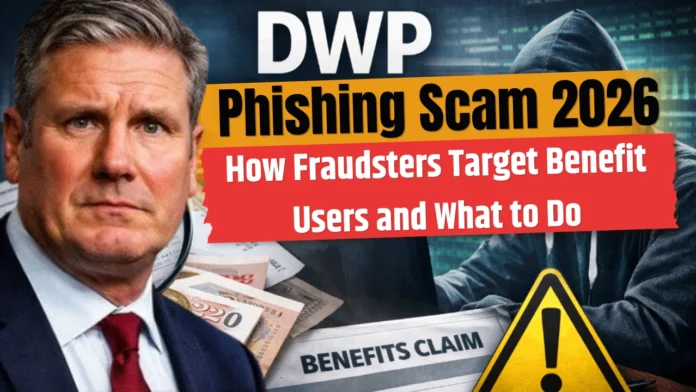
The DWP Phishing Scam 2026 involves criminals sending deceptive communications that mimic official DWP correspondence to trick benefit recipients into revealing sensitive data such as National Insurance numbers, bank details, and login credentials. Reports suggest these scams have increased in frequency since early 2026, exploiting cost-of-living pressures and reliance on government support.
How the Scam Works
Fraudsters often use spoofed email addresses and text messages that appear to come from “gov.uk” domains or DWP branding, claiming urgent updates to benefit claims, requests for verification, or offers of additional payments. Not publicly disclosed is the exact number of victims, but authorities note a significant rise in reported incidents across England, Scotland, and Wales.
The scams typically direct users to counterfeit websites that closely replicate the legitimate DWP online services portal, where entered information is captured by criminals for identity theft or benefit fraud. Reports suggest some phishing kits include fake Universal Credit, Jobseeker’s Allowance, and Pension Credit login pages.
Steps to Protect Yourself
What to do: Official guidance from the DWP and the UK’s National Cyber Security Centre (NCSC) advises benefit users to never click links or download attachments from unsolicited messages, and to verify any communication by logging into their account directly via the official GOV.UK website. Not publicly disclosed are specific details of ongoing investigations, but the DWP encourages reporting suspicious emails to report@phishing.gov.uk and texts to 7726.



Additional protective measures include enabling two-factor authentication where available, regularly monitoring bank statements for unauthorized transactions, and informing the DWP immediately if benefit payments are unexpectedly altered or stopped. Reports suggest that awareness campaigns are being rolled out through Jobcentre Plus offices and online platforms to educate claimants.
The DWP Phishing Scam 2026 highlights the ongoing challenge of social engineering targeting vulnerable populations reliant on state support, with officials stressing that legitimate DWP communications will never ask for full passwords or PINs via email or SMS. Not publicly disclosed is whether any arrests have been made in connection with the scam waves.
Have you or someone you know received a suspicious message claiming to be from the DWP lately? Share what it looked like and how you verified whether it was real or fake.
What extra steps do you take to protect your benefit accounts from phishing attempts — let us know in the comments below!

 through sophisticated phishing emails)