

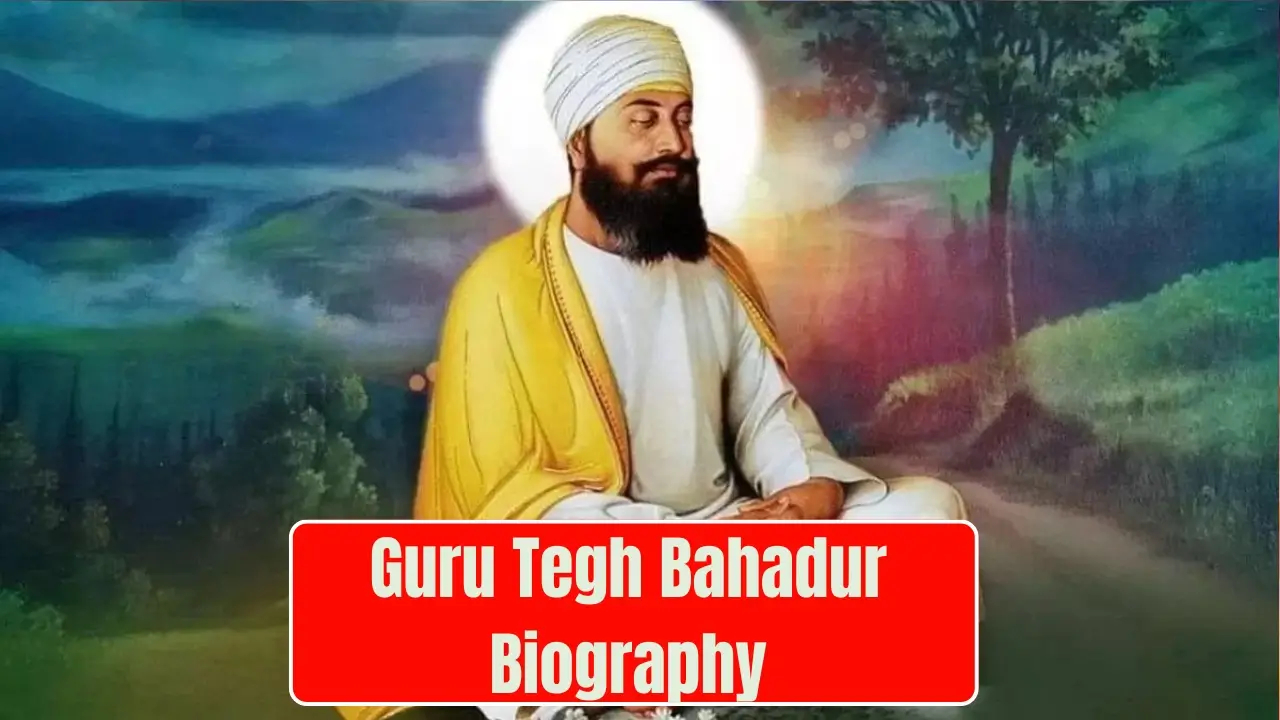
Guru Tegh Bahadur (1621–1675), the ninth Guru of Sikhism, stands as one of the most profound moral figures in Indian history. Revered as a spiritual visionary, poet, and fearless defender of human dignity, he is remembered above all for sacrificing his life to protect the religious freedom of others. His legacy transcends Sikhism, positioning him as a universal symbol of resistance against oppression and an enduring advocate of human rights.
Honored with the titles Hind di Chadar (Shield of India) and Srisht-di-Chadar (Protector of Humanity), Guru Tegh Bahadur’s life reflects an extraordinary blend of spiritual depth, ethical clarity, and unwavering courage.
Biographical Overview
- Birth Name: Tyag Mal
- Date of Birth: April 1, 1621
- Place of Birth: Amritsar, Punjab
- Parents: Guru Hargobind Sahib (sixth Sikh Guru) and Mata Nanaki
- Spouse: Mata Gujri (also known as Mata Gujar Kaur)
- Child: Gobind Rai (later Guru Gobind Singh)
- Guruship: Installed as the ninth Sikh Guru in 1664–1665 at Bakala
- Martyrdom: November 11, 1675, Chandni Chowk, Delhi
- Key Contributions: 116 hymns in the Guru Granth Sahib
- Legacy: Defender of religious freedom, inspiration behind the Khalsa
Early Life and Family Background
Born into a deeply spiritual household, Tyag Mal was the youngest child of Guru Hargobind Sahib, who embodied the Sikh principle of Miri-Piri—the balance between spiritual authority and temporal responsibility. From childhood, he was immersed in Sikh teachings, classical music, and martial training, reflecting the holistic Sikh approach to education.
Despite his training as a warrior, Tyag Mal showed a strong inclination toward meditation, solitude, and poetic expression. His contemplative nature coexisted with remarkable bravery. During military engagements alongside his father, particularly in conflicts near Kartarpur, he demonstrated exceptional valor. In recognition of this courage, he was given the name Tegh Bahadur, meaning “the brave sword.”
Years of Spiritual Discipline and Recognition as Guru
After the passing of Guru Hargobind Sahib, Tegh Bahadur married Mata Gujri and eventually settled in the village of Bakala. For nearly two decades, he lived a quiet and austere life, dedicating himself to meditation, spiritual reflection, and detachment from worldly ambition. This prolonged period of inner preparation shaped his philosophical outlook and spiritual authority.
Following the death of the eighth Sikh Guru, Guru Har Krishan, confusion arose regarding succession. Guru Har Krishan had indicated that the next Guru would be found in Bakala, leading many claimants to emerge. Sikh tradition recounts that Bhai Makhan Shah Lubana, a merchant who had survived a shipwreck, played a decisive role in identifying the true Guru. Through a test of spiritual insight rather than public declaration, Tegh Bahadur was recognized as the rightful successor and formally installed as the ninth Sikh Guru in 1664–1665.
Spiritual Leadership, Travels, and Community Service
After assuming the Guruship, Guru Tegh Bahadur established Chakk Nanaki, later known as Anandpur Sahib, as a major center for Sikh spiritual life. While maintaining protective guards in accordance with Sikh tradition, he personally lived with simplicity, humility, and restraint.
Over the next two decades, he traveled extensively across the Indian subcontinent, including regions such as Punjab, Uttar Pradesh, Bihar, Bengal, Assam, and present-day Uttarakhand. These journeys were undertaken not for conquest or power, but to spread Sikh teachings of devotion, equality, compassion, and moral courage.
During his travels, Guru Tegh Bahadur encouraged practical expressions of spirituality. He supported the establishment of langars (community kitchens), wells, and rest houses, reinforcing Sikh values of service and social responsibility. While residing in Patna, his son Gobind Rai—destined to become Guru Gobind Singh—was born in 1666.
Teachings and Philosophical Contributions
Guru Tegh Bahadur’s spiritual philosophy is preserved in 116 compositions included in the Guru Granth Sahib, comprising 57 Salokas and 59 Shabads set in 15 musical ragas. His writings are marked by profound introspection and philosophical clarity.
Key themes of his teachings include:
- Naam Simran (Meditation): Constant remembrance of the Divine as the path to inner liberation
- Detachment: Awareness of the impermanence of material life
- Righteous Living: Ethical conduct rooted in truth and humility
- Fearlessness: The ideal of “fear none and frighten no one”
- Universal Equality: Rejection of ritualism and affirmation of human dignity
His hymns address the emotional and moral struggles of everyday life, offering guidance on how to remain spiritually grounded amid suffering and uncertainty.
Family Life and Influence
Guru Tegh Bahadur’s wife, Mata Gujri, played a vital role in sustaining the Guru’s mission, particularly during his long travels. Their son, Gobind Rai, was deeply influenced by his father’s teachings and ultimate sacrifice. The Guru’s martyrdom profoundly shaped the character and resolve of the young Gobind Rai, who later became Guru Gobind Singh and transformed Sikhism through the creation of the Khalsa.
Defense of Religious Freedom and Martyrdom
Historical Context
During the reign of Mughal Emperor Aurangzeb, policies of religious intolerance intensified, including forced conversions and the suppression of non-Islamic practices. The Kashmiri Hindu Pandits, facing severe persecution, sought Guru Tegh Bahadur’s help as a moral authority respected across religious boundaries.
Arrest and Execution
Accepting the burden of this crisis, Guru Tegh Bahadur chose to confront injustice directly. He was arrested along with three devoted followers—Bhai Mati Das, Bhai Sati Das, and Bhai Dayala—and taken to Delhi. Offered the choice of conversion, performing miracles, or death, the Guru refused to compromise his principles.
In an attempt to intimidate him, Mughal authorities executed his companions in brutal ways before his eyes. Yet Guru Tegh Bahadur remained resolute. On November 11, 1675, he was publicly beheaded at Chandni Chowk, Delhi, becoming the second Sikh Guru to attain martyrdom after Guru Arjan Dev.
Legacy, Memorials, and Continuing Impact
Major Memorials
- Gurdwara Sis Ganj Sahib (Delhi): Site of execution
- Gurdwara Rakab Ganj Sahib (Delhi): Site of cremation of the body
- Anandpur Sahib: Center of his spiritual legacy
Commemoration
His martyrdom is observed annually as Shaheedi Divas, marked by prayers, processions, and acts of community service.
Enduring Influence
Guru Tegh Bahadur’s sacrifice laid the moral foundation for the Khalsa and reshaped Sikh identity around justice, courage, and collective responsibility. Beyond Sikhism, he is remembered as a global symbol of conscience—one who gave his life not for political power or personal belief, but for the fundamental right of others to practice their faith freely.
Conclusion
Guru Tegh Bahadur’s life represents the highest ideals of spiritual integrity and moral courage. His teachings continue to guide seekers toward fearlessness, humility, and truth, while his martyrdom remains one of history’s most powerful examples of selfless sacrifice for human dignity. Across centuries, his legacy endures as a beacon of justice, compassion, and unwavering commitment to freedom.
Also Read: Thanuja Puttaswamy Biography 2025, Net Worth, Age, Bio, Career & Family