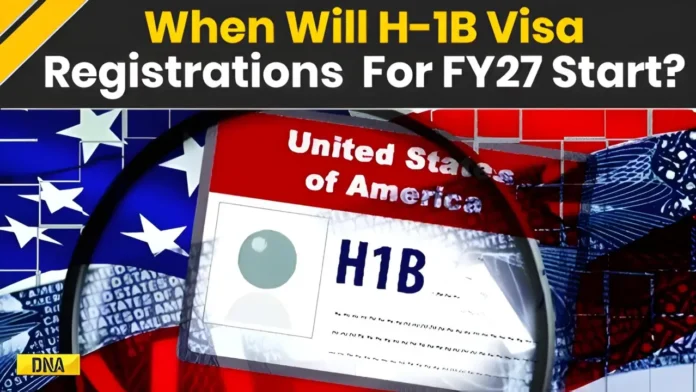
The H-1B Visa FY27 registration cycle officially concluded on March 19, 2026, and early estimates from immigration attorneys suggest total filings fell between 30 and 50 percent below last year’s figures, accelerating a sharp multi-year decline that began in FY24. US Citizenship and Immigration Services (USCIS) received 336,153 eligible registrations in FY26 itself 26.9 percent lower than FY25’s 470,342 and FY27 numbers are expected to fall even further once USCIS releases official statistics. Immigration experts attribute the drop to a combination of structural reforms, raised fees and growing caution among employers who historically submitted mass filings on behalf of prospective workers.
Registration Decline Follows a Three-Year Downward Trend
The collapse in FY27 filings is part of a sustained pattern. Eligible H-1B registrations peaked at 758,994 in FY24, then dropped to 470,342 in FY25, then again to 343,981 in FY26 a cumulative decline of more than 54 percent across three fiscal years. The FY26 total was already the lowest since the first Trump administration’s FY21 cycle, which recorded 269,424 eligible entries. FY27 data, once released by USCIS, may approach or break that record.
The decline reflects genuine behavioural change among large-scale filers. In FY24, employers averaged 8.9 registrations per hire. That figure dropped to 6.0 in FY26 a 33 percent reduction indicating that bulk filing strategies are no longer viable under the revised rules. The number of beneficiaries with more than one registration also fell dramatically, from 47,314 in FY25 to just 7,828 in FY26.
Higher Fees and New Lottery Weighting Drive Employer Hesitation
Two changes introduced for FY27 directly contributed to the registration drop. First, USCIS raised the H-1B registration fee from $10 per beneficiary to $215 per beneficiary, a 20-fold increase that made speculative bulk filings significantly more expensive for large IT staffing firms and outsourcing companies. Second, the Department of Homeland Security introduced a wage-weighted lottery system, which deprioritises candidates offered wages at the lower end of the prevailing wage scale and elevates those offered higher wages. This directly disadvantages the business model of high-volume IT outsourcing firms, which typically place workers at entry-level wage tiers.


Immigration attorney firms confirm that many employers who previously submitted hundreds of registrations to maximise lottery odds chose not to file at all this year, calculating that the fee outlay could not justify the lower selection probability under the new weighting system.
Which Companies Stand to Gain From the New System
While the drop hurt high-volume filers, some employer segments now see improved selection odds. Mid-sized technology firms, financial institutions and healthcare organisations which file moderate volumes at higher wage levels now face less competition from outsourcing firms that previously crowded the lottery pool. With fewer total registrations, the selection rate per remaining eligible registration improves proportionally, benefiting applicants with strong wage offers from direct employers.
Law firms that advise tech companies report that clients in product engineering, cloud infrastructure, cybersecurity and AI research see the new system as relatively favourable, since these roles typically carry wages above the Level II prevailing wage threshold that the weighting model rewards. Small startups and direct-hire employers are also now more likely to see their filings selected, given that the field has narrowed considerably.
FY27 Lottery Results and Key Dates
USCIS has not publicly disclosed the exact date for FY27 lottery selection results, but based on the FY26 timeline, notifications are typically sent to selected employers by late March to mid-April. Selected employers must then file full H-1B cap petitions within a 90-day window that begins after notification. The annual H-1B cap remains unchanged at 65,000 regular cap plus 20,000 advanced-degree exemption slots, totalling 85,000 visas per fiscal year.
With FY27 registrations estimated between 170,000 and 235,000 based on the 30-50 percent drop range cited by immigration attorneys selection odds per registration could improve to between 36 and 50 percent, compared to roughly 25 percent in FY24 when the pool exceeded 750,000.
Impact on Indian and International Applicants
Indian nationals continue to represent the largest share of H-1B registrations, typically accounting for 70 percent or more of total filings annually. The shift to a wage-weighted system and higher fees affects Indian IT professionals disproportionately, given that a significant share of Indian applicants historically entered through IT staffing and outsourcing channels that submitted registrations at lower wage levels.
Professionals who secure direct employment with product companies or high-wage employers before the registration window now hold a measurable structural advantage under the new lottery design.
Registration Integrity and Fraud Prevention
USCIS credits much of the registration volume decline to anti-fraud enforcement launched in FY25. The agency found that manipulation of the earlier randomised lottery through the filing of multiple registrations for a single beneficiary by different employers or staffing firms artificially inflated totals in FY24.
The beneficiary-centric selection system, which limits each individual to one lottery entry regardless of how many employers file on their behalf, directly eliminated this practice. USCIS stated that investigations, petition cancellations and criminal referrals in FY25 and FY26 contributed to the cleaner registration pool now visible in FY27 filings.

