

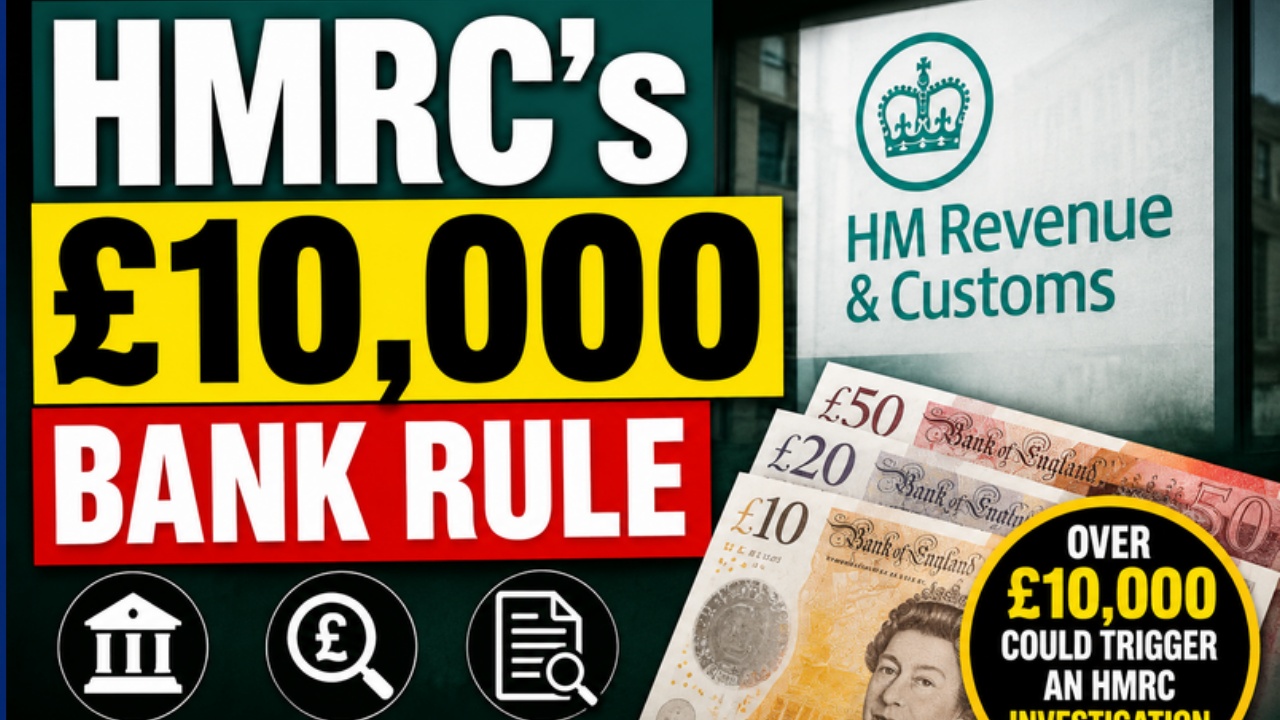
A friend of mine who runs a small landscaping business called me up genuinely stressed last year. He’d seen a Facebook post saying HMRC now automatically investigates anyone who deposits over £10,000 into their bank account — no questions asked. He’d just received a lump sum from a client and was about to split the payment across different accounts to “stay under the limit.”
I told him to stop. Right there.
What he was about to do — deliberately splitting deposits to avoid a threshold — actually has a name. It’s called structuring, and ironically, that is the kind of behaviour that can genuinely trigger an investigation. What he feared in the first place wouldn’t have.
So let’s clear this whole thing up properly, because there is a lot of nonsense floating around online about what HMRC can and can’t see — and some of it is flat-out false.
The Viral Claim — What People Think Is Happening
If you’ve been on Facebook or TikTok recently, you’ve probably seen headlines like:
- “HMRC’s New £10,000 Bank Rule Is Now In Effect”
- “Purchases Over £1,000 Will Be Automatically Reported to HMRC From 2026”
- “Take Out More Than £420 Cash and You’ll Be Flagged”
These posts rack up thousands of shares because they tap into a very real anxiety — that the government is watching every penny you spend or save.
But here’s the thing: most of these specific claims are false.
Full Fact — the UK’s independent fact-checking organisation — confirmed that HMRC itself stated these viral claims are “completely false and designed to cause undue alarm and fear.” There is no universal rule where your bank automatically reports deposits of a specific amount directly to HMRC on a routine basis.
So What Is Actually True?
Right — this is where it gets important, because while the scare stories are exaggerated, HMRC does have real (and growing) powers that every UK taxpayer should understand.
What HMRC genuinely can do:
- Request your bank records during an investigation. If HMRC suspects tax fraud or underreporting, they can legally ask your bank for account information.
- Issue Financial Institution Notices (FINs). Since 2021, HMRC has had the power to demand financial information from banks directly — without needing to go to a tribunal first. This is used in targeted investigations, not mass surveillance.
- Use a system called Connect. This is HMRC’s internal data analysis tool — and it is genuinely powerful. Connect cross-references data from bank accounts, property records, Companies House, Land Registry, social media, eBay, Airbnb, and more. If you’re declaring a low income but living a clearly expensive lifestyle, Connect will spot the inconsistency.
- Receive Suspicious Activity Reports (SARs) from banks. Banks are legally required under anti-money laundering (AML) laws to report anything that looks unusual. They do this independently of HMRC, and you won’t be told a SAR has been filed.
What HMRC cannot currently do:
- Automatically see your live bank balance or transactions
- Freeze or monitor accounts without grounds
- Use Making Tax Digital (MTD) to access your bank feed — MTD only lets HMRC see what you submit, not your raw banking data
The £10,000 Rule — Where Did It Even Come From?
The £10,000 figure isn’t completely made up — it just gets misapplied and exaggerated online.
There is a legitimate rule in the UK that requires certain businesses — specifically alcohol warehousekeepers and registered producers — to report cash payments over 10,000 euros received for duty-suspended goods. That’s a very niche, industry-specific reporting requirement that has nothing to do with personal bank accounts.
There’s also the EU and US equivalent — in the US, banks must report cash deposits over $10,000 to the IRS, and some people confuse this with UK rules. The UK does not have an equivalent automatic personal reporting threshold at £10,000.
The reality? In the UK, there is no official monetary threshold at which a bank must automatically report your deposit to HMRC. What triggers scrutiny is unusual patterns of activity — not just the size of a deposit.
What Actually Gets You Flagged
This is the stuff that actually matters. Rather than worrying about an arbitrary number, here’s what genuinely raises red flags — both at your bank and at HMRC:
- Frequent large cash deposits with no clear explanation
- Income on your tax return that doesn’t match your bank activity — especially if Connect picks up property ownership, vehicle registration, or business directories that suggest higher earnings
- Cash-outs from crypto that aren’t declared
- Undeclared rental income — HMRC has been actively cross-referencing Airbnb and Rightmove listings with tax returns
- Foreign transfers with no documented source
- Personal gifts or loans that aren’t properly documented — if your mum transfers you £15,000 as a gift and you can’t prove it, it can look like undeclared income
- Lifestyle inconsistencies — posting holiday photos on Instagram while declaring minimum wage is, genuinely, the kind of thing Connect will cross-reference
A taxi business owner in the UK recently received a £350,000 tax bill because HMRC traced bank deposits back to business income that was never declared. The deposits had been used to purchase property — and Connect joined the dots.
Making Tax Digital: The Real Change in 2026
If there’s a genuine 2026 rule change you should know about, it’s this: Making Tax Digital for Income Tax (MTD for IT) is now live for self-employed people and landlords with annual income over £50,000.
From April 2026, if your income exceeds £30,000 (from self-employment or property), you’ll also need to comply.
What this means practically:
- You’ll need to use HMRC-approved software (like QuickBooks, FreeAgent, Xero, or TaxCalc) to submit quarterly digital tax updates
- Annual tax returns will still happen, but the quarterly updates give HMRC more regular visibility of your declared income
- It does NOT mean HMRC can see your bank account — but it does mean any major discrepancy between what you report and what they find elsewhere becomes easier for them to spot
What to Do If You’re Worried About a Large Deposit
Whether it’s inheritance money, a property sale, a gift from family, or a big client payment — here’s a sensible step-by-step approach:
- Document the source immediately. Write it down, save the bank transfer reference, keep the email or contract. You want a clear paper trail.
- Check if it’s taxable. Not everything is. Gifts between individuals are generally not income tax events (though Inheritance Tax rules can apply above certain thresholds). A one-off sale of a personal item isn’t taxable. But business income is.
- Speak to an accountant before tax season. If you’re unsure, a one-off consultation with a qualified accountant is far cheaper than an HMRC investigation.
- Don’t split payments to “stay under” thresholds. As I mentioned at the start — that’s structuring, and it actively looks suspicious.
- Don’t ignore unusual letters from HMRC. If you get a letter asking for more information about your income or a specific payment, respond. Ignoring HMRC correspondence makes things significantly worse.
The Savings Interest Trap Nobody Mentions
Here’s one real 2026 change that is catching people off guard: frozen Personal Savings Allowances combined with rising interest rates.
If you have savings earning more than £500–£1,000 in interest per year (the threshold depends on your tax band), you owe tax on that interest. HMRC receives data from banks about interest paid — so they already know about this before you do.
Thousands of pensioners and savers are currently receiving letters from HMRC because their savings interest has tipped them into a taxable position they didn’t know about. It’s not a penalty letter — it’s usually a notice to update your tax code or file a self-assessment return. But if you ignore it, it becomes a problem.
If your bank account has been earning decent interest this year, log into your HMRC personal tax account at gov.uk and check whether your tax code reflects it.
Common Mistakes People Are Making Right Now
- Believing every Facebook post about HMRC rules. Seriously — run anything alarming past Full Fact (fullfact.org) before panicking.
- Not keeping records of cash gifts or loans. A handshake deal with a family member doesn’t cut it if HMRC asks questions.
- Ignoring MTD deadlines. If you’re self-employed and earning over £50,000, you should already be using compliant software.
- Assuming crypto gains are invisible. HMRC has agreements with exchanges and actively pursues undeclared crypto profits.
- Not checking savings interest. If you haven’t looked at how much interest your savings accounts earned last tax year, do it now.
The Bottom Line
HMRC does not have a magic £10,000 alarm bell that goes off every time someone deposits cash. That’s not how it works — and the claim that it does is misinformation that’s been repeatedly debunked.
What HMRC does have is a sophisticated data-matching system, expanding digital reporting powers, and an increasing number of tools to spot inconsistencies between declared income and actual financial activity.
The best protection against any of this? Keep honest records, report what you’re supposed to report, and don’t make financial decisions based on viral social media posts. If you’re ever genuinely unsure about a tax situation, gov.uk and a decent accountant are always more reliable than a Facebook share.