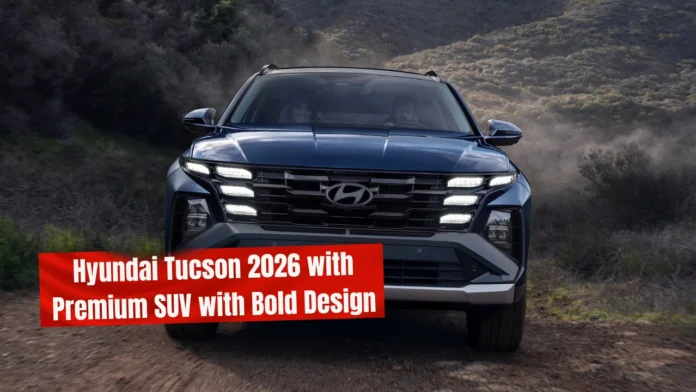
The Hyundai Tucson 2026 has been revealed as a refreshed compact SUV with updated styling, new technology, and multiple powertrain options. The model introduces hybrid and plug-in hybrid systems along with improved interior comfort and safety features.
The latest Tucson focuses on offering a balance of efficiency, performance, and practicality. Reports suggest the SUV will arrive in key markets by mid-2026, with competitive pricing and feature upgrades.
Bold Exterior Gets a Sharper Identity
The 2026 Tucson comes with a redesigned exterior that builds on Hyundai’s signature design language. The front fascia now looks sharper, with a bold grille integrated with updated LED lighting.
The SUV features parametric LED daytime running lights, which blend into the grille when turned off. At the rear, redesigned LED tail lamps add a modern touch.


New alloy wheel designs and subtle body changes give the Tucson a more premium road presence. The overall shape remains similar, but the details look more refined.
Multiple Engine Options with Hybrid Focus
The Hyundai Tucson 2026 offers a wide range of engine options to suit different driving needs. Buyers can choose between petrol, hybrid, and plug-in hybrid systems.
The 2.5-litre petrol engine produces 187 hp and comes with an 8-speed automatic transmission. This option targets buyers looking for a simple and reliable setup.
The 1.6-litre turbo hybrid (HEV) combines a petrol engine with an electric motor. It delivers 231 hp and 271 lb-ft torque, offering better fuel efficiency and smoother performance.
The plug-in hybrid (PHEV) version produces 268 hp, making it the most powerful option in the lineup. It also supports electric-only driving for short distances, though exact range figures are not publicly disclosed.
Cabin Experience Feels More Premium
Inside, the Tucson 2026 offers a cleaner and more modern cabin layout. The dashboard now features dual 12.3-inch screens, one for infotainment and one for the instrument cluster.
Wireless Apple CarPlay and Android Auto are supported, improving convenience for daily use. The interface looks simple and easy to use.
The SUV provides good space for passengers. Rear seats can recline, and legroom remains generous. A “Boss Mode” feature allows rear passengers to adjust the front passenger seat for extra space.
Technology Upgrades Focus on Daily Convenience
Hyundai has added several technology features to improve the overall driving experience. The Tucson now includes updated connectivity and digital controls.
Touch-sensitive buttons and illuminated controls enhance usability, especially at night. The infotainment system supports faster response times compared to the previous version.
A 360-degree camera system helps with parking and tight spaces. Reports suggest improved software integration across vehicle systems, though full details are not publicly disclosed.
Safety Features Get Level 2 ADAS Boost
Safety remains a key focus in the Hyundai Tucson 2026. The SUV includes a suite of Level 2 Advanced Driver Assistance Systems (ADAS).
Key safety features include:
- Adaptive cruise control
- Lane-keeping assist
- Blind-spot monitoring
- Forward collision warning
These systems help reduce driver workload during long trips and city driving. The SUV also includes multiple airbags and standard safety features.
Practicality and Comfort for Everyday Use
The Tucson continues to focus on everyday usability. The cabin offers ample storage spaces and flexible seating arrangements.
Rear seats can fold down to increase cargo capacity, making the SUV suitable for travel and family use. A panoramic sunroof adds to the sense of space inside the cabin.
Climate control systems and rear AC vents ensure comfort for all passengers. Hyundai has also improved seat materials for better durability.
Expected Price and Launch Timeline
The Hyundai Tucson 2026 is expected to launch in global markets around mid-2026. In India, the SUV could arrive with an estimated price range of Rs 29 lakh to Rs 36 lakh.
Exact variant-wise pricing and availability details are not publicly disclosed. Reports suggest Hyundai will position the Tucson as a premium offering in the compact SUV segment.
Would you choose the hybrid Tucson or stick with petrol power? Do you think the new design makes it stand out more on Indian roads? Share your thoughts.

