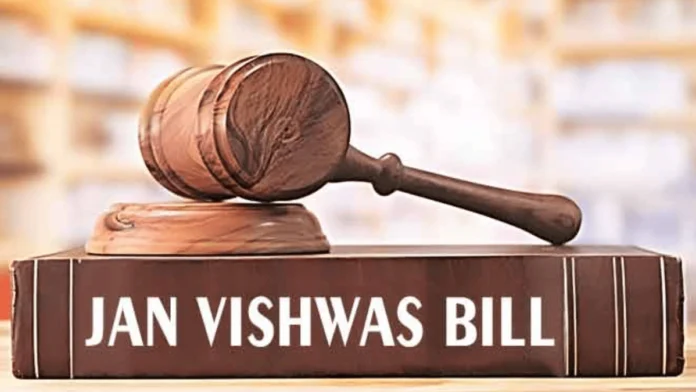
The Jan Vishwas Bill 2026 proposes to amend 80 central Acts to decriminalise or rationalise offences and penalties, replacing an earlier version that covered only 17 Acts. It targets 784 provisions spread across 79 central laws administered by 23 ministries, with 717 changes removing criminal liability for minor violations to foster ease of doing business and 67 changes aimed at improving ease of living. By converting imprisonment for small offences into civil fines, the Bill intends to provide justice rather than punishment for technical breaches.
How It Changes Criminal Liability
Under the Bill, minor violations that previously attracted jail time will now attract proportionate fines, reducing the threat of criminal prosecution for procedural lapses. It introduces “improvement notices” under the Legal Metrology Act, 2009, allowing businesses to correct violations within a set period before facing penaltties. The legislation also provides for adjudicating officers to inquire into alleged breaches and decide penalties, while appellate authorities hear appeals, streamlining enforcement.
Impact on Ease of Doing Business
Officials say the Bill will significantly ease compliance burdens for citizens and micro, small and medium enterprises (MSMEs) by decriminalising over one thousand minor offences. Commerce and Industry Minister Piyush Goyal stated that the measure reflects the Narendra Modi government’s trust in the people and replaces outdated British‑era laws that treated small mistakes as crimes. The Bill’s provisions for periodic revision of penalties defer to existing mechanisms in individual laws, ensuring updates stay aligned with sector‑specific needs.
Impact on Ease of Living
Beyond business, 67 amended provisions focus on everyday life, aiming to reduce harassment from technical non‑compliance in areas such as municipal services and consumer protection. The Bill amends the New Delhi Municipal Council Act, 1994, by restructuring property tax into building and vacant land components, creating a Municipal Valuation Committee and establishing a Hardship and Anomaly Committee for grievance redresssal. It also removes provisions for advertisement tax, simplifying local levies.

Parliamentary Journey and Political Reactions
The Jan Vishwas Bill 2026 was introduced in Lok Sabha on 27 March 2026, passed by the Lower House 1 April 2026 and approved by Rajya Sabha on 2 April 2026. It replaced the Jan Vishwas Bill 2025, which had been introduced on 18 August 2025, referred to a Select Committee chaired by Tejasvi Surya and withdrawn on 17 March 2026 after the Committee recommended amendments to 65 additional Acts. During debate, BJP’s Tejasvi Surya praised the Bill as the largest decriminalisation exercise in independent India’s history, while opposition members expressed concerns about haste and potential adverse effects on certain Acts. Lahar Singh Siroya of BJP highlighted the Bill’s focus on industries, start‑ups, MSMEs and farmers, noting the 24‑member Select Committee held 49 meetings to scrutinise the legislation.
Government’s View on the Reform
Prime Minister Narendra Modi welcomed the passage, saying the Bill strengthens a trust‑based framework, ends outdated rules and ensures speedy disposal of cases while reducing litigation burden through decriminalisation. Minister of State for Commerce and Industry Shri Jitin Prasada introduced the Bill in Lok Sabha following Cabinet approval, confirming that the 2025 version was withdrawn before the 2026 version was tabled. The legislation is set to come into force on dates notified by the Central Government, with different commencement dates possible for various enactments.

