

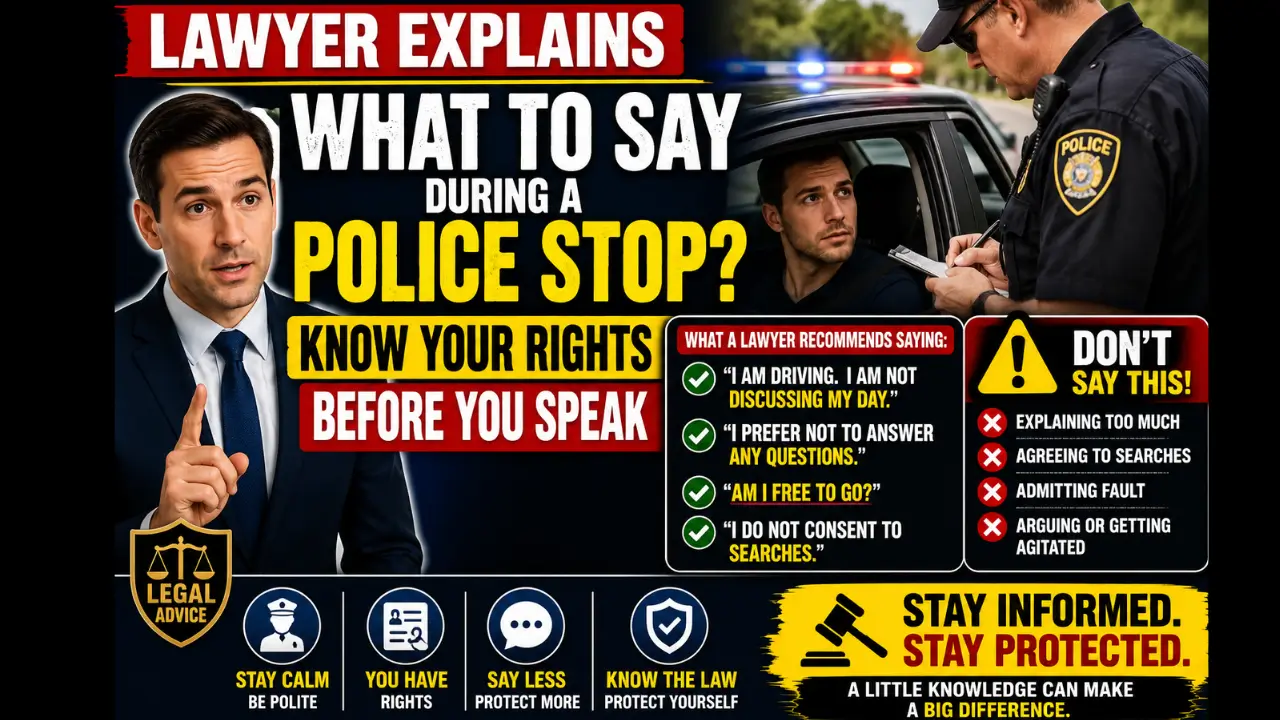
Getting pulled over by the police can feel stressful, especially if drivers are unsure about their legal rights during a traffic stop. Many people accidentally say too much, agree to searches without understanding the law, or panic during questioning. Legal experts say that knowing what to say — and what not to say — can make a major difference during a police encounter.
Drivers are actively looking for simple legal advice that can help them stay calm and avoid mistakes during roadside interactions.
This guide explains the most important things a lawyer recommends saying during a police stop while also covering common mistakes that many drivers make.
Stay Calm and Keep Your Hands Visible
The first thing legal experts recommend is remaining calm and respectful. Arguing aggressively or making sudden movements can quickly escalate the situation.
When a police officer approaches the vehicle:
- Keep both hands visible
- Turn down loud music
- Avoid reaching suddenly into bags or pockets
- Wait until instructed before grabbing documents
A calm attitude often helps reduce tension during the encounter.
What Drivers Should Say First During a Police Stop
According to many criminal defense lawyers, one of the safest responses is simple and polite.
Drivers can say:
- “Hello officer.”
- “How can I help you?”
- “My license and registration are in the glove box. May I reach for them?”
These statements show cooperation without volunteering unnecessary information.
Avoid Admitting Guilt Too Quickly
One of the biggest mistakes drivers make is immediately admitting fault.
Questions like:
- “Do you know why I pulled you over?”
- “Do you know how fast you were going?”
can sometimes lead people to unintentionally incriminate themselves.
Lawyers often suggest avoiding direct admissions unless absolutely necessary. Instead of guessing or confessing, drivers can respond calmly with:
- “I’m not sure, officer.”
- “Could you explain the reason for the stop?”
This keeps the conversation respectful while protecting legal rights.
Can Police Search Your Car?
This is one of the most searched legal questions online right now.
Many people do not realize they generally have the right to refuse a voluntary vehicle search.
A polite response often recommended by attorneys is:
- “I do not consent to any searches.”
Legal experts say this sentence is important because it clearly establishes that permission was not voluntarily given.
However, drivers should never physically resist officers, even if they believe the search is unfair or unlawful. Disputes can be handled later through legal channels.
The Right to Remain Silent
In the United States, people have the constitutional right to remain silent in many situations involving police questioning.
If questioning becomes more serious, lawyers often recommend saying:
- “I choose to remain silent.”
- “I would like to speak to an attorney.”
These phrases are widely searched because many people are uncertain about when they should stop answering questions.
Common Mistakes During a Traffic Stop
Lawyers frequently warn drivers about these common errors:
Talking Too Much
Nervous drivers sometimes continue speaking unnecessarily. Extra details can create confusion or provide information officers may use later.
Arguing on the Roadside
Disagreements rarely help during a traffic stop. Legal experts recommend staying polite and addressing concerns later in court if needed.
Consenting to Searches Without Understanding Rights
Many drivers unknowingly allow searches because they feel pressured. Knowing the difference between a request and a lawful order matters.
Recording Aggressively
In many places, recording police interactions is legal, but experts recommend doing so calmly and without interfering.
What If Police Ask You to Step Out of the Vehicle?
Courts in the United States generally allow officers to ask drivers to step out during a lawful traffic stop.
Lawyers recommend complying calmly while continuing to protect personal rights respectfully.
If unsure about instructions, drivers can ask:
- “Am I being detained?”
- “Am I free to leave?”
These are among the most searched police stop phrases online because they help clarify the situation without escalating tension.
Why Search Interest in Police Rights Is Rising
Searches related to:
- police stop rights
- traffic stop lawyer advice
- what not to say to police
- can police search my car
- constitutional rights during a stop
have increased significantly as viral videos and social media discussions continue spreading awareness about civil liberties and legal protections.
Many people now want clearer information about how to handle police encounters safely and legally.
Also Read: UK Drivers WARNING: New DVLA Crackdown Could Cost You £1,000 in Seconds!
Final Thoughts
Knowing basic legal rights during a police stop can help drivers remain calm, avoid unnecessary mistakes, and handle the situation more confidently. Lawyers consistently emphasize the importance of staying respectful, avoiding self-incrimination, and understanding when to exercise the right to remain silent.
While laws can vary depending on the country or state, the safest approach is usually simple: stay calm, stay polite, and avoid saying more than necessary until legal advice is available.
FAQ
What should you never say during a police stop?
Lawyers often recommend avoiding admissions of guilt, arguments, or unnecessary explanations that could be misunderstood later.
Can police search a vehicle without permission?
In some situations police may legally search a vehicle without consent, but drivers can still clearly state that they do not consent to searches.
Is it legal to remain silent during police questioning?
In many legal systems, including the United States, people have rights that protect them from self-incrimination during questioning.
Should drivers argue with police officers during a stop?
Most attorneys strongly advise against arguing roadside. Legal disputes are usually better handled later through proper legal channels.
Why are “know your rights” searches trending?
Growing public awareness, viral social media videos, and concerns about legal protections have increased interest in police stop rights and constitutional law topics.
Also Read: DVLA New Rule for Over 60s STARTS TOMORROW — Are You Still Legal to Drive?