

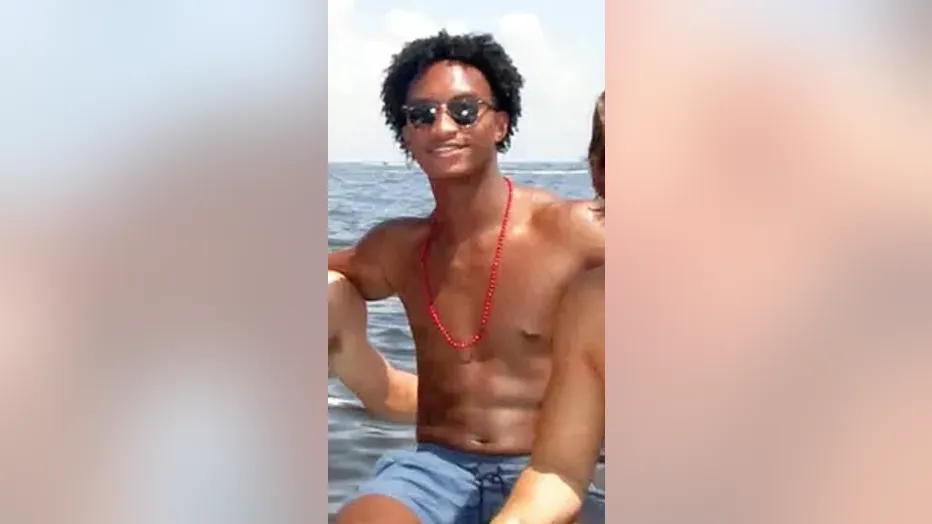
The death of Nolan Xavier Wells, an 18-year-old Black teenager from Ocean Springs, Mississippi, sent shockwaves through his community and sparked national attention due to its mysterious circumstances and the racial dynamics surrounding his final hours. On July 4, 2026, Wells embarked on a boat trip to Horn Island with three white friends, but he never returned home. His body was discovered two days later off the island’s coast, leading to more questions than answers about what truly happened during that Independence Day outing.
This comprehensive examination delves into the known facts of the case, the contentious investigation, the independent autopsy findings, and the broader implications that continue to fuel debate about justice and transparency in Mississippi.
🕵️♂️ The Mysterious Death of Nolan Wells: What We Know
The Final Hours: July 4, 2026
Nolan Wells was last seen alive on the afternoon of July 4, 2026, during a gathering of approximately 300 young people at Horn Island, a barrier island about 10 miles off the Mississippi Gulf Coast. The island, part of the Gulf Islands National Seashore, is a popular but remote destination with no utilities or commercial ferry service, accessible only by private boat.
According to accounts from friends present that day, Wells traveled to the island with a group of high school friends, all of whom are white. The group consisted of Wells and three white companions, one of whom is the stepson of a Jackson County chancery judge. This racial composition would later become a significant point of controversy and speculation.
The Timeline of Events
timeline
    title Timeline of Nolan Wells' Final Day
    section Morning
      9:56 AM : Boat departs for Horn Island
      11:14 AM : Boat arrives at Horn Island
    section Afternoon
      ~3:23 PM : Last confirmed sighting of Wells<br>on the island
      4:31 PM : Boat departs island without Wells<br>due to mechanical issues
    section Evening
      ~11:00 PM : Friend contacts Coast Guard<br>after realizing Wells never returned
    section Next 48 Hours
      July 5 : Mother reports Wells missing<br>after friends return without him
      July 6 : Wells' body found off<br>Horn Island shoreline
The exact sequence of events remains disputed. Wells’ friends told investigators that around 4:30 PM, they encouraged him to leave with them due to a mechanical issue with their boat, but he allegedly declined, stating he would catch a ride with another group. However, Wells’ family and representatives have questioned this account, noting it was completely out of character for him to separate from his group.
The Discovery and Initial Response
Wells’ body was discovered on July 6, 2026, floating in the water near Horn Island’s northwestern tip. The Jackson County Sheriff’s Department initially treated the case as an accidental drowning, with Sheriff John Ledbetter stating there were no immediate signs of foul play.
However, the circumstances raised immediate suspicions:
- Wells was the only Black person in his group of friends
- His phone and keys were returned with his friends rather than remaining with him
- The delay in reporting him missing (not until 11 PM on July 4) seemed unusual
- Photos from the day showed Wells as the only Black male in a predominantly white gathering
🔍 The Investigation and Controversy
Official Investigation vs. Independent Inquiry
The official investigation by the Jackson County Sheriff’s Department proceeded cautiously, with Sheriff Ledbetter stating that friends were cooperating with authorities. However, the Wells family, dissatisfied with what they perceived as a lack of urgency and transparency, retained high-profile civil rights attorney Ben Crump to conduct an independent investigation.
The family’s concerns centered on several inconsistencies:
- Deleted Communications: Wells’ Snapchat messages and photos from July 4 were deleted after his disappearance, prompting the family’s legal team to issue subpoenas to multiple social media platforms and GPS tracking services.
- Timeline Gaps: There was a significant gap between Wells’ last confirmed sighting (around 3:23 PM) and the boat’s departure (4:31 PM), with no clear explanation for his whereabouts during this time.
- Racial Dynamics: The fact that Wells was the only Black person in his immediate group, coupled with Mississippi’s history of racial violence, led many to question whether the investigation would have been conducted differently if the racial roles were reversed.
The Independent Autopsy Findings
On July 22, 2026, attorney Ben Crump announced preliminary findings from an independent autopsy commissioned by the Wells family. The examination, conducted by forensic pathologist Dr. Roger Mitchell and paid for by former NFL quarterback Colin Kaepernick, revealed several significant findings:
- Cause and Manner of Death: Both were listed as “undetermined pending further investigation”
- Physical Evidence: A 12-by-8-inch area of red discoloration was found in the deep soft tissue on the back of Wells’ head over the occipital bone
- Limitations: The autopsy was hindered by the body’s decomposition and the fact that it arrived without certain organs and neck structures, which had been retained by the medical examiner for additional testing
Crump emphasized that these findings did not rule out the possibility that “non-accidental factors contributed to or caused the death”. The pathologist could not determine whether the discoloration was an injury that occurred around the time of death, but noted it was significant enough to warrant further investigation.
The Audio Controversy
Adding to the mystery, audio from a distress call made by one of Wells’ friends to a boat company on July 4 was enhanced and analyzed. Some listeners claimed to hear someone in the background saying “Is he dead?” and mentioning Nolan’s name, though these interpretations were disputed.
⚠️ Note: The friend who made the call, Tracestin Shepherd, later clarified that the voice heard yelling was actually his own, and that there was no discussion about a phone in the viral video that circulated online.
The Grand Jury Decision and Aftermath
No Criminal Charges Filed
On September 21, 2026, a grand jury declined to indict anyone in connection with Nolan Wells’ death. The panel, consisting of 13 men and 10 women, determined that the “position of, the condition of, time of discovery, and location of Mr. Wells’ body is consistent with drowning”.
The grand jury report stated that neither forensic expert (from the state or independent examination) could rule out accidental drowning as a cause of death. Additionally, the report found “no credible evidence to support the public allegations that any persons who rode to or from Horn Island on July 4, 2026 on the Triton, the Palm Beach, or the Tideline engaged in any criminal conduct related to the death of Mr. Wells”.
Reactions and Implications
The decision was met with mixed reactions:
- Wells Family: The family expressed continued grief and frustration, with mother Christine Wonsley stating they would “continue to fight” for answers.
- Civil Rights Leaders: Rev. Al Sharpton and attorney Ben Crump had previously called for a thorough investigation, with Sharpton noting during the funeral that “we cannot say it was racist, but we cannot say it was not racist”.
- Community Response: The case had already heightened racial tensions in Ocean Springs, a town that is nearly 80% white and was voted the “friendliest small town on the Gulf Coast” by World Atlas.
The Broader Context: Race and Justice in Mississippi
Historical Parallels
The circumstances surrounding Nolan Wells’ death drew inevitable comparisons to Emmett Till, the 14-year-old Black boy who was murdered in Mississippi in 1955 after allegedly offending a white woman. Civil rights attorney Ben Crump explicitly made this connection, stating: “We are in Mississippi. These were three young white men. Nolan was the only young Black man. Had the roles been reversed, we know this investigation would be going differently.”
The calls for Federal Intervention
Mississippi’s only Black federal congressman, Bennie Thompson, called for the FBI to intervene in the investigation, citing the state’s history of racial violence and questioning whether local officials had the capability to handle such a sensitive case. Thompson stated: “Sometimes, our local law enforcement agencies don’t have the capability to conduct this type of investigation.”
National Attention and Celebrity Involvement
The case garnered national attention and support from various public figures:
- Colin Kaepernick: The former NFL quarterback paid for the independent autopsy through his Know Your Rights Camp organization
- Tyler Perry: The filmmaker covered the cost of Wells’ funeral
- Rev. Al Sharpton: Delivered the eulogy at Wells’ funeral and offered a $50,000 reward for information leading to an arrest and conviction
- Spike Lee and Terrell Owens: Attended the funeral service
Remembering Nolan Wells: A Life of Promise
Beyond the controversy surrounding his death, those who knew Nolan Wells remembered him as a remarkable young man with a bright future ahead of him.
Athletic Achievements and Academic Promise
Wells was a proud graduate of Ocean Springs High School’s Class of 2025, where he excelled as a three-sport athlete in football, basketball, and baseball. He also lent his talents to GTV, the school’s media program, demonstrating versatility beyond athletics.
Following graduation, Wells attended Southwest Mississippi Community College on a football scholarship, where he was recognized for his outstanding academic success alongside his athletic pursuits.
Character and Community Impact
Those who knew Wells described him as:
- A person of faith: Raised in the Catholic faith, his favorite Scripture was Colossians 4:2: “Devote yourselves to prayer, being watchful and thankful”
- A compassionate friend: Known for his “infectious smile,” “laugh that invited everyone to join in,” and personality that made “strangers feel like lifelong friends”
- A devoted family member: Especially adored by his family, he disliked seeing his mother cry and would do everything within his power to comfort her.
His mother, Christine Wonsley, described him as having a “gentle, calming spirit” and a way of making people feel “seen, welcome and valued”.
Frequently Asked Questions
Q: What was the official cause of Nolan Wells’ death?
A: Both the state medical examiner and the independent pathologist listed the cause and manner of death as “undetermined pending further investigation”. The grand jury ultimately found the circumstances “consistent with drowning” but could not rule out other factors.
Q: Were any criminal charges filed in connection with Nolan Wells’ death?
A: No. A grand jury declined to indict anyone, determining there was no credible evidence of criminal conduct.
Q: Why did the case receive national attention?
A: Several factors contributed to the national spotlight: the mysterious circumstances of Wells’ death, the racial dynamics (Wells was the only Black person in his group of white friends), Mississippi’s history of racial violence, and the involvement of high-profile civil rights figures.
Q: What were the key findings of the independent autopsy?
A: The independent autopsy found an area of red discoloration on the back of Wells’ head but no fractures or deep tissue injuries. The examination was limited by the body’s decomposition and missing organs/structures retained by the medical examiner.
Q: How did the community respond to Wells’ death?
A: The case heightened racial tensions in Ocean Springs and beyond. While some questioned the investigation’s transparency, others warned against jumping to conclusions before all evidence was presented.
Conclusion: Seeking Truth in the Shadow of Tragedy
The death of Nolan Xavier Wells remains a haunting tragedy that transcends the immediate circumstances of his passing. It represents a convergence of unresolved questions about what happened on Horn Island that July day, the persistent shadows of Mississippi’s racial history, and the challenges of achieving transparency in high-profile investigations.
While the grand jury’s decision closed the legal chapter of this case, it did little to quiet the broader questions it raised about how such cases are investigated, prosecuted, and remembered. For Wells’ family and supporters, the search for truth continues. For the community of Ocean Springs and the nation watching, the case serves as a sobering reminder of how quickly tragedy can become entangled with broader social and historical narratives.
As Mississippi continues to grapple with its legacy of racial injustice, the memory of Nolan Wells—described by his mother as “a special soul” who was “always willing to cheer and uplift others”—stands as a poignant reminder of a life cut short and the enduring quest for answers that will allow him to truly rest in peace.
Disclaimer: This article explores the available information surrounding Nolan Wells’ death based on public reporting and official statements. The case involves sensitive topics including race, mental health, and allegations of misconduct. Readers are encouraged to consult the cited sources for additional context and perspectives.