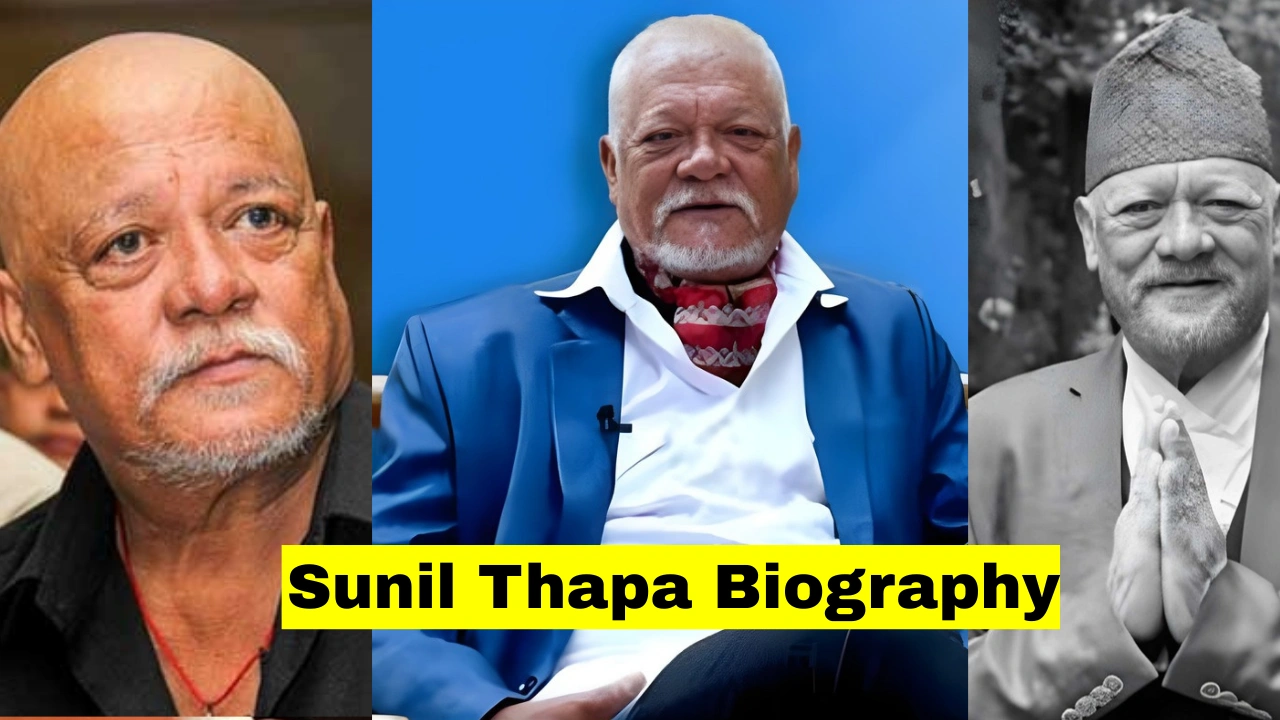
Sunil Thapa (Nepali: सुनील थापा) was a Nepalese actor born on May 19, 1960, in Dang, Nepal, who appeared in Nepali, Bollywood, and Bhojpuri films across a career spanning over four decades. He gained prominence for his villainous roles in Nepali cinema and earned the nickname “Raate Kaila” after his iconic character in the 1989 film “Chino,” becoming one of Nepal’s most recognized actors. Thapa won the Motion Pictures Award Nepal twice, served as chairman of Everest Film Academy, and received a Filmfare Award nomination for his role as coach M. Narjit Singh in the 2014 Bollywood film “Mary Kom”.
Sunil Thapa Wiki / Biography
| Attribute | Details |
| Full Name | Sunil Thapa (सुनील थापा) |
| Date of Birth | May 19, 1960 |
| Date of Death | February 6, 2026 |
| Age at Death | 65 years (some sources reported 68) |
| Place of Birth | Dang, Nepal |
| Place of Death | Norvic Hospital, Thapathali, Kathmandu, Nepal |
| Cause of Death | Cardiac arrest |
| Nationality | Nepalese |
| Occupation | Actor, Model, Footballer, Photojournalist |
| Years Active | 1974-2026 (52 years) |
| Famous As | “Raate Kaila” |
| Film Debut | Ek Duuje Ke Liye (1981) – Bollywood |
| Iconic Role | Raate Kaila in “Chino” (1989) |
| Languages Worked In | Nepali, Hindi, Bhojpuri, Tamil, Telugu |
| Total Films | Over 300 films |
| Notable Works | Chino (1989), Mary Kom (2014), Meri Bassai (TV), Prem Geet 3 (2022) |
| Awards | Motion Pictures Award Nepal (2 times), Filmfare Award nomination (2014) |
| Position | Chairman, Everest Film Academy |
| Modeling Career Start | 1974 with Binny’s and Mafatlal Fabrics |
| Football Career | ICL Club Bombay, Orkay’s Sports Club |
| Journalism | Photojournalist for JS Magazine, covered Bhutan Coronation (1974) |
| Spouse | Rajani Thapa |
| Education | Not publicly disclosed |
| Final Film | Mirai (2025) – Telugu |
Early Life and Background
Sunil Thapa was born on May 19, 1960, in Dang, Nepal. Some sources list his birth year as 1957, though official records indicate 1960. Details about his parents, siblings, and early childhood in Dang are not publicly disclosed.
Thapa moved to Mumbai (then Bombay) during his teenage years to pursue opportunities in modeling and entertainment. This relocation marked the beginning of his journey into the entertainment industry. His early years in Mumbai exposed him to diverse professional opportunities beyond acting.
Sunil Thapa Age
Sunil Thapa was 65 years old at the time of his death on February 6, 2026. Born on May 19, 1960, he had recently celebrated his birthday nine months before his passing. Some reports indicated he was 68 years old, based on the alternative birth year of 1957.
Education
Specific details about Sunil Thapa’s formal education, including schools attended and academic qualifications, are not publicly disclosed. His professional training appears to have come primarily through practical experience in modeling, sports, and the entertainment industry. The transition from Nepal to Mumbai during his youth suggests his education may have been interrupted or completed informally.
Early Career in Modeling and Sports
Sunil Thapa started his modeling career in 1974 in Mumbai with major brands including Binny’s and Mafatlal Fabrics. He was only 14 years old when he began this professional work. His modeling success provided entry into Mumbai’s entertainment circles.
Thapa was also involved in professional sports, playing football for ICL Club Bombay and Orkay’s Sports Club. His athletic abilities complemented his modeling career during this period. He demonstrated versatility across multiple professional domains from a young age.
Thapa worked as a photojournalist for JS Magazine (Junior Statesman). In this capacity, he covered the Bhutan Coronation in 1974, a prestigious international assignment. This journalism experience added another dimension to his diverse professional background before entering cinema.
Film Career Beginning
Sunil Thapa made his film debut in Bollywood with “Ek Duuje Ke Liye” in 1981. This romantic drama became a major commercial success and provided Thapa with his entry into cinema. The following year, he appeared in “Aaj Ki Awaaz” (1982) and the Nepali film “Mashaal” (1982), beginning his work in Nepali cinema.
Throughout the 1980s, Thapa appeared in multiple Hindi films including “Manav Hatya” (1986) as Police Constable Bajirao Kale, “Manu The Great” (1989), and “Albela” (1989). He also established himself in Nepali cinema with “Chino” (1989), the film that would define his career. His ability to work across different film industries demonstrated his linguistic and acting versatility.
Breakthrough with “Chino”
Sunil Thapa’s portrayal of Raate Kaila in the 1989 Nepali film “Chino” became his most iconic role. The character established him as a leading villain in Nepali cinema and earned him enduring popularity. “Chino” was one of the highest-grossing Nepali films at the time of its release.
The nickname “Raate Kaila” became synonymous with Thapa’s identity in Nepali media and among the public. He was frequently referred to by this character name even decades after the film’s release. This role demonstrated his ability to create memorable villainous characters that resonated with audiences.
Following “Chino,” Thapa became one of the most sought-after actors for antagonist roles in Nepali cinema. His performance set a standard for villain portrayals in the industry. The film’s success established him as an enigmatic figure in Nepali cinema.
Career in Nepali Cinema
Throughout the 1990s and 2000s, Sunil Thapa appeared in numerous Nepali films including “Deuki” (1991), “Prabhisha” (1994), “Thuldai” (1999), and “Aago” (2000). He starred in “Yo Maya Ko Sagar” (2000) as Pitambar and “Jetho Kancho” (2003) as Birkhe Saau. His versatility allowed him to portray various character types beyond villains.
In “Basanta Ritu” (2004), Thapa played Ranveer Singh, and in “Karma Yoodha” (2005), he portrayed Dharanidhar. He appeared in “Raghubir” (2007) as Birat and “Kanoon” (2008) as Mantri Satya Prakash. These diverse roles showcased his range as a character actor.
From 2006 to 2017, Thapa played Sher Singh Mama in the popular television series “Meri Bassai,” one of Nepal’s longest-running comedy shows. He also starred in “Dear Jindagi” (2019-present), continuing his television work. In 2022, he appeared in “Prem Geet 3,” one of his final Nepali films.
Work in Bollywood and Regional Cinema
Sunil Thapa gained renewed Bollywood recognition with his performance as coach M. Narjit Singh in “Mary Kom” (2014), starring Priyanka Chopra. The biographical sports drama about Olympic boxer Mary Kom became a commercial and critical success. For this role, Thapa received a Filmfare Award nomination for Best Actor in a Supporting Role.
He expanded into Tamil cinema with “10 Endrathukulla” (2015). Thapa also worked extensively in Bhojpuri cinema, appearing in films like “Sarkar Raj” (2017), “Border” (2018), “Nirahua Chalal London” (2019) as Vishabhar Singh, and “Sher-E-Hindustan” (2019). His final film was the Telugu movie “Mirai” (2025).
His work across Hindi, Nepali, Bhojpuri, Tamil, and Telugu cinema demonstrated remarkable linguistic ability and adaptability. Thapa appeared in over 300 films throughout his career. This prolific output made him one of Nepal’s most active actors in multiple film industries.
Awards and Recognition
Sunil Thapa won the Motion Pictures Award Nepal twice during his career, recognizing his contributions to Nepali cinema. These awards acknowledged his excellence in acting and impact on the industry. Specific years and categories for these awards are not publicly disclosed.
In 2014, Thapa received a Filmfare Award nomination for Best Actor in a Supporting Role for his performance in “Mary Kom”. This nomination represented recognition from one of Bollywood’s most prestigious award ceremonies. The nomination brought him renewed attention from Indian audiences.
Thapa served as chairman of Everest Film Academy, a position reflecting his stature and influence in Nepali cinema. His leadership role demonstrated the industry’s respect for his contributions beyond acting. Details about his tenure and specific initiatives as chairman are not extensively documented.
Sunil Thapa Death
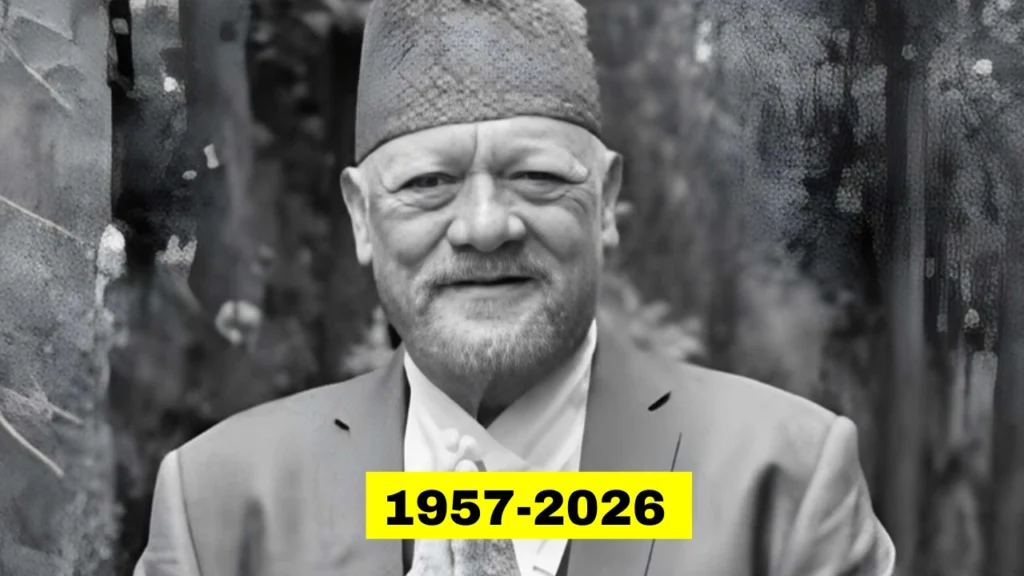
Sunil Thapa died on February 6, 2026, at Norvic Hospital in Thapathali, Kathmandu, Nepal. He was brought to the hospital unconscious on the morning of his death. An electrocardiogram (ECG) performed at 7:44 am confirmed he had passed away.
According to Rajendra Bahadur Singh, chairperson of Norvic Hospital, Thapa was already unconscious when he arrived at the facility. Medical staff immediately conducted an ECG, which confirmed his death. The cause of death was reported as cardiac arrest.
Thapa was 65 years old (or 68 according to some reports) at the time of his death. The news of his passing was reported by multiple Nepali and Indian media outlets. His sudden death shocked fans and colleagues across Nepal and India.
Sunil Thapa Legacy and Impact
Sunil Thapa’s career spanning over four decades made significant contributions to Nepali cinema. His portrayal of villainous characters, particularly Raate Kaila in “Chino,” created an enduring template for antagonist roles in Nepali films. Few actors achieved his level of recognition for negative roles while maintaining audience affection.
His versatility across Nepali, Hindi, Bhojpuri, Tamil, and Telugu films demonstrated the breadth of his talent. Thapa’s ability to work in multiple languages and film industries made him one of Nepal’s most internationally recognized actors. His role as a cultural ambassador bringing Nepali talent to Bollywood and regional Indian cinema paved the way for other Nepali actors.
As chairman of Everest Film Academy, Thapa contributed to developing Nepal’s film industry infrastructure. His leadership role influenced the next generation of Nepali filmmakers and actors. His death in 2026 marked the end of an era for Nepali cinema, with tributes pouring in from colleagues and fans across South Asia.

 was a Nepalese actor born on May 19, 1960, in Dang, Nepal, who appeared in Nepali, Bollywood, and Bhojpuri films.)