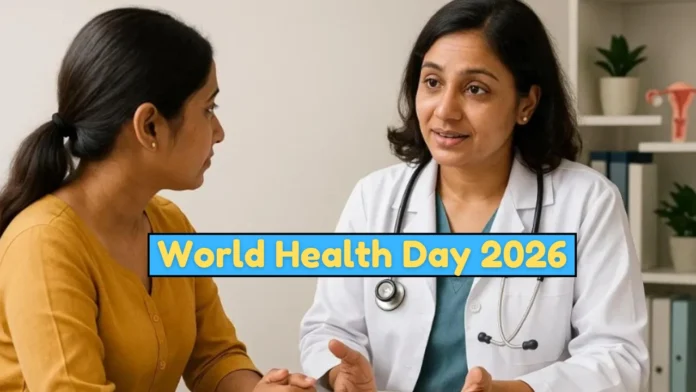
World Health Day 2026 falls on Wednesday, April 7, 2026, as it does every year on the anniversary of the founding of the World Health Organization (WHO), which was established on April 7, 1948. The annual observance serves as a global call to action, rallying member states, health institutions, NGOs, schools, businesses and individuals around a single health priority that WHO identifies as urgent for that year.
This year marks the 78th World Health Day, and the WHO has structured its global campaigns, ministerial briefings and public outreach programmes around the April 7 date across all six WHO regional offices worldwide.
What Is World Health Day and Who Established It?
World Health Day is an official global health awareness day designated by the World Health Organization and observed by all 194 WHO member states simultaneously. WHO established the observance at the First World Health Assembly in 1948, setting April 7 as the permanent date to coincide with the organisation’s founding anniversary.
Each year, WHO selects a specific global health theme to focus attention, resources and advocacy on a particular dimension of public health past themes have ranged from mental health, climate change and universal health coverage to maternal and child health, antimicrobial resistance and health equity.




The day provides a structured global moment for governments to announce health policy commitments, for healthcare professionals to raise community awareness and for media organisations to amplify health education content. WHO uses April 7 as the launch platform for flagship annual reports, policy briefs and public campaigns that carry through the remainder of the calendar year.
World Health Day 2026 Theme: What WHO Is Focusing On
Reports suggest the World Health Day 2026 theme builds on the momentum of 2025’s “Healthy Beginnings, Hopeful Futures” campaign, which focused on maternal and newborn health, by broadening the lens toward health system strengthening and equitable access to primary healthcare as the foundation for all other health outcomes. The WHO Secretariat has emphasised that access to basic, affordable health services at the primary care level remains the single most impactful intervention available for improving population-level health across low- and middle-income countries.
Not publicly disclosed as of March 26, 2026 is the final official campaign slogan, accompanying visual identity and full WHO action framework for the 2026 observance, which WHO typically finalises and publishes through its official website at who.int approximately three weeks before April 7.
WHO’s 2026 theme selection also aligns with the final year of its Thirteenth General Programme of Work 2019–2025 extension, making this observance a critical accountability moment for the triple billion targets one billion more people benefiting from universal health coverage, one billion more people better protected from health emergencies and one billion more people enjoying better health and well-being.
History and Significance of World Health Day
WHO chose April 7 deliberately to mark the founding moment of multilateral global health governance the day the international community formally committed to the principle that the “highest attainable standard of health is one of the fundamental rights of every human being,” as enshrined in the WHO Constitution. This founding principle makes World Health Day inherently political as well as scientific: it asserts that health is not a privilege determined by wealth or geography but a universal human right requiring collective institutional action.
Over seven decades, the observance has drawn attention to smallpox eradication, the AIDS epidemic, tobacco control, the global obesity crisis, mental health stigma and most recently, pandemic preparedness in the wake of COVID-19. Each theme has historically translated into measurable policy outcomes the 2023 mental health campaign, for example, contributed to increased mental health budget allocations in 27 member states within 18 months.
Why World Health Day 2026 Carries Particular Urgency
The 2026 observance arrives at a moment when global health faces a convergence of acute and structural pressures. WHO data shows that at least 4.5 billion people — more than half the world’s population still lack access to essential health services. Health financing gaps in low-income countries have widened following pandemic-related debt increases, forcing governments to reduce health budgets precisely when post-pandemic recovery demands more investment. Antimicrobial resistance now kills an estimated 1.27 million people annually, with projections suggesting this figure could reach 10 million per year by 2050 without coordinated global action.
Simultaneously, climate change is reshaping disease patterns at a pace that health systems were not designed to track. Vector-borne diseases such as dengue, malaria and Zika are spreading into previously unaffected geographies as temperatures rise, while extreme weather events destroy health infrastructure in vulnerable regions faster than it rebuilds. WHO has identified the intersection of climate and health as one of the defining challenges of this decade, and reports suggest the 2026 World Health Day campaign will carry a climate-health thread within its broader equity narrative.
How World Health Day 2026 Is Observed Around the World
Governments mark April 7 through health fairs, free medical camps, mass screening drives, policy announcements and ministerial press conferences. In India, the Ministry of Health and Family Welfare typically launches nationwide health awareness campaigns, with state governments organising community-level outreach across primary health centres and Ayushman Bharat Jan Arogya Kendra facilities. In 2025, India used World Health Day to announce expanded coverage under PM Jan Arogya Yojana and to report on the progress of the Ayushman Bhav programme.
Internationally, WHO headquarters in Geneva hosts a World Health Day symposium bringing together health ministers, global health researchers and civil society organisations, which live-streams across WHO’s digital platforms. Regional WHO offices in New Delhi (SEARO), Cairo (EMRO), Brazzaville (AFRO), Washington (PAHO), Manila (WPRO) and Copenhagen (EURO) simultaneously host regional events tailored to the health priorities of their member states. Educational institutions, hospitals, corporate health programmes and NGOs contribute through themed seminars, social media campaigns, marathon runs, blood donation drives and health screenings organised in the days immediately before and after April 7.
Key Facts at a Glance
| Category | Details |
| Date of World Health Day 2026 | Wednesday, April 7, 2026 |
| Founding Organisation | World Health Organization (WHO) |
| First Observance | April 7, 1948 |
| 2026 Edition | 78th World Health Day |
| 2025 Theme | Healthy Beginnings, Hopeful Futures |
| 2026 Theme | Reports suggest focus on health equity and primary care access |
| Official Website | who.int |
| WHO Member States | 194 countries |

)