

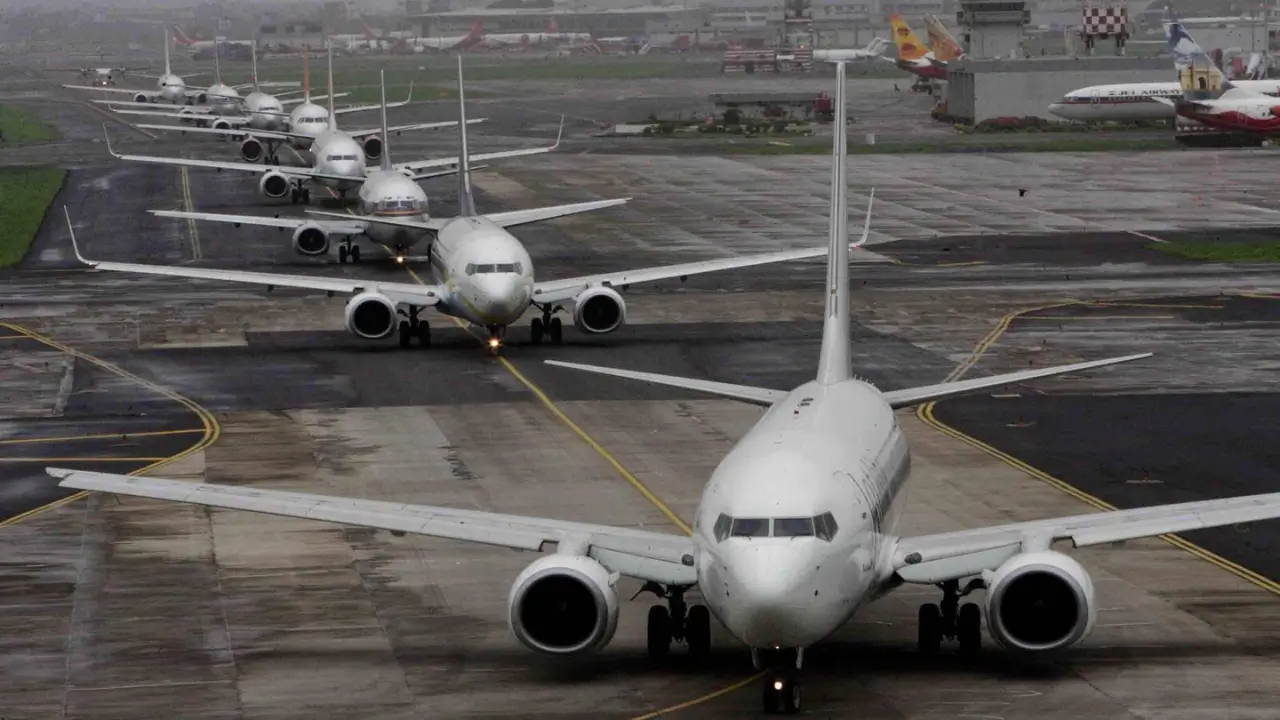
India’s West Asia airspace travel alert, issued by the Directorate General of Civil Aviation (DGCA) in the third week of March 2026, has placed nine volatile airspace jurisdictions off-limits for Indian commercial operators representing the most sweeping official aviation advisory from India’s civil aviation regulator in recent years.
The DGCA advisory, framed as a Notice to Airmen (NOTAM), instructs Air India, IndiGo, Air India Express, Akasa Air, and all other DGCA-licensed carriers to avoid flight paths over or through the designated restricted zones until the regulator issues a formal clearance based on assessments from ICAO, Eurocontrol, and India’s own intelligence inputs.
The advisory directly affects hundreds of India-bound and India-originating flights that previously used West Asian corridors particularly routes connecting major Indian cities with London, Frankfurt, Paris, Amsterdam, New York, and Toronto.
The Nine Airspaces Indian Airlines Must Avoid
The DGCA advisory designates the following nine airspaces as restricted for Indian commercial aviation operations:
| Country | FIR / Airspace Region | Status |
| Iran | Tehran FIR | Fully restricted |
| Iraq | Baghdad FIR | Fully restricted |
| Qatar | Doha FIR | Fully restricted |
| Lebanon | Beirut FIR | Fully restricted |
| Syria | Damascus FIR | Fully restricted |
| Kuwait | Kuwait FIR | Fully restricted |
| Bahrain | Bahrain FIR | Fully restricted |
| Jordan | Amman FIR | Restricted / Avoid |
| Yemen | Sanaa FIR | Fully restricted |
The DGCA noted that airspace conditions across all nine regions carry an elevated risk profile based on current military activity, live NOTAM warnings from regional air navigation service providers, and co-ordinated advisories from Eurocontrol, the FAA, and peer regulators including the UK Civil Aviation Authority and Germany’s Luftfahrt-Bundesamt.
Why These Nine Airspaces Are Dangerous Right Now
The closure of Qatari airspace in late February 2026 which triggered Qatar Airways’ suspension of scheduled operations and the stranding of over 8,000 passengers set off a chain reaction across the region’s interconnected flight corridors. Several of the nine restricted airspaces now listed by the DGCA involve active armed conflict zones, live surface-to-air missile activity, or military exercises that place commercial aircraft at risk of interception or collision with non-civilian aerial objects.
The DGCA’s advisory specifically references that navigation through these corridors cannot currently be considered safe for civilian operations without real-time military deconfliction guarantees that regional authorities have not yet provided.
Impact on Air India and IndiGo Routes
Air India and IndiGo together operate the majority of Indian international long-haul and Gulf-sector routes that previously used West Asian airspace corridors. Air India’s London, Frankfurt, Paris, Amsterdam, New York JFK, and Toronto routes typically transit Iranian and Iraqi airspace the airline must now reroute all such services through Central Asian corridors over Kazakhstan, Uzbekistan, and Turkmenistan or southerly oceanic paths, adding significant fuel costs and flight time.
IndiGo’s Gulf network which includes Doha, Dubai, Abu Dhabi, Riyadh, Jeddah, Kuwait, and Bahrain faces the most immediate disruption since the affected airspaces directly enclose multiple destination airports.
Reports suggest Air India has already activated contingency routing plans developed after earlier Iran-Iraq airspace closures in 2020, which pre-calculate alternate flight path options for every major international route through the region.
The Passenger Impact: Longer Flights and Higher Costs
Rerouting around nine restricted airspace zones adds between 60 and 150 minutes to affected flight durations depending on the origin, destination, and available corridor alternatives. For Indian carriers, longer routing means burning more jet fuel translating directly into higher operating costs per flight that airlines may pass on to passengers through fare surcharges on affected routes.
Reports suggest that Air India filed operational cost impact projections with the DGCA within 48 hours of the advisory’s issuance, seeking guidance on whether temporary emergency fuel surcharges would be approved by the regulator for affected international routes. Not publicly disclosed is the DGCA’s response to that request as of March 20, 2026.
How DGCA Is Coordinating With Global Regulators
The DGCA advisory places India alongside a growing list of regulatory bodies that have issued concurrent West Asia airspace warnings. The European Union Aviation Safety Agency (EASA) issued its own advisory in early March 2026 covering the same nine airspace zones — a development that forced Lufthansa Group, Air France-KLM, and British Airways to execute identical rerouting decisions days before India’s own directive.
The FAA’s Notice to Air Missions covering Iranian, Iraqi, and Yemeni airspace has remained in effect since February 2026, with the agency citing risks including military NOTAM activity, GPS jamming reported in multiple FIR boundaries, and inconsistent communication protocols from regional ATC providers during heightened alert periods.
The DGCA is in active communication with ICAO’s regional office in Bangkok, which serves as the coordinating body for Asian carriers navigating around the restricted FIR zones. ICAO has published revised contingency route charts for India-Europe traffic flows that route through the Almaty FIR (Kazakhstan), Tashkent FIR (Uzbekistan), and Moscow FIR (Russia) though the Russia routing remains subject to bilateral clearance requirements that individual airlines must manage separately.
What Passengers Should Do Before Travelling
All passengers with confirmed bookings on Indian carriers to or from Gulf destinations, European cities, or North American routes that transit West Asian airspace should take the following steps immediately:
- Check your flight status directly on your airline’s app or website using your booking reference rerouting changes sometimes require updated departure times
- Allow additional buffer time at the airport contingency routing adjustments can alter check-in windows on some Air India and IndiGo international services
- Do not cancel proactively affected airlines have filed force majeure provisions with DGCA, meaning flight changes triggered by the advisory qualify for free rebooking or full refunds under standard passenger rights guidelines
- Monitor your registered email and SMS Air India and IndiGo are sending proactive passenger notifications to all affected booking holders as route changes are confirmed
Passengers travelling on codeshare tickets involving Qatar Airways, Turkish Airlines, Lufthansa, or other Gulf carriers who have independently suspended or restricted operations face additional complexity they should contact both their ticketing airline and operating airline to confirm rebooking options.
The Advisory’s Duration and Renewal Process
The DGCA’s current advisory covers operations through at least March 31, 2026 with a formal review scheduled before that date based on updated security assessments from Indian intelligence inputs, ICAO guidance, and direct consultation with the civil aviation authorities of the nine designated countries.
If conditions improve, the DGCA may lift restrictions on individual airspaces for instance, restoring Iraq FIR access before Iranian or Qatari airspace rather than issuing a blanket clearance for all nine zones simultaneously. Not publicly disclosed is the specific criteria the DGCA will use to determine whether any individual restricted airspace meets the safety threshold required for reinstatement to Indian carrier routing.