

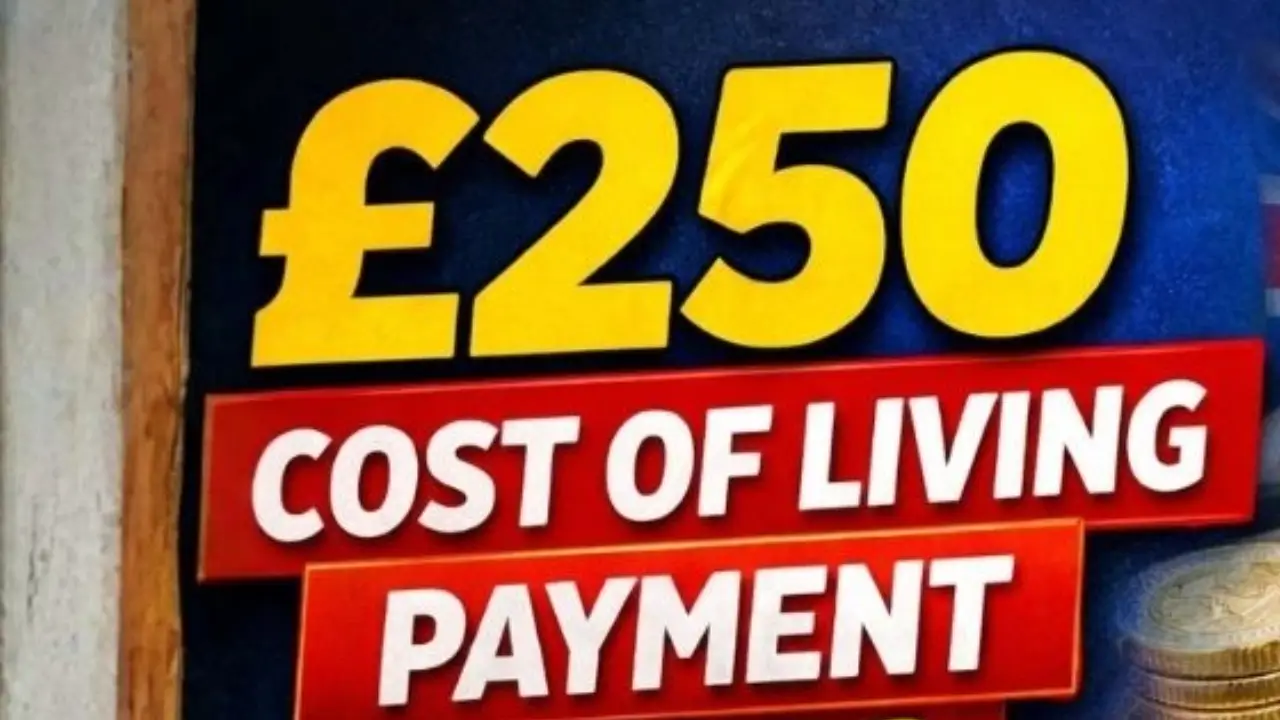
The UK £250 cost of living support 2026 claim has spread rapidly across Facebook groups, WhatsApp forwards and third-party websites in early 2026 but no confirmed, verified government announcement backs the specific figure of £250 as a universal payment to all UK households.
The Department for Work and Pensions (DWP), HM Treasury and the official GOV.UK website have not published any press release, parliamentary announcement or benefit guidance confirming a blanket £250 payment to the general UK population in 2026.
The Labour government’s approach to cost of living support in 2025–26 shifted away from the universal one-off payments used by the previous Conservative administration in 2022–23 and toward targeted, means-tested support for the lowest-income households.
Where the £250 Claim Comes From
The £250 figure appears to originate from a combination of sources that, when taken out of context, create the impression of a new universal payment.
First, some local councils and devolved administrations distribute Household Support Fund grants amounts that vary by local authority but sometimes reach £150–£300 for eligible low-income households.
Second, the Winter Fuel Payment, which was restricted in 2024 to only Pension Credit recipients, occasionally appears in social media posts stripped of its eligibility context.
Third, scam websites and social media accounts some of which use official-looking DWP branding have actively promoted fictional payment schemes to harvest personal information from users who click through to fake application forms.
Reports suggest Action Fraud received a significant increase in complaints related to fake DWP payment scams between January and March 2026, with fraudsters using the £250 figure specifically because it appears plausible against the backdrop of genuine past government support payments.
What Cost of Living Support Actually Exists in 2026
While a universal £250 payment does not exist, several genuine support mechanisms are operational in 2026:
Household Support Fund
The Household Support Fund originally launched in 2021 and extended multiple times continues to operate through local councils in England, giving councils discretion to distribute grants to vulnerable households facing financial hardship.
The amount available per household varies by local authority. Not publicly disclosed is whether the fund will receive further extension beyond its current allocation period. Scottish, Welsh and Northern Irish administrations run equivalent schemes through their own devolved frameworks.
Pension Credit and Related Top-Ups
Pensioners who claim Pension Credit receive the standard guarantee of £227.10 per week (single) or £346.60 per week (couple) from April 6, 2026.
Pension Credit recipients also unlock eligibility for Housing Benefit, Council Tax Reduction and for those aged 75 and over the free TV licence. Reports suggest over 800,000 eligible pensioners still do not claim Pension Credit, representing a significant pool of unclaimed support.
Warm Home Discount
The Warm Home Discount provides a £150 discount on electricity bills for eligible low-income households. Energy suppliers apply the discount directly to bills between October and March. Qualifying households primarily those receiving the Guarantee Credit element of Pension Credit receive the discount automatically without making a separate application.
Council Tax Support
Local councils continue to administer Council Tax Reduction schemes for low-income working-age adults and pensioners. Reduction amounts vary by council but can eliminate the Council Tax bill entirely for the lowest-income households.
How to Spot a Fake DWP Payment Claim
Scam posts promoting fictional government payments share recognisable warning signs:
- They ask you to click a link and enter your National Insurance number, bank details or date of birth to “claim” the payment
- They use unofficial-looking URLs that are not gov.uk addresses
- They set artificial urgency — “claim before [date] or lose your payment”
- They share screenshots of fake DWP letters or WhatsApp-style announcements with no official source link
- The payment amount is a round number (£150, £200, £250, £300) that conveniently matches past genuine schemes
The DWP’s official guidance is unambiguous: the government will never contact you by WhatsApp, Facebook or unsolicited SMS to offer a cost of living payment requiring you to click a link and enter personal details. All genuine DWP payments credit automatically to the bank account registered with DWP or HMRC no separate application or link click is required.
What to Do If You Received a Suspicious Message
If you received a message claiming you are entitled to a £250 cost of living payment and asking for personal details, take these steps immediately:
- Do not click any links in the message
- Do not enter any personal information on any website reached through the message
- Report the scam text by forwarding it to 7726 (free from all major UK networks)
- Report scam emails to report@phishing.gov.uk
- Report to Action Fraud at actionfraud.police.uk or by calling 0300 123 2040 if you already shared personal or financial details
If you shared bank details through a fraudulent link, contact your bank immediately using the number on the back of your card and request a fraud review of your account.
Legitimate Support Available Right Now
If you are struggling with household costs in 2026, these verified channels offer real help:
| Support Type | Who Qualifies | How to Access |
| Pension Credit | Pensioners on low income | gov.uk/pension-credit or 0800 99 1234 |
| Household Support Fund | Low-income households | Contact your local council directly |
| Warm Home Discount | Pension Credit recipients | Automatic — or check gov.uk/warm-home-discount |
| Council Tax Reduction | Low-income households | Apply through your local council |
| Universal Credit | Working-age low-income | gov.uk/universal-credit |
| Free School Meals | Families on qualifying benefits | Apply through your child’s school |