

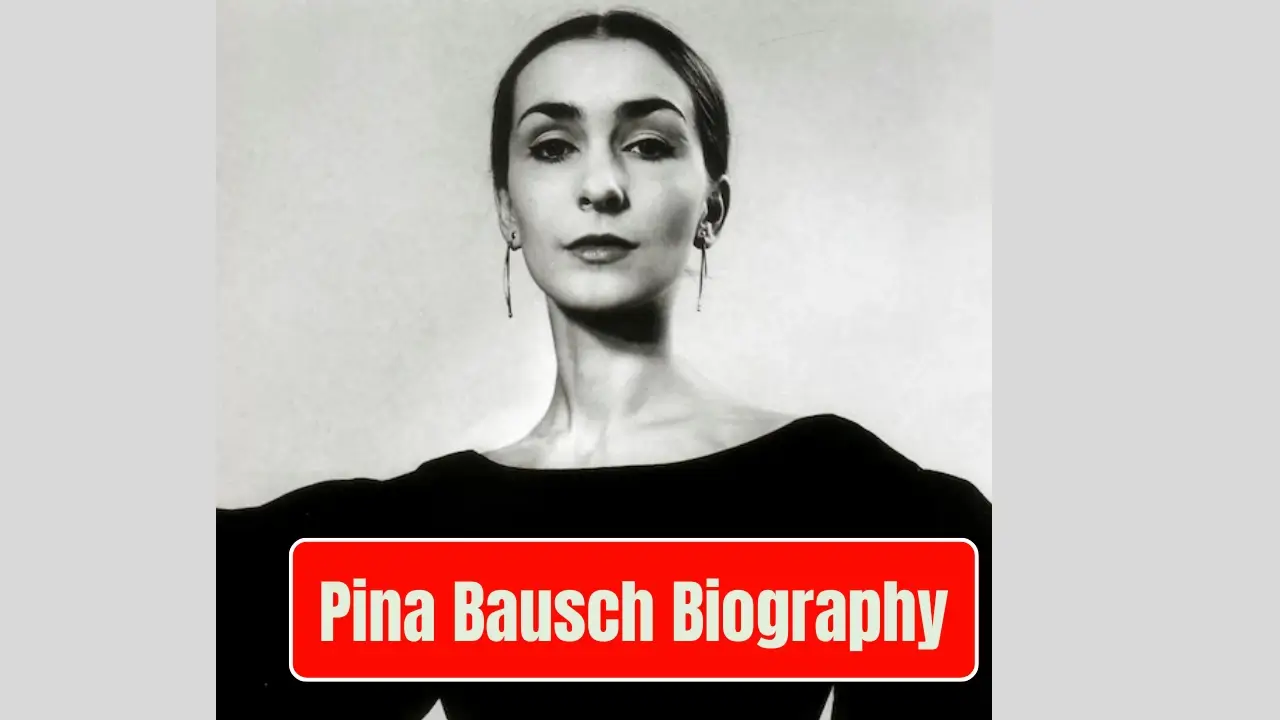
This Pina Bausch Biography explores the life and groundbreaking career of Philippine “Pina” Bausch, a German dancer and choreographer who completely changed the world of modern dance. She is known for creating a powerful, expressive style called Tanztheater (Dance Theater), which blends movement, emotion, and everyday life in a new way.
Pina Bausch Biography / Wiki
Philippine “Pina” Bausch was a German dancer and choreographer whose work fundamentally reshaped modern dance and performance art. Born on July 27, 1940, in Solingen, Germany, and passing away on June 30, 2009, in Wuppertal, she became one of the most influential artistic figures of the twentieth century. Bausch is internationally celebrated as the creator of Tanztheater (Dance Theatre), a revolutionary performance form that fused movement, speech, music, and theatrical imagery to explore real human emotions and everyday experiences.
Rather than treating dance as an abstract or decorative art, Bausch used it as a powerful medium for examining love, fear, isolation, violence, tenderness, and human connection. Her work earned worldwide acclaim, numerous prestigious awards, and a lasting legacy that continues to influence dance, theatre, film, and performance art.
| Full Name | Philippine Bausch |
| Born | July 27, 1940 |
| Died | June 30, 2009 (Aged 68) |
| Birthplace | Solingen, Germany |
| Known For | Creator of Tanztheater (Dance Theater) |
| Key Company | Tanztheater Wuppertal Pina Bausch |
| Famous Quote | “Dance, dance, otherwise we are lost.” |
| Notable Film | Pina (2011, directed by Wim Wenders) |
Early Life & Education
Pina Bausch was born into a working family during the early years of World War II. Her parents, August and Anita Bausch, owned and operated a small hotel and restaurant in Solingen. As a child, she spent long hours observing guests from beneath the tables in the dining room, quietly watching their gestures, conversations, and emotional interactions. This early habit of close observation deeply shaped her artistic vision and later became a direct source of inspiration for works such as Café Müller.
From a young age, Bausch showed an instinctive connection to movement. She performed in local children’s ballet productions before beginning formal dance training. At just fourteen years old, she enrolled at the Folkwang School in Essen, an institution known for its progressive approach to the arts. There, she studied under Kurt Jooss, a leading figure of German expressive dance (Ausdruckstanz).
Jooss trained her not only in technique but also in a philosophy that emphasized emotional honesty, clarity of intention, and social awareness. His belief that dance should reflect real life rather than idealized beauty became a cornerstone of Bausch’s artistic identity. Her exceptional promise was recognized early through awards and performance opportunities.
Education and Artistic Expansion in New York
In 1960, Bausch received a scholarship to study in New York City at the Juilliard School. This period marked a crucial expansion of her artistic outlook. At Juilliard, she trained with major figures of American modern dance, including Antony Tudor and José Limón, and encountered the legacy of Martha Graham’s expressive movement style.
While in New York, Bausch also gained professional experience performing with Antony Tudor’s New American Ballet and dancing at the Metropolitan Opera. Exposure to both classical ballet and experimental modern dance broadened her understanding of performance and deepened her interest in blending movement with dramatic expression. The artistic freedom and diversity of New York strongly influenced the direction her later work would take.
Return to Germany and the Move Toward Choreography
In 1962, Bausch returned to Germany at the invitation of Kurt Jooss and joined the Folkwang Ballet (later Folkwang Tanzstudio). Initially performing as a soloist, she soon began assisting with choreography and developing her own creative voice. This period marked her gradual departure from traditional ballet structures and her growing interest in theatrical storytelling.
As the company required new repertoire, Bausch created her first independent choreographic works, which quickly gained attention for their emotional depth and unconventional structure. Her talent was recognized at international choreographic competitions, and by the end of the 1960s, she was appointed artistic director of the Folkwang Tanzstudio—an extraordinary achievement at a young age.
Tanztheater Wuppertal and Artistic Breakthrough
Bausch’s career reached a turning point in 1973 when she was appointed director of the Wuppertal Opera Ballet. One of her first actions was to rename the company Tanztheater Wuppertal, signaling a radical shift in artistic direction. The change marked the birth of the form that would become inseparably associated with her name.
Tanztheater rejected the idea that dance should focus solely on flawless technique or visual beauty. Instead, Bausch placed human emotion at the center of performance. Her productions combined dance with spoken text, singing, repetition, everyday gestures, and striking stage environments. Sets often included unexpected materials such as soil, water, flowers, or walls of carnations, transforming the stage into a living emotional landscape.
Although early audiences—especially in Germany—were often shocked or critical, international recognition followed quickly. Tanztheater Wuppertal became one of the most influential touring companies in the world.
Major Works and Artistic Style
Among Bausch’s most iconic works is The Rite of Spring (1975), set to Igor Stravinsky’s music and performed on a stage covered in dark earth. The piece confronts themes of ritual, violence, and sacrifice with raw physical intensity and remains one of the most powerful interpretations of the score ever created.
Café Müller (1978) stands as one of her most personal and widely recognized works. Drawing from childhood memories of her parents’ café, the piece depicts dancers moving blindly through a crowded space of tables and chairs, colliding, falling, and searching for connection. It explores loneliness, vulnerability, and the pain of failed relationships.
Another significant work, Kontakthof (1978), examines social behavior, desire, and awkward attempts at intimacy. Its later restagings with elderly performers and teenagers highlighted the universality of human longing across generations.
Across her body of work—more than forty major productions—Bausch consistently explored the emotional realities of human life, combining disciplined movement with gestures drawn from everyday experience.
Collaborative Method and Creative Philosophy
Bausch transformed the choreographic process itself. Rather than prescribing steps, she asked dancers deeply personal questions about their memories, fears, desires, and relationships. Their responses—expressed through movement, speech, or stillness—became the foundation of her works.
She famously stated that she was “not interested in how people move, but in what moves them.” Rehearsals were long and demanding, requiring emotional openness, trust, and vulnerability. Through careful selection and structuring, Bausch shaped this raw material into cohesive theatrical compositions that felt deeply authentic.
Influence Beyond Dance and Recognition
Bausch’s influence extended well beyond the dance world. Her work inspired theatre directors, filmmakers, and visual artists, and she herself appeared in Federico Fellini’s film And the Ship Sails On (1983). Her choreography also played a key role in Pedro Almodóvar’s Talk to Her (2002), introducing her work to new audiences.
Despite early controversy, she received numerous international honors, including major European and global arts prizes. These awards recognized not only individual works but her creation of an entirely new genre of performance.
Death and Continuing Legacy
Pina Bausch died in 2009 at the age of 68, only days after being diagnosed with cancer. Her sudden death shocked the international arts community. Tributes came from across the world, acknowledging her unparalleled contribution to contemporary culture.
In 2011, filmmaker Wim Wenders released the documentary Pina, a visually striking tribute that introduced her work to a global audience and reinforced her lasting impact. Tanztheater Wuppertal continues to perform her repertoire, preserving her artistic vision for future generations.
Bausch’s belief that movement is essential to understanding life—captured in her well-known words, “Dance, dance, otherwise we are lost”—remains central to her legacy. Through emotional honesty, fearless experimentation, and a deep commitment to human truth, Pina Bausch secured her place as one of the most important and transformative artists of modern performance.
Also Read: Guru Tegh Bahadur Biography – The Ninth Sikh Guru