

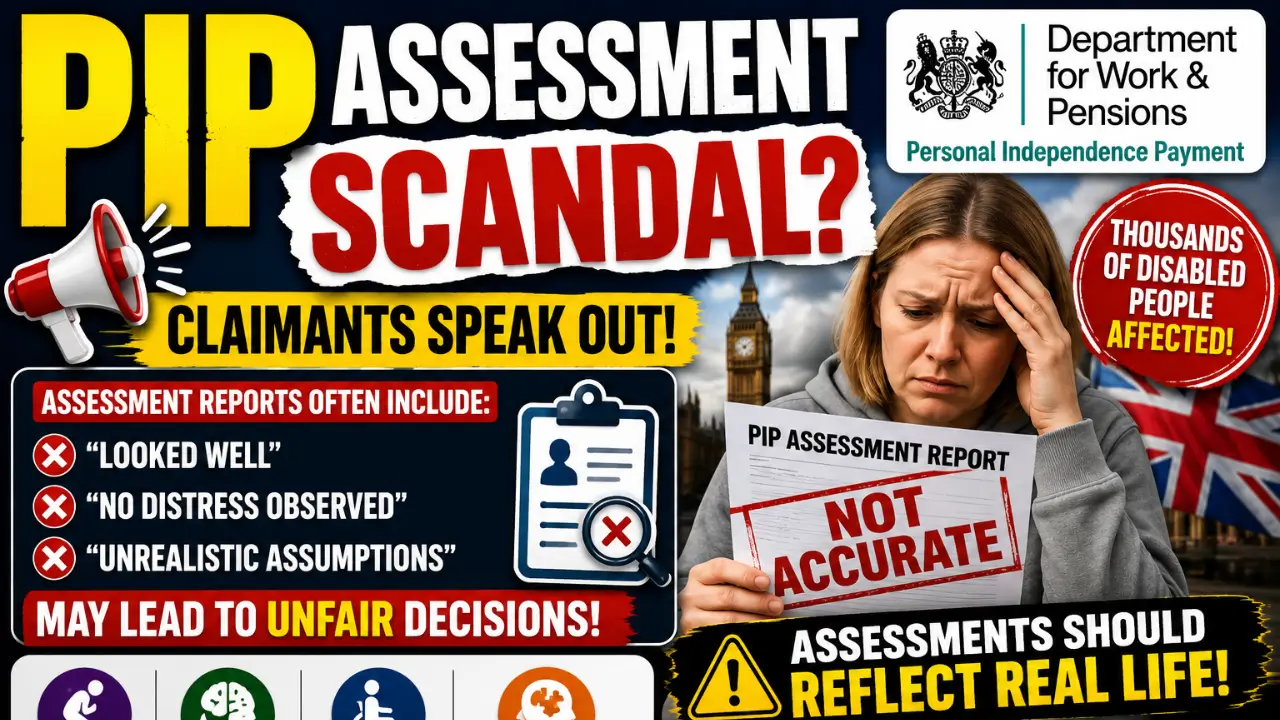
The UK’s Personal Independence Payment (PIP) assessment system is facing growing scrutiny as many disabled claimants continue reporting assessment reports they believe contain inaccurate observations, misleading conclusions, or findings that do not reflect their daily living difficulties.
In many disputed cases, claimants say reports include repeated phrases such as “looked well”, “no distress observed”, or assumptions about mobility and independence that they believe unfairly influenced the final decision.
The issue has become a major source of frustration for some claimants, particularly those living with hidden disabilities, chronic pain, fluctuating illnesses, mental health conditions, and neurological disorders.
Common Assessment Phrases Frequently Challenged
Many claimants and disability support groups have highlighted concerns about recurring observations appearing in assessment reports, including:
- “The claimant appeared well-groomed”
- “No visible signs of distress”
- “Maintained good eye contact”
- “Walked normally into the assessment room”
- “Engaged well during conversation”
- “Used a mobile phone independently”
Claimants argue that these brief observations are sometimes used to draw wider conclusions about a person’s ability to manage daily living or mobility activities, despite the limited duration of the assessment.
Also Read: British Gas vs Octopus Energy 2026 – New Fixed Tariff Deals Spark Battle for UK Energy Customers
Why Claimants Dispute These Observations
PIP is intended to assess how a condition affects someone’s ability to function over time, rather than focusing solely on diagnosis or appearance during an appointment.
Critics of the current assessment process argue that short observations may not fully capture:
- Hidden disabilities
- Severe fatigue
- Chronic pain
- Fluctuating conditions
- Mental health difficulties
- Autism and neurodivergent masking behaviours
- Post-activity exhaustion after attending appointments
A claimant may appear calm or composed during an assessment while still struggling significantly with day-to-day tasks outside the appointment environment.
Tribunal Appeals Continue to Raise Questions
Official tribunal statistics continue to show that a large proportion of PIP appeals are overturned in favour of claimants after independent review.
Appeal tribunals often consider:
- Medical evidence
- GP and consultant reports
- Daily living impact
- Whether the correct descriptors were applied
- Consistency within assessment reports
In some cases, tribunal panels identify contradictions between assessment observations and supporting medical evidence submitted by claimants.
Claimant Experiences and Complaints
Some claimants report being surprised by statements included in assessment reports after requesting copies from the Department for Work and Pensions (DWP).
Common complaints raised by claimants include:
- Reports allegedly overstating mobility ability
- Observations based on a few minutes of interaction
- Missing details about pain, fatigue, or panic attacks
- Assumptions that attending an assessment means full independence
- Limited recognition of fluctuating symptoms
However, the DWP maintains that PIP assessments are designed to evaluate how health conditions affect daily functioning and that assessors follow official guidance during the decision-making process.
Also Read: UK Interest Rate Update 2026: What the Bank of England’s Latest Decision Means for Borrowers
What You Can Do If You Believe Your PIP Report Is Wrong
If you believe your assessment report does not accurately reflect your condition or support needs, there are steps you can take.
1. Request a Copy of the Assessment Report
Claimants can contact the DWP and request a copy of the assessor’s report, commonly referred to as the PA4.
2. Review the Report Carefully
Check whether the report accurately reflects:
- Your statements during the assessment
- Medical evidence submitted
- Daily living difficulties
- Mobility limitations
- Help or supervision you require
3. Request a Mandatory Reconsideration
If you disagree with the decision, you can ask the DWP for a Mandatory Reconsideration (MR), explaining:
- Which findings you disagree with
- Why you believe the decision is incorrect
- What evidence supports your case
4. Gather Supporting Evidence
Helpful supporting evidence may include:
- GP letters
- Consultant reports
- Occupational therapy assessments
- Care plans
- Statements from carers or family members
5. Appeal to an Independent Tribunal
If the Mandatory Reconsideration is unsuccessful, claimants have the right to appeal to an independent tribunal.
Many claimants receive revised decisions at tribunal stage after additional evidence is reviewed.
Ongoing Debate Around PIP Assessments
Disability charities, campaigners, and support organisations continue calling for reforms to the PIP assessment process, including:
- Better assessor training
- Greater understanding of hidden disabilities
- Reduced reliance on informal observations
- Improved consistency in reports
- Stronger consideration of medical evidence
The wider debate over fairness, transparency, and accuracy in disability benefit assessments continues across the UK.
Also Read: Most UK Pensioners Overpay Tax — Here Are 6 Legal Ways to Stop HMRC!