

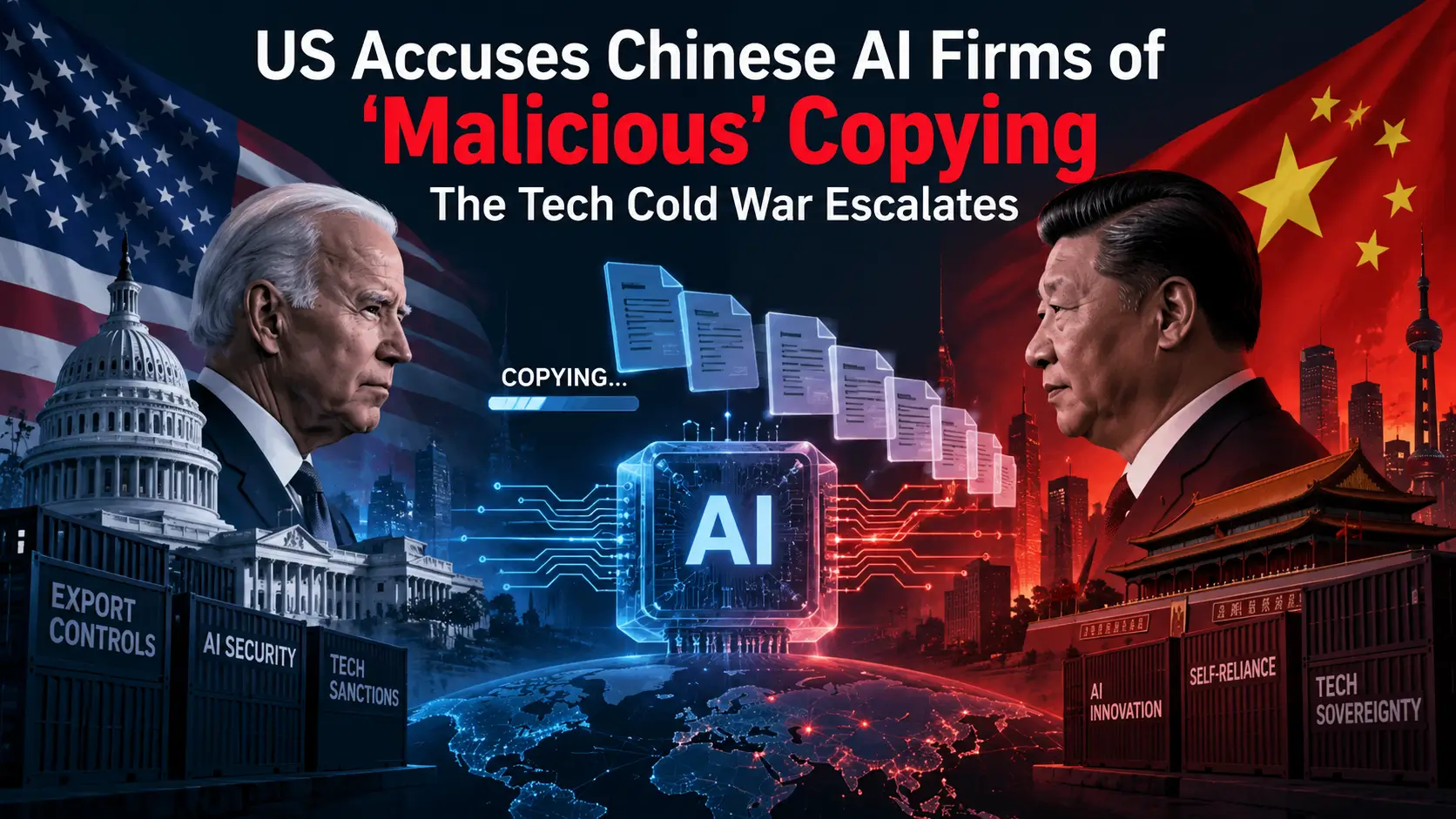
The global race for artificial intelligence dominance has taken a sharp geopolitical turn, with the United States formally accusing several Chinese AI firms of engaging in “malicious” copying of American AI technology. This unprecedented escalation in US-China tech tensions represents more than just competitive rivalry—it signals a fundamental shift in how nations approach technological sovereignty, intellectual property, and the future of innovation.
At the heart of the dispute are allegations of “industrial-scale campaigns” by foreign actors, specifically Chinese companies, to steal advances in AI technology through sophisticated methods including model distillation and unauthorized data extraction.
These accusations come at a critical juncture as both nations vie for leadership in what many consider the defining technology of the 21st century.
This comprehensive analysis examines the specific allegations, the companies involved, China’s response, and the far-reaching implications for global technological development, international relations, and the future of AI innovation.
Overview of the Accusations
The Core Allegations
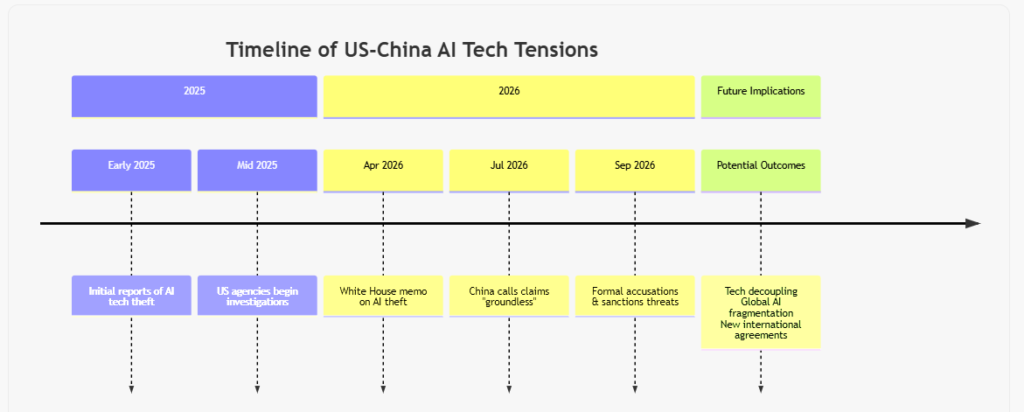
The United States government has formally accused multiple Chinese AI firms of engaging in coordinated campaigns to steal American AI technology through methods characterized as “malicious” and “industrial-scale” in nature. These accusations, outlined in a White House memorandum and subsequent statements from various agencies, represent the most direct confrontation yet in the ongoing tech tensions between the two superpowers.
Specific Companies Targeted
While the full list remains classified, intelligence reports and media investigations have identified several prominent Chinese AI firms allegedly involved in these activities.
- DeepSeek: A Chinese AI company specializing in advanced language models and AI applications
- 01.AI: A leading Chinese AI firm focused on multimodal AI systems
- Other Chinese AI companies: Multiple organizations across various sectors of AI development
Methods of Alleged Theft
The accusations describe several sophisticated methods employed to steal AI technology:
- Model Distillation: A technique where smaller, efficient models are trained to mimic the behavior of larger, more powerful AI systems.
- Data Extraction: Unauthorized collection of training data and model parameters through various means
- Cyber Intrusions: Targeted attacks on American AI companies and research institutions
- Talent Acquisition: Aggressive recruitment of AI researchers with access to proprietary information
Technical Analysis: How the Alleged Theft Occurs
Understanding Model Distillation
Model distillation represents the most concerning method mentioned in the accusations. This process involves:
Comparison of AI Development Approaches
| Aspect | Traditional Development | Alleged Stolen Methods |
|---|---|---|
| Time Required | Years of research and development | Weeks to months |
| Cost Investment | Millions in R&D funding | Minimal investment |
| Data Requirements | Massive proprietary datasets | Extracted model knowledge |
| Innovation Level | Novel architectures and approaches | Replication of existing work |
The Scale of the Problem
Intelligence assessments suggest these operations are “industrial-scale” in nature, involving:
- Hundreds of researchers and operatives
- Millions of dollars in stolen R&D value
- Multiple attack vectors and methodologies
- State sponsorship or protection (according to U.S. officials)
🇺🇸 The US Response and Strategic Implications
Official Government Reactions
The United States government has responded to these allegations through multiple channels:
- White House Memorandum: A formal document outlining the threats and proposing countermeasures bbc
- Agency Investigations: Coordinated efforts by the FBI, Department of Commerce, and intelligence agencies
- Sanctions Considerations: Potential economic penalties and technology restrictions
- Diplomatic Protests: Formal complaints through official channels
Strategic Concerns for US AI Leadership
These accusations reflect deeper strategic concerns about maintaining American technological competitiveness:
💡 Critical Insight: The U.S. views AI leadership as essential to economic prosperity, military advantage, and geopolitical influence. The theft of AI technology represents not just economic loss but a direct threat to national security and strategic positioning.
Potential Countermeasures
The United States is reportedly considering several responses:
- Technology Restrictions: Further limits on AI technology exports to China
- Sanctions: Targeted penalties against Chinese companies and individuals
- Research Security: Enhanced protections for American AI research
- International Coalition: Building alliances with other nations concerned about tech theft
China’s Rebuttal and Counter-Accusations
Official Response from Beijing
The Chinese government has firmly rejected these accusations, characterizing them as “groundless” and part of a broader “smear campaign” against Chinese technological advancement.
A government spokesperson told NBC News that the allegations were an “unfounded ‘smear’ resulting from prejudice”
China’s Foreign Ministry has consistently maintained that:
China is a “victim” rather than a perpetrator of tech theft
The accusations lack “concrete evidence”
They represent an attempt to “suppress Chinese technological development”
The U.S. is attempting to establish a “monopoly of the AI industry”
China’s Counter-Narrative
Chinese officials and state media have advanced alternative explanations:
- Legitimate Technology Transfer: Claims that cooperation is mutually beneficial
- Innovation Denial: Suggestions that U.S. companies are trying to avoid competition
- Historical Context: References to past technology transfer agreements
- Development Rights: Emphasizing China’s right to technological advancement
Global Implications and Industry Response
Impact on International AI Research
These tensions are already affecting global AI development:
- Chilling Effect on Collaboration: International research partnerships may be restricted
- Fragmentation of Standards: Potential development of separate AI ecosystems
- Technology Decoupling: Gradual separation of US and Chinese tech sectors
- Innovation Slowdown: Reduced knowledge sharing could hamper progress
Industry Reactions and Adaptations
Major AI companies and research institutions are responding to these new challenges:
- Enhanced Security: Implementing stricter protections for research and data
- Diversified Operations: Reducing exposure to single-country dependencies
- Geopolitical Risk Analysis: Increased consideration of international relations in business decisions
- Lobbying Efforts: Seeking government protections and clear guidelines
Legal and Ethical Dimensions
Intellectual Property Considerations
The accusations raise complex legal questions about AI development:
- Nature of AI IP: How traditional intellectual property applies to AI models
- Training Data Rights: Ownership and usage rights of training data
- International Enforcement: Challenges of prosecuting cross-border tech theft
- Open Source Complexity: Ambiguities around open source AI models
Ethical Concerns in AI Development
Beyond the legal aspects, these allegations highlight ethical issues:
- Fair Competition: Ensuring equitable access to AI advancements
- Global Benefits: Balancing national interests with global progress
- Research Integrity: Maintaining ethical standards in AI research
- Dual-Use Technologies: Managing technologies with military and civilian applications
Future Trajectories and Potential Outcomes
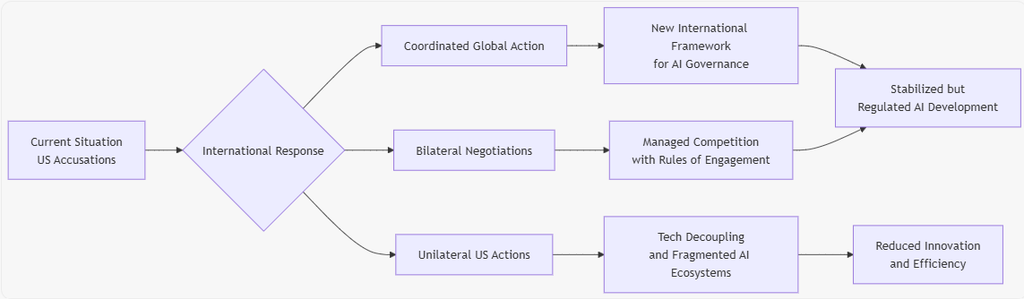
Scenario Analysis: Where This Might Lead
Predictions for the AI Landscape
Based on current trends, several developments appear likely:
- Increased Scrutiny: More intense monitoring of international AI collaborations
- Technology Nationalism: Growing emphasis on domestic AI capabilities
- New Regulations: Enhanced government oversight of AI research and development
- Alternative Ecosystems: Development of separate Chinese and Western AI stacks
- Potential Conflict Points: Further escalations in tech tensions
Frequently Asked Questions
How significant is this accusation in the broader context of US-China relations?
This represents a major escalation in what many are calling the “Tech Cold War.” AI is considered a strategic technology essential for both economic competitiveness and military advantage. The accusations move beyond traditional trade disputes to directly challenge technological sovereignty and innovation models. Given AI’s transformative potential across industries, this dispute could shape global technological development for decades.
What specific evidence has the US presented to support these claims?
The U.S. has reportedly shared classified intelligence with allies detailing the methods and scale of the alleged theft. This includes cyberattack forensics, human intelligence from defectors, and pattern analysis of AI developments in China that show suspicious similarities to American research. However, full public disclosure of evidence is unlikely due to national security concerns and protection of intelligence sources and methods.
How might this affect everyday consumers and businesses using AI?
Consumers and businesses could experience several impacts:
Reduced Innovation: Slower AI advancement due to fragmented research efforts
Higher Costs: Less efficient development leading to more expensive AI solutions
Limited Compatibility: Difficulty integrating systems from different regions
Security Concerns: Increased scrutiny of AI technologies from certain countries
Regulatory Complexity: Navigating different AI governance frameworks
Are there historical parallels to this situation?
While AI-specific theft is new, there are parallels in:
Cold War Technology Races: Space race and military technology competition
Industrial Espionage: Traditional theft of industrial secrets
Nuclear Proliferation: Challenges of controlling dual-use technologies
However, AI presents unique challenges due to its software-based nature, rapid evolution, and broad applicability across all sectors of the economy and society.
Conclusion: Navigating the Future of Global AI Development
The US accusations of malicious AI copying represent a pivotal moment in the global technology landscape. What began as competitive rivalry has escalated into direct confrontation over technological sovereignty and the future of innovation. These developments occur against the backdrop of broader strategic competition between the United States and China for global influence in the 21st century.
The resolution of these tensions will likely shape:
- Global AI governance frameworks
- International research collaboration models
- Technology transfer and intellectual property regimes
- Geopolitical alliances and economic partnerships
As this situation continues to evolve, one thing becomes clear: the age of unrestricted global AI collaboration may be ending, giving way to a more fragmented, competitive, and nationally-focused approach to technological development. How nations navigate this transition will determine not only who leads in AI but how its benefits are distributed globally.