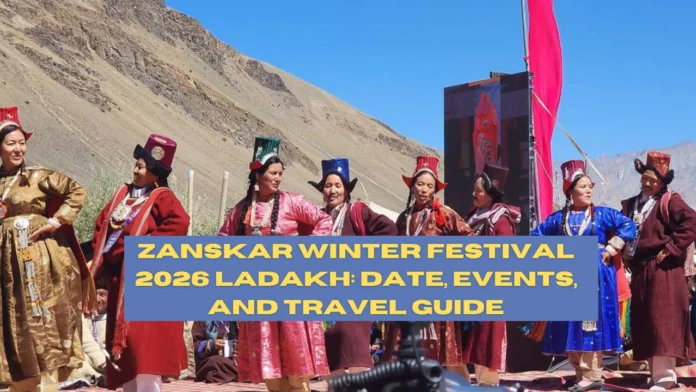
The Zanskar Winter Festival 2026 Ladakh was organised by the Ladakh Autonomous Hill Development Council (LAHDC) and the Ladakh Tourism Department as part of the administration’s push to extend tourism beyond the summer season, position Ladakh as a year-round destination and provide local artisans, performers and businesses with a significant winter revenue opportunity.
Held annually in the heart of winter typically the last week of January or first week of February the festival transforms the snow-locked Zanskar Valley into a vibrant showcase of Zanskari Buddhist culture, winter sports and traditional community life at altitudes exceeding 3,500 metres above sea level.
For 2026, reports suggest the festival ran across three days, maintaining the format established in recent editions that balance cultural programming with adventure activities and official government ceremonies.
Date and Venue of Zanskar Winter Festival 2026
The Zanskar Winter Festival 2026 was held at Padum, the administrative centre of Zanskar, situated approximately 470 kilometres from Leh in the Kargil district of Ladakh. Padum lies along the frozen Zanskar River, which serves not only as the festival’s scenic backdrop but also as a functional transportation route during winter, when road access to Zanskar is completely cut off by heavy snowfall.



Reports suggest the festival spanned three days in the last week of January 2026, with the exact date confirmed by the Ladakh Tourism Department through its official social media channels. The specific day-by-day schedule for 2026 is not publicly disclosed on centralised platforms, but local sources confirm all major events including the inaugural ceremony, cultural performances and sports competitions followed the established annual programme structure.
Festival Highlights: What Happens at Zanskar Winter Festival
The Zanskar Winter Festival packs multiple cultural and adventure activities into its three-day schedule:
Cham Dance (Masked Dance): Monks from Karsha Monastery, Stongdey Monastery and Zangla Monastery perform elaborate Cham traditional Tibetan Buddhist masked dances in elaborate silk costumes representing deities, protectors and historical figures from Buddhist iconography. These performances serve both a ritual function and a spectacular visual display for festival visitors, lasting several hours with complex choreography accompanied by long-horns, cymbals and drum rhythms.
Archery Competition: Traditional Zanskari archery contests draw local men and women who compete using hand-crafted bows in an event that has deep historical roots in Zanskar’s community culture. Winners receive government-sponsored prizes and community recognition.
Ice Polo: A signature Zanskar attraction, ice polo matches take place on the frozen surface of a nearby water body, combining equestrian skill with the extreme conditions of a high-altitude winter environment. This rare sporting spectacle draws photography enthusiasts and sports travelers specifically.
Chadar Trek Integration: The festival’s timing coincides with the operational window of the famous Chadar Trek the frozen-river ice trekking route along the Zanskar River gorge allowing adventure tourists to combine festival attendance with one of India’s most iconic winter treks. Trek operators in Leh typically offer combined festival-and-Chadar itineraries during the January–February window.
Local Craft Exhibition: Artisans from across Zanskar display and sell traditional products including handwoven Pashmina woollen garments, thangka paintings, wooden handicrafts, turquoise jewellery and local apricot oil products providing direct livelihood support to valley communities during the otherwise economically dormant winter months.
Local Cuisine Stalls: Festival food stalls serve authentic Zanskari winter dishes including Tsampa (roasted barley flour), Butter Tea (Gur Gur Chai), Skyu (a thick pasta and root vegetable stew), Chhurpe (dried yak cheese) and Zanskar’s local barley-based fermented drink giving visitors rare access to food traditions rarely encountered outside the valley.
How to Reach Zanskar in Winter for the Festival
Reaching Zanskar in winter requires advance planning and physical preparation. The road from Kargil to Padum (approximately 230 km) is typically snowbound and impassable by road from December through April. Two alternative access routes operate during the festival period:
By Air and Road to Leh then Helicopter: Fly to Leh’s Kushok Bakula Rimpochee Airport from Delhi, Srinagar, Chandigarh or Jammu. From Leh, the Ladakh administration occasionally operates helicopter services to Padum during the festival period, subject to weather clearance. Reports suggest helicopter seats are limited to 6–8 passengers per flight and should be booked well in advance through the LAHDC or authorised Leh travel operators.
Chadar Trek (On Foot): The most physically demanding but scenically unmatched route is the Chadar Trek itself — entering Zanskar on foot by trekking along the frozen river gorge from Chilling village (accessible from Leh by road) to Padum over 7–10 days. This option suits fit trekkers with prior high-altitude experience and requires guided arrangements through LAHDC-registered trek operators.
When the Road Opens: For those who prefer road travel, the Pensi La pass route (Kargil–Padum road) typically reopens in early May, outside the festival window.
Travel Essentials for Zanskar Winter Festival
Traveling to Zanskar in January–February demands serious cold-weather preparation. Temperatures in Padum regularly drop to -20°C to -30°C at night, and daytime highs rarely exceed -5°C during the festival period. Visitors must carry:
- Layered thermal clothing: Base layer (merino wool or synthetic), mid layer (fleece), outer layer (windproof and waterproof down jacket rated to -30°C)
- Footwear: Insulated boots rated for extreme cold; standard trekking boots are insufficient
- Altitude acclimatisation: Spend at least 2–3 days in Leh (3,500 m) before proceeding to Padum (3,657 m); Zanskar festival sites may sit higher
- Cash: ATMs do not function in Zanskar in winter; carry sufficient Indian rupee cash from Leh or Kargil
- Satellite or offline maps: Mobile networks are unavailable in Zanskar; download offline maps and carry a physical route guide
- Personal medications: Include altitude sickness medication (Diamox/Acetazolamide), pain relievers and a comprehensive first-aid kit
Accommodation in Padum during festival season is available through home stays hosted by local Zanskari families the most authentic and recommended option as well as a small number of government-run and private guesthouses.
Reports suggest accommodation fills quickly during the festival; bookings should complete at least 6–8 weeks in advance through Leh-based travel operators who manage the Zanskar circuit.
Why This Festival Matters for Zanskar Communities
Beyond tourism, the Zanskar Winter Festival carries significant economic and cultural importance for the valley’s estimated 18,000–20,000 permanent residents, who remain largely cut off from the outside world for five months each winter.
The festival generates direct income for homestay operators, local food vendors, artisans, monastery staff and transportation workers. It also provides young Zanskaris a platform to demonstrate their cultural heritage to a wider audience at a moment when rapid modernisation and seasonal out-migration present genuine challenges to the continuity of traditional Zanskari way of life.
The LAHDC’s investment in the festival also signals a broader Ladakh tourism strategy: extending the economic benefits of Ladakh’s summer tourism boom into the winter calendar by creating anchor events in Zanskar, Nubra and the Changthang plateau that give travelers compelling reasons to visit during the off-season.

 and Ladakh Tourism Department)