

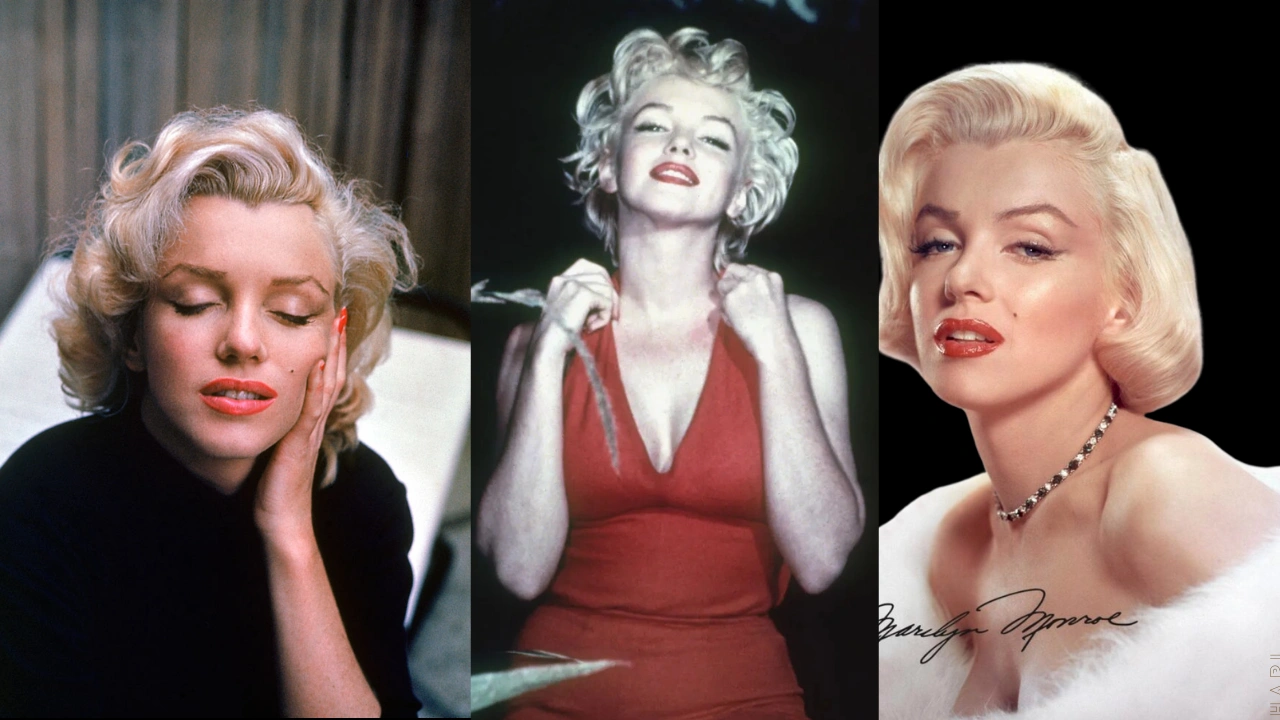
Marilyn Monroe remains one of the most iconic figures in cinema history and American pop culture. Born as Norma Jeane Mortenson on June 1, 1926, in Los Angeles, California, she transformed herself into a global sensation during the 1950s. Her career as an actress, model, and entertainer spanned just 15 years before her tragic death on August 5, 1962, at age 36. Despite her brief life, Monroe became the defining sex symbol of her era, starring in blockbuster films like Gentlemen Prefer Blondes, The Seven Year Itch, and Some Like It Hot. Beyond her glamorous public image, Monroe struggled privately with emotional turmoil, broken relationships, and dependency on prescription drugs. This biography explores her remarkable journey from a neglected child to Hollywood’s brightest star, examining her personal relationships, creative ambitions, and the circumstances surrounding her untimely death.
Who is Marilyn Monroe?
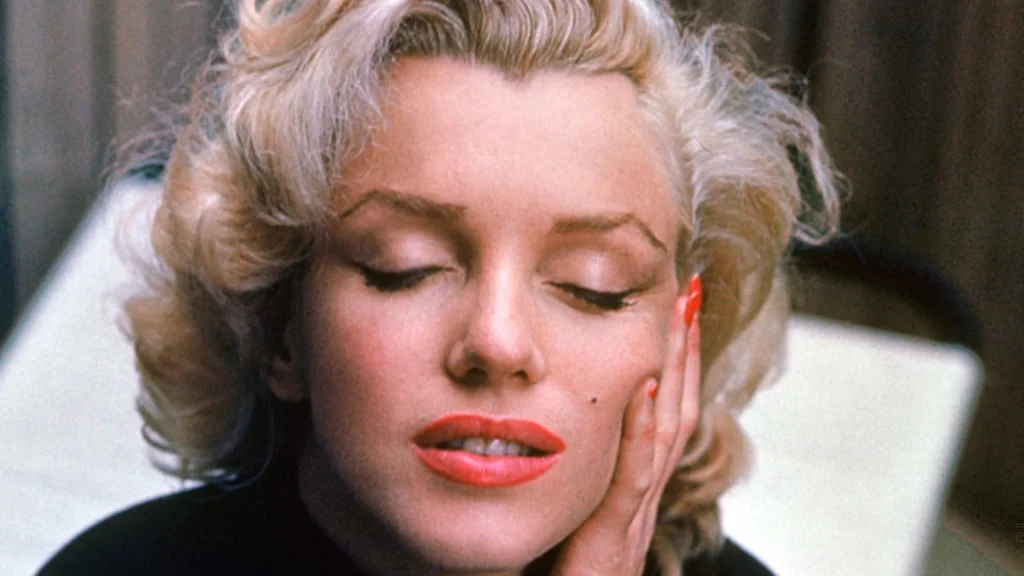
Marilyn Monroe represents one of cinema’s most complex figures—a woman who transcended being merely a movie actress to become a cultural phenomenon and enduring symbol of 1950s glamour. Born into poverty and instability, she reinvented herself through sheer determination, intelligence, and undeniable talent. What began as a modeling career evolved into stardom that captivated audiences worldwide and made her the highest-grossing film star of her generation.
Her appeal extended beyond physical beauty; Monroe possessed genuine comedic timing, dramatic range, and an intuitive understanding of how to command camera attention. Unlike many actors who appeared in superficial roles, she actively fought studios for more substantial parts and studied method acting seriously under Lee Strasberg at the prestigious Actors Studio in New York. She founded her own production company to gain creative control—a radical move that contributed to breaking the studio system’s monopoly on Hollywood talent.
Contemporary film critics and fellow actors repeatedly praised her intelligence, warmth, and work ethic, though mainstream media often focused exclusively on her sexuality. Today, over six decades after her death, Monroe continues to influence fashion, music, and popular culture, remaining more recognizable than many living celebrities. Her films continue generating revenue through theatrical re-releases, streaming platforms, and merchandise, demonstrating the enduring commercial power of her image.
Marilyn Monroe Age and Early Life
Marilyn Monroe was born on June 1, 1926, at Los Angeles County Hospital in Boyle Heights, a working-class neighborhood in Los Angeles, California. She would have been 36 years old at the time of her death on August 5, 1962. Her birth date places her under the astrological sign of Gemini, typically associated with communicativeness and adaptability—traits evident in her career versatility.
Her earliest years were marked by profound instability. Her mother, Gladys Pearl Baker (née Monroe), worked as a film negative cutter at Consolidated Film Industries, giving her tenuous connections to the entertainment industry her daughter would eventually dominate.
Her biological father remains uncertain. While her birth certificate lists Martin Edward Mortensen as her father, DNA testing conducted in 2022 confirmed that Charles Stanley Gifford, Gladys’s coworker at RKO Studios, was likely her biological parent. Gifford, however, denied paternity and never played any role in her life. This paternal absence shaped Monroe’s psychology throughout her lifetime, contributing to deep-seated insecurities and a lifelong search for male approval and emotional security.
Childhood and Abandonment
Her childhood spanned the tumultuous 1930s and 1940s, during which she experienced abandonment, instability, and hardship that contrasted sharply with the glamorous image she would later cultivate. When Norma Jeane was only three months old, her mother—already emotionally fragile and economically desperate—placed her with evangelical Christian foster parents, Albert and Ida Bolender, in Hawthorne, California.
This separation marked the beginning of a pattern that would define her childhood: displacement and emotional deprivation. Gladys worked continuously in the film industry but struggled with severe mental health challenges. In January 1934, when Norma Jeane was just seven years old, her mother suffered a catastrophic mental breakdown and was diagnosed with paranoid schizophrenia.
She was committed to the Metropolitan State Hospital, where she spent the remainder of her life alternating between institutional care and brief periods in the community. This permanent separation devastated young Norma Jeane, who internalized the loss as personal rejection rather than recognizing her mother’s illness.
She would spend her entire life processing this trauma, unconsciously seeking maternal affection in her relationships with older women and romantic partners. After her mother’s institutionalization, Norma Jeane became a ward of the state under the guardianship of Grace Goddard, her mother’s compassionate friend. Over the following years, she lived in approximately twelve different foster homes and spent time in the Los Angeles Orphans Home.
During one placement with Grace and her husband, Erwin “Doc” Goddard, she allegedly experienced sexual abuse—a trauma she never fully disclosed during her lifetime but which psychologists suggest contributed to her later sexual anxieties and complicated relationships with powerful men. These early experiences of deprivation, instability, and abuse might have crushed a weaker spirit.
Instead, they catalyzed her ambition. As a shy, frequently bullied child, she discovered escape through cinema. She would sit in darkened movie theaters for hours, watching glamorous actresses command attention and embody lives of luxury and respect. She made a conscious decision that this would be her escape route.
“I didn’t like the world around me because it was kind of grim. When I heard that this was acting, I said that’s what I want to be. Some of my foster families used to send me to the movies to get me out of the house and there I’d sit all day and way into the night. Up in front, there with the screen so big, a little kid all alone, and I loved it.” — Marilyn Monroe
Physical Appearance
Marilyn Monroe stood approximately 5 feet 5 to 5 feet 6 inches (165-168 centimeters), making her slightly above average height for women of her era. Her weight fluctuated throughout her career, typically ranging between 110 and 140 pounds (50-64 kilograms), depending on filming schedules and personal circumstances.
Her celebrated measurements were 35-22-35 inches (88.9-55.9-88.9 centimeters), creating her legendary hourglass silhouette that epitomized 1950s beauty standards. She typically wore a dress size 12 by modern standards—considerably larger than the ultra-thin models favored in contemporary fashion.
Her distinctive physical features included naturally curly dark brown hair that she had chemically straightened and dyed a striking platinum blonde—a look she maintained throughout her career and that became her trademark. Her eyes were light brown, described as expressive and penetrating, capable of conveying profound emotion with minimal movement.
She maintained flawless pale skin, famously powdered with precision by her makeup artist Allan “Whitey” Snyder, who developed her signature look featuring dark arched eyebrows, glistening red lips, and a carefully placed beauty mark. Remarkably, Monroe was acutely conscious of her appearance yet harbored persistent insecurities about her looks.
She wore elaborate makeup, wigs, and padding in clothing to maintain her public image, spending hours preparing her appearance for public appearances. Privately, she preferred minimal makeup and simpler hairstyles, suggesting her glamorous public persona was carefully constructed rather than her natural state. Her physical presentation demonstrated mastery of costume, illusion, and performance—skills that extended her acting talent beyond the screen into real life.
Marilyn Monroe Biography / Wiki
| Category | Details |
|---|---|
| Full Name | Norma Jeane Mortenson / Norma Jeane Baker |
| Professional Name | Marilyn Monroe |
| Date of Birth | June 1, 1926 |
| Date of Death | August 4-5, 1962 |
| Age at Death | 36 Years Old |
| Birthplace | Los Angeles, California, USA |
| Height | 5’5″ – 5’6″ (165-168 cm) |
| Weight | 110-140 lbs (50-64 kg) |
| Dress Size | 12 (US) |
| Eye Color | Light Brown |
| Hair Color | Platinum Blonde (Dyed); Naturally Dark Brown |
| Mother | Gladys Pearl Baker (née Monroe) |
| Father | Charles Stanley Gifford (Biological, Unacknowledged) |
| Half-Sister | Bernice (Raised Separately) |
| Siblings | Effectively None (Raised Alone) |
| Education | Emerson Junior High; Van Nuys High School |
| Profession | Actress, Model, Singer |
| Total Completed Films | 23 |
| Career Earnings (Lifetime) | $200+ Million (Box Office Gross) |
| Estate Value (at death) | ~$800,000 |
| Liquid Assets (at death) | ~$5,000 or less |
| Marriages | 3 (Dougherty, DiMaggio, Miller) |
| Children | None |
Education and Formative Years
Marilyn Monroe’s formal education was sporadic and interrupted by her unstable housing situation. She was enrolled at Emerson Junior High School but later attended Van Nuys High School, where she earned respectable grades and contributed to the school newspaper, demonstrating early writing ability.
However, her focus was divided between academics and survival. In 1942, facing potential return to an orphanage when her guardians prepared to relocate out of state, she made a fateful decision at age 16: she married James Dougherty, a factory worker and neighbor five years her senior, to avoid institutional placement. This marriage, occurring just after her 16th birthday on June 19, 1942, proved disastrous.
Monroe later described being “dying of boredom” throughout the union. When Dougherty enlisted in the Merchant Marine in 1943, Monroe seized the opportunity for independence. She took a job at Radioplane Company, a munitions factory in Van Nuys, manufacturing parts for wartime aircraft.
From Factory Worker to Model
This factory job changed her life. In late 1944, she met photographer David Conover from the U.S. Army Air Forces’ First Motion Picture Unit, who was stationed at the factory to photograph female workers for morale-boosting purposes. Although Conover’s initial photographs of Monroe were not used, he recognized her potential and encouraged her to pursue modeling.
She signed with the Blue Book Model Agency in August 1945 and rapidly became one of their most ambitious and successful models. The agency deemed her figure too curvaceous for high fashion and directed her toward pin-up and advertising work. She dyed her naturally curly dark brown hair a striking platinum blonde, straightened it meticulously, and transformed her appearance to match the era’s beauty standards.
By early 1946, she had appeared on 33 magazine covers, using occasionally the pseudonym “Jean Norman” to maintain some professional separation from her personal life. These early modeling successes opened the door to film opportunities that would ultimately define her legacy.
Marilyn Monroe’s Film Career and Movies
Marilyn Monroe movies represent a carefully curated selection of roles spanning from 1947 to 1962, showcasing her evolution from bit-part actress to major box-office draw to critically acclaimed performer. Her 23 completed films generated over $200 million in box-office revenue during their initial theatrical releases—an astronomical sum equivalent to approximately $2 billion in contemporary dollars—making her the most commercially successful actress of her era.
Early Career Films (1947-1951): Building the Foundation
Monroe’s initial film roles were modest and forgettable. She appeared in minor parts in Dangerous Years (1947), Scudda Hoo! Scudda Hay! (1948), and her first starring role in the low-budget musical Ladies of the Chorus (1948). These early films went largely unnoticed by audiences and critics alike.
Her breakthrough came not through starring roles but through a small part in Joseph Mankiewicz’s critically acclaimed All About Eve (1950), which received 14 Academy Award nominations. Despite her minimal screen time, Monroe made an impression, and established star Bette Davis publicly praised her talent and ambition.
That same year, director John Huston cast her in a small but pivotal role in the film noir masterpiece The Asphalt Jungle (1950). Although she appeared only briefly, audiences responded enthusiastically, and Monroe received thousands of fan letters. She then appeared in supporting roles in three moderately successful comedies: As Young as You Feel (1951), Love Nest (1951), and Let’s Make It Legal (1951).
Stardom Emergence (1952-1953): The Sex Symbol
1952 proved transformative. She appeared in multiple films: Clash by Night (a Fritz Lang drama), Don’t Bother to Knock (a psychological thriller), Monkey Business (a Howard Hawks comedy opposite Cary Grant), O. Henry’s Full House, and We’re Not Married!
However, 1952 also saw a scandal that paradoxically boosted her career. In March 1952, it was revealed that she had posed for nude photographs in 1949 when she was broke and desperate for work. Rather than denying the photos, Monroe and Fox strategically admitted to them, emphasizing her financial desperation and eliciting public sympathy.
The scandal generated enormous media attention and dramatically increased audience interest in her films. She was featured on the cover of Life magazine as the “Talk of Hollywood,” and gossip columnist Hedda Hopper declared her the “cheesecake queen turned box-office smash.”
In 1953, Monroe starred in three major films that established her as a major box-office force. First came the film noir Niagara, in which she played a femme fatale scheming to murder her husband. Next came Gentlemen Prefer Blondes, a musical comedy in which Monroe sang the unforgettable musical number “Diamonds Are a Girl’s Best Friend.” Finally came How to Marry a Millionaire, released in November 1953, which became one of the biggest box-office successes of the year. These three 1953 films cemented her status as Hollywood’s leading sex symbol.
Peak Stardom (1954-1955): The Icon
By 1954, Monroe had become 20th Century Fox’s greatest asset, yet remained contractually underpaid compared to her male counterparts. During this period, she filmed The Seven Year Itch (1955), directed by Billy Wilder and co-starring Tom Ewell.
The film featured the legendary scene in which Monroe stands over a subway grate wearing a white pleated dress designed by William Travilla, with air from below billowing the skirt around her. Shot in New York with 2,000 spectators watching, this six-minute scene became one of cinema’s most enduring images and defined Monroe’s public persona. The film became one of 1955’s biggest commercial successes.
Critical Recognition (1956-1959): The Actress
Frustrated with typecasting and studio control, Monroe founded Marilyn Monroe Productions (MMP) in 1954 with photographer Milton Greene. This groundbreaking action—a young actress attempting to control her own career—contributed to dismantling the studio system’s absolute power.
Her next film, Bus Stop (1956), marked a turning point. Playing Chérie, an aging saloon singer with big dreams, Monroe delivered a critically acclaimed performance that proved she could carry a dramatic role. Director Joshua Logan proclaimed that Monroe had “finally proved herself an actress.”
Critic Bosley Crowther’s review captured the moment:
“Hold on to your chairs, everybody, and get set for a rattling surprise. Marilyn Monroe has finally proved herself an actress.”
Monroe’s crowning critical achievement came with Some Like It Hot (1959), Billy Wilder’s comedy masterpiece about two musicians who disguise themselves as women to escape mobsters. Playing Sugar Kane, a ukulele player and gold-digger, Monroe delivered a performance that earned her a Golden Globe Award for Best Actress in a Leading Role – Musical or Comedy.
Director Wilder offered his assessment:
“Anyone can remember lines, but it takes a real artist to come on the set and not know her lines and yet give the performance she did!”
The film became an enduring classic, regularly appearing on lists of the greatest films ever made.
Final Films (1960-1962): The Tragedy
Monroe’s last completed film was John Huston’s The Misfits (1961), written specifically for her. Playing Roslyn, a recently divorced woman befriending three aging cowboys, Monroe delivered a mature, emotionally nuanced performance. The film’s production proved disastrous personally; Monroe’s marriage was effectively ending, with her husband Arthur Miller beginning a relationship with on-set photographer Inge Morath.
Despite these difficulties, Huston recognized her gift:
“When Monroe was acting, she was not pretending to an emotion. It was the real thing. She would go deep down within herself and find it and bring it up into consciousness.” — Director John Huston
Her final film, Something’s Got to Give, began production in April 1962. A comedy remake of My Favorite Wife, it was to co-star Dean Martin and be directed by George Cukor. Monroe was frequently absent due to various illnesses, personal crises, and psychological depression. In June 1962, Fox fired her from the production—a public humiliation that devastated her and signaled the end of her Hollywood career.
Marilyn Monroe’s Relationships and Marriages
Marilyn’s relationship history reveals a pattern of seeking emotional security through marriage, all three unions ending in divorce and leaving her progressively more traumatized. These relationships were complicated, passionate, and ultimately destructive for Monroe, who struggled with insecurity despite her global fame.
First Marriage: James Dougherty (1942-1946)
Monroe’s first husband was James Dougherty, a factory worker and neighbor who was five years her senior. They married on June 19, 1942, just after her 16th birthday, primarily to prevent Norma Jeane from returning to an orphanage when her guardians relocated. Monroe found the union deeply unfulfilling, describing herself as “dying of boredom.”
Dougherty was opposed to her modeling ambitions and did not support her career aspirations. After he enlisted in the Merchant Marine and was stationed on Santa Catalina Island, their marriage deteriorated further. She filed for divorce in 1946 shortly after beginning her film career, maintaining that she had outgrown their relationship.
Second Marriage: Joe DiMaggio (1954-1955)
Monroe’s second marriage to retired New York Yankees baseball legend Joe DiMaggio proved brief and volatile. One of the era’s most celebrated sports figures, DiMaggio had been baseball’s most prominent star before retirement. They married at San Francisco City Hall on January 14, 1954, in a ceremony that captured international media attention. The couple traveled to Japan for their honeymoon, where Monroe participated in USO shows, singing for over 60,000 American Marines.
The marriage unraveled quickly due to DiMaggio’s jealousy and possessiveness. Uncomfortable with his wife’s status as the world’s leading sex symbol, he became increasingly controlling and eventually physically abusive. The iconic moment from The Seven Year Itch, when Monroe’s white dress billows over a subway grate, particularly enraged DiMaggio, who was present during filming.
He considered the publicity stunt inappropriate and sexually provocative. Monroe filed for divorce in October 1954, after only nine months of marriage. Despite the divorce, they maintained a friendship, and DiMaggio was instrumental in helping her during a psychiatric hospitalization in 1961, when she attempted to escape from a facility where she had been wrongly placed.
Third Marriage: Arthur Miller (1956-1961)
Monroe’s third and final marriage was to celebrated playwright Arthur Miller, author of Death of a Salesman and other acclaimed dramas. They met in the early 1950s but did not begin their relationship until both had divorced their respective partners.
Miller, an intellectual and political activist, seemed an unlikely match for Monroe, the sex symbol. However, Miller genuinely respected her intelligence, creativity, and ambitions. He wanted her to become a serious actress and supported her method acting studies.
They married in a civil ceremony at Westchester County Court in White Plains, New York, on June 29, 1956, followed by a Jewish ceremony at the home of Miller’s literary agent. Monroe converted to Judaism for the marriage, a decision that led Egypt to ban all her films. American media viewed the union skeptically, with Variety publishing the headline:
“Egghead Weds Hourglass” — Variety, 1956
The early years of their marriage were relatively happy, and Monroe became pregnant multiple times—three separate pregnancies—but suffered miscarriages each time. These losses devastated her and contributed to depression. The couple never had children despite Monroe’s desire to become a mother.
The marriage deteriorated during the filming of The Misfits in 1960, when Miller began a relationship with on-set photographer Inge Morath. Monroe filed for divorce in January 1961, which was finalized that year. Miller’s infidelity and emotional abandonment during their marriage’s final years caused Monroe profound pain and contributed to her increasing psychological deterioration.
Other Relationships
Beyond her three marriages, Monroe had numerous romantic relationships. Her relationship with Joe DiMaggio continued after their divorce, and they maintained affection for one another until her death. She briefly dated actor Marlon Brando in the mid-1950s, and according to Brando, they maintained an intermittent romantic relationship until her death.
Monroe was extensively rumored to have had affairs with President John F. Kennedy and his brother, Attorney General Robert F. Kennedy. The alleged liaison with JFK is supported by circumstantial evidence, including her famous 1962 appearance at Madison Square Garden, where she sang “Happy Birthday Mr. President” in a breathy, seductive rendition that became iconic. However, definitive proof of a sexual relationship with either Kennedy brother remains elusive and contested by historians.
She also dated actor Yul Brynner and director Elia Kazan at various points in her career. In the final months of her life, she briefly dated singer Frank Sinatra for several months while living in California.
Marilyn Monroe Net Worth and Financial Status
Marilyn Monroe Net Worth requires careful explanation, as the distinction between estate valuation and actual liquid assets is crucial for accuracy. While her estate was valued at approximately $800,000 at the time of her death—reflecting future royalties, image rights, and potential earnings—her actual liquid cash on hand was dramatically lower, approximately $5,000 or less.
Wealth Sources and Peak Earnings
Her net worth accumulation came primarily from her film salaries, which increased dramatically as her star rose. By the 1950s, she was earning substantial compensation per film, though she remained underpaid compared to her male counterparts of equivalent star status.
Her wealth was also derived from her modeling career, which had made her one of the most successful pin-up models before her acting career took off. Her appearance on the cover and as centerfold of the first issue of Playboy (December 1953), using her photograph without permission, made Hugh Hefner a wealthy man while Monroe received no compensation.
She also earned royalties and residuals from her films, though studio contracts of that era were notoriously unfavorable to actors. Monroe’s financial independence, limited as it was by studio control and industry sexism, gave her leverage to negotiate for better roles and more control over her career. She invested in her own production company, Marilyn Monroe Productions, demonstrating business acumen. She purchased a house in Brentwood, Los Angeles, shortly before her death at 12305 Fifth Helena Drive, which represented significant real estate investment.
Financial Drain and Expenses
However, her net worth was substantially diminished by her expenses. She maintained an expensive lifestyle, employed personal staff, paid for extensive medical care and psychiatric treatment, and spent significant sums on prescription medications. Her drug dependencies also drained her finances through medical bills and black-market medications.
Additionally, studio taxes, alimony obligations, and legal fees associated with her three divorces consumed significant portions of her earnings. By the time of her death, despite her substantial lifetime earnings of over $200 million in box-office gross, her actual liquid wealth and assets were considerably less than the $800,000 estate valuation suggested. Many bills remained unpaid, and creditors made claims against her estate.
The $800,000 valuation represented what the estate could potentially generate through royalties, licensing, and future earnings from her films—a value that has only increased exponentially since her death, as streaming platforms, theatrical re-releases, and merchandise continue generating substantial revenue decades later.
Marilyn Monroe: Final Years and Death
The final years of Marilyn Monroe’s life revealed a woman in profound crisis. In the months preceding her death, she had experienced significant professional and personal setbacks. Her marriage to Arthur Miller had disintegrated in 1961, leaving her emotionally devastated.
She was fired from Something’s Got to Give in June 1962 due to frequent absences attributed to illness and psychiatric distress. This firing, while not unprecedented in Hollywood, carried particular humiliation. The studio publicly blamed her unreliability rather than acknowledging her underlying emotional and physical health crises.
Her drug dependency, which had developed gradually throughout the 1950s, had become severe by 1962. She was taking multiple prescription medications simultaneously: barbiturates for insomnia, amphetamines for weight management and energy, and tranquilizers for anxiety. Medical records indicate she had received injections of the barbiturate pentobarbital, likely administered by her personal physician, Dr. Ralph Greenson, within hours of her death.
The Night of August 4-5, 1962
On the evening of August 4, 1962, Monroe was alone in her Brentwood home at 12305 Fifth Helena Drive in Los Angeles. Housekeeper Eunice Murray was present but retired to her quarters. The exact sequence of events remains unclear due to inconsistencies in witness testimony and official reports.
She was found unresponsive early on August 5 when Murray discovered her in bed and called emergency services. The coroner’s report indicated she died from an overdose of barbiturates, specifically pentobarbital (Nembutal) and chloral hydrate, though the exact amount she consumed remains disputed.
Official Ruling and Conspiracy Theories
The official investigation concluded “probable suicide,” based on Monroe’s history of drug dependency, previous suicide attempts, and her psychological deterioration. However, conspiracy theories have persisted for over six decades, suggesting alternative scenarios: that she was murdered by organized crime associates of the Kennedy brothers, that she was accidentally killed by her physician’s medical misadventure, or that her death resulted from accidental overdose rather than intentional suicide.
While these alternative theories have captured public imagination, they remain speculative and lack definitive evidence. The weight of evidence supports accidental overdose or suicide related to her psychiatric crisis, though the exact circumstances may never be definitively established.
A Life of Tragedy
What is certain is that Marilyn Monroe’s death represented a tragic culmination of years of emotional trauma, psychological instability, professional exploitation, failed relationships, and increasing isolation. Her final years reveal a woman caught between the demands of stardom and her deep personal insecurities, increasingly reliant on pharmaceuticals to manage depression and anxiety.
She ultimately succumbed to the very dependencies that had seemed to promise relief. Over six decades after her death, Marilyn Monroe remains an unforgettable figure—remembered not only as a sex symbol but as a talented actress and complex human being whose struggles continue to resonate with audiences worldwide.
Also Read: Mckenna Grace Biography: Age, Wiki, Family, Relationship and More