
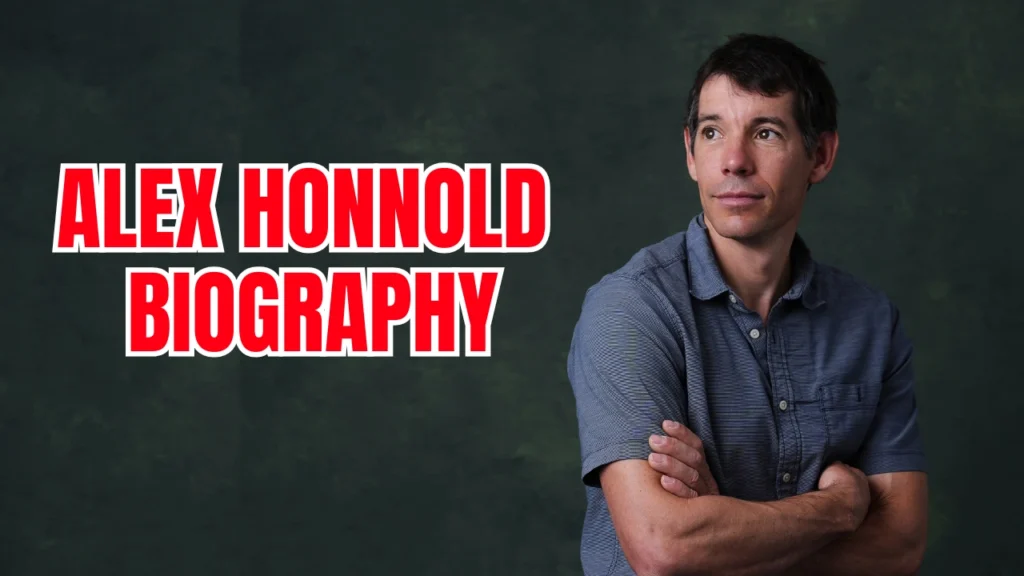
Alex Honnold (born August 17, 1985) is an American professional rock climber who achieved what many considered impossible: on June 3, 2017, he became the first person to free solo climb El Capitan’s Freerider route in Yosemite National Park—scaling 2,900 feet of sheer granite without ropes, harnesses, or protective equipment in 3 hours and 56 minutes. This achievement, documented in the Oscar-winning film Free Solo (2018), was described by The New York Times as “one of the great athletic feats of any kind, ever.”
What distinguishes Honnold beyond this singular accomplishment is his philosophical approach to risk and mortality. Unlike adrenaline junkies seeking thrill, he approaches free soloing through methodical preparation, intimate route knowledge, and calm mental discipline. At 40 years old in 2026, married to Sanni McCandless since 2020 with two daughters (June, born 2022, and Alice, born 2024), Honnold has transitioned from living in a van and focusing solely on climbing to balancing fatherhood, philanthropy through the Honnold Foundation supporting solar energy access, and selective high-profile climbs including his recent January 2026 ascent of Taipei 101.
WHO IS ALEX HONNOLD?
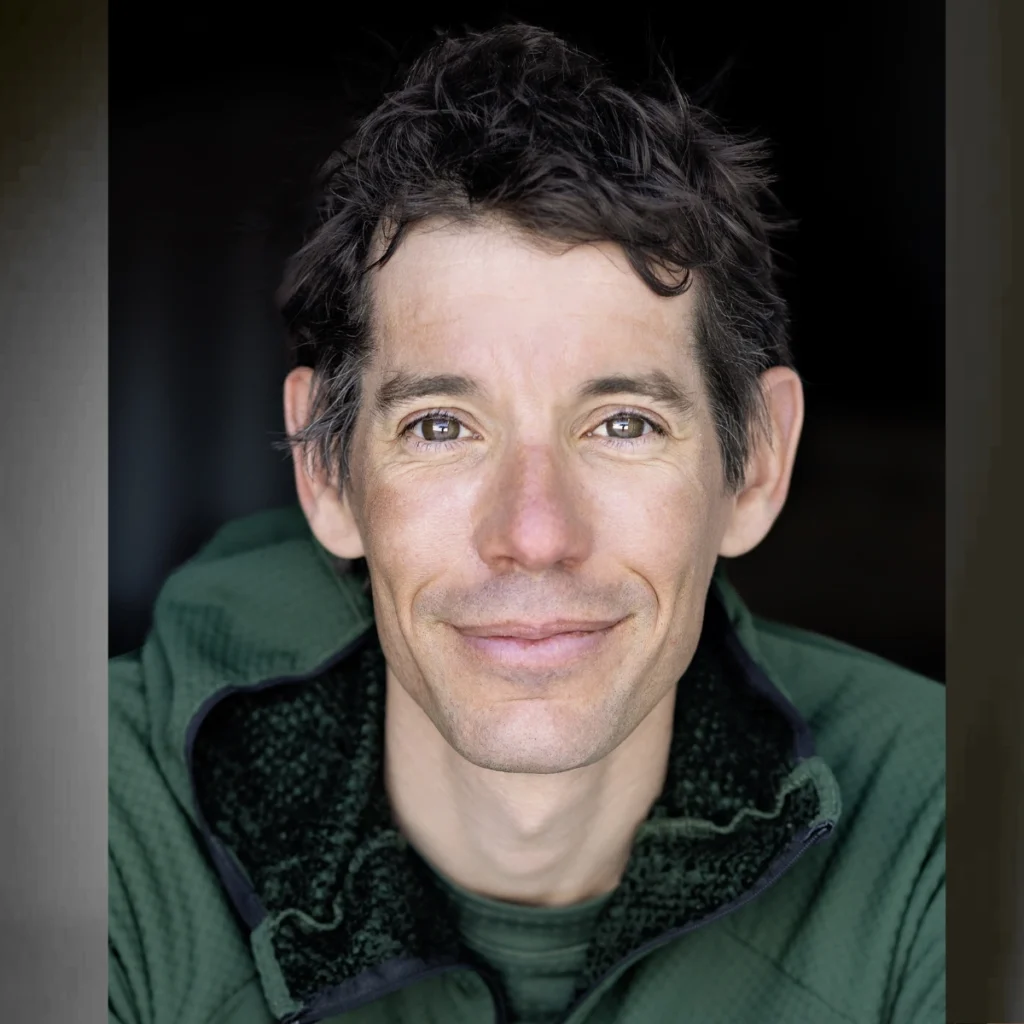

Alex Honnold occupies a singular position in both climbing culture and broader athletic achievement. He is simultaneously the world’s most accomplished free solo climber and someone who has fundamentally redefined what the human body and mind can achieve through discipline, preparation, and risk calculation.
His approach to free soloing differs markedly from how casual observers perceive extreme sports. Where audiences see death-defying stunts, Honnold sees the culmination of years of preparation—routes climbed dozens of times with ropes, every handhold and foothold memorized, every movement rehearsed until it becomes automatic. His 2017 El Capitan ascent wasn’t spontaneous courage; it was the result of climbing that specific route over 50 times with protection, spending months visualizing every pitch, and waiting for the precise mental state where he felt zero doubt.
This methodical approach extends to his broader life philosophy. He lives simply despite earning approximately $200,000 annually as the world’s highest-paid climber—initially continuing to live in his van even after buying a house in Las Vegas because “it felt more like home than an empty house.” His 2012 founding of the Honnold Foundation, which supports solar energy projects in underserved communities, reflects his commitment to using his platform for tangible environmental impact rather than personal luxury.
What makes Honnold culturally significant transcends climbing achievements. He represents a particular kind of modern heroism—one built on discipline rather than recklessness, meticulous preparation rather than spontaneous courage, and intellectual rigor applied to physical challenges. His success demonstrates that even the most seemingly impossible human achievements result from systematic effort rather than innate fearlessness.
ALEX HONNOLD AGE – HOW OLD IS HE?
Alex Honnold was born on August 17, 1985, in Sacramento, California, USA. Consequently, he is 40 years old as of January 2026. His zodiac sign is Leo.
In recent interviews regarding his January 2026 Taipei 101 ascent, Honnold acknowledged that his age has influenced his approach to preparation, stating he now approaches training with more caution and commitment than he did in his twenties.
ALEX HONNOLD HEIGHT & APPEARANCE
Height: 5’11” (180 cm)
Physical Build: Lean and athletic with a climber’s physique—characterized by exceptional finger and forearm strength, minimal body fat, and remarkable strength-to-weight ratio.
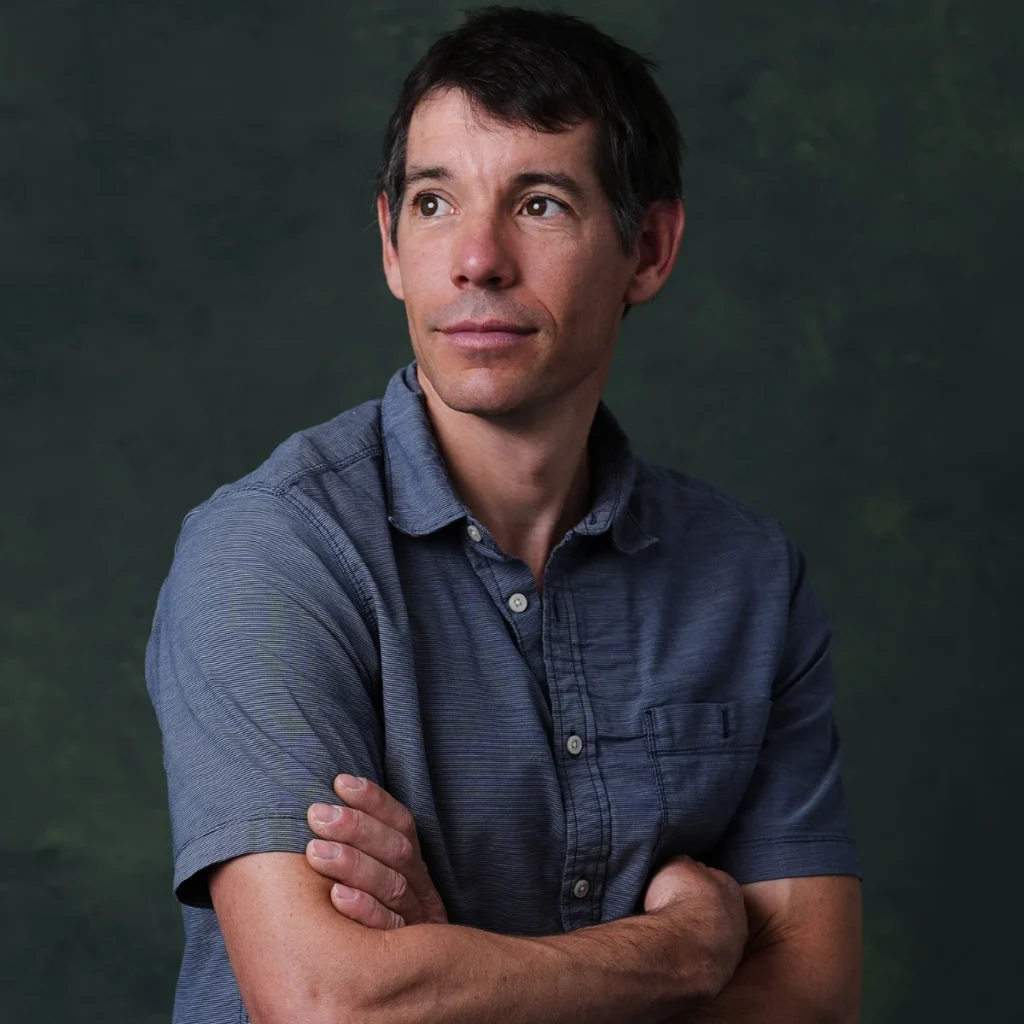
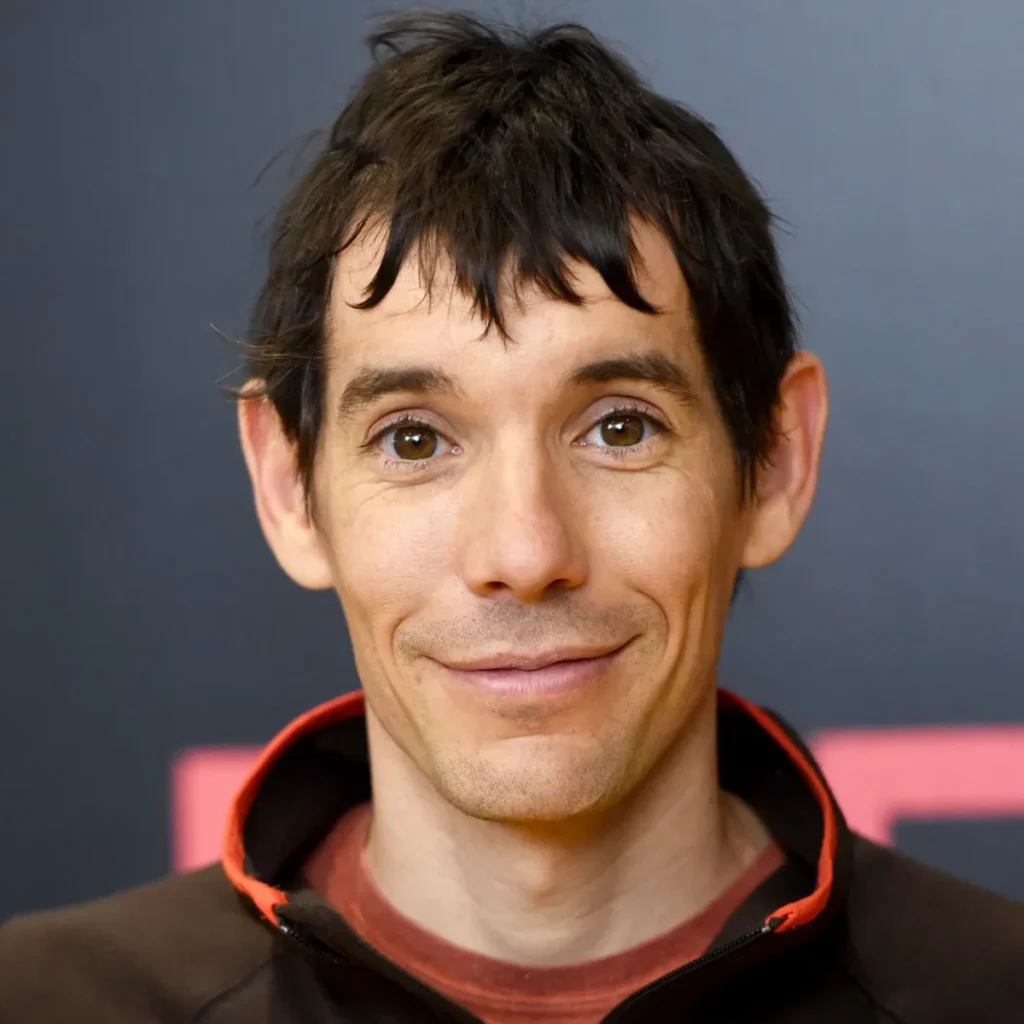
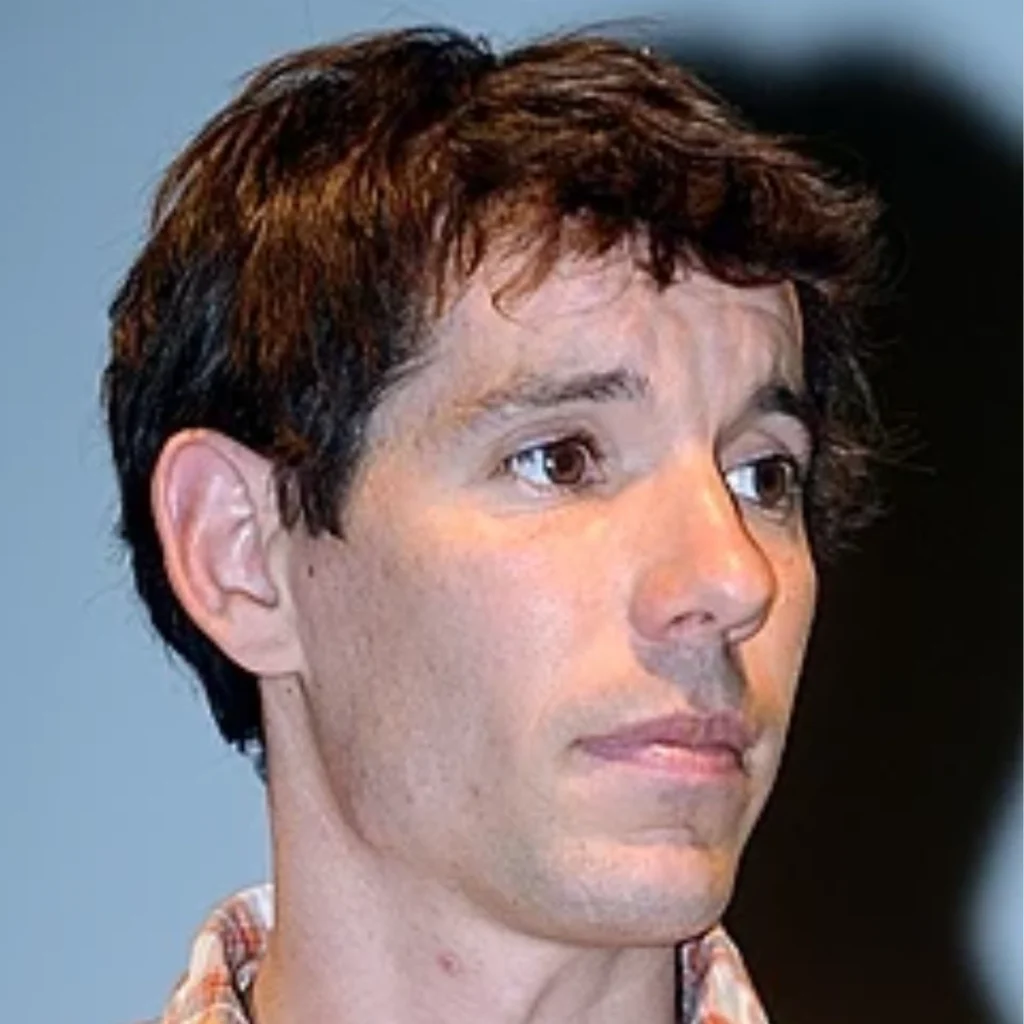
Appearance: Honnold maintains a distinctive look: dark hair typically kept short, brown eyes, and an understated personal style reflecting his minimalist lifestyle. Unlike athletes in commercial sports who cultivate polished public personas, he presents himself with notable authenticity—often appearing in casual climbing attire, displaying a preference for function over fashion.
His physical appearance reflects his approach to life: practical, unpretentious, and entirely focused on performance rather than presentation.
ALEX HONNOLD BIOGRAPHY / WIKI TABLE
| Attribute | Details |
| Full Name | Alexander Honnold |
| Date of Birth | August 17, 1985 |
| Age (2026) | 40 Years Old |
| Birthplace | Sacramento, California, USA |
| Nationality | American |
| Height | 5’11” (180 cm) |
| Occupation | Professional Rock Climber, Environmental Activist, Public Speaker |
| Spouse | Sanni McCandless (married September 13, 2020) |
| Children | June (born February 17, 2022) and Alice Summer (born February 6, 2024) |
| Zodiac Sign | Leo |
| Years Active (Climbing) | 2005–Present |
| Most Famous Achievement | First free solo ascent of El Capitan’s Freerider route (June 3, 2017) |
| Foundation | Honnold Foundation (founded 2012) |
| Estimated Net Worth | $2 million USD |
| Documentary | Free Solo (2018) – Academy Award Winner |
EARLY LIFE AND BACKGROUND
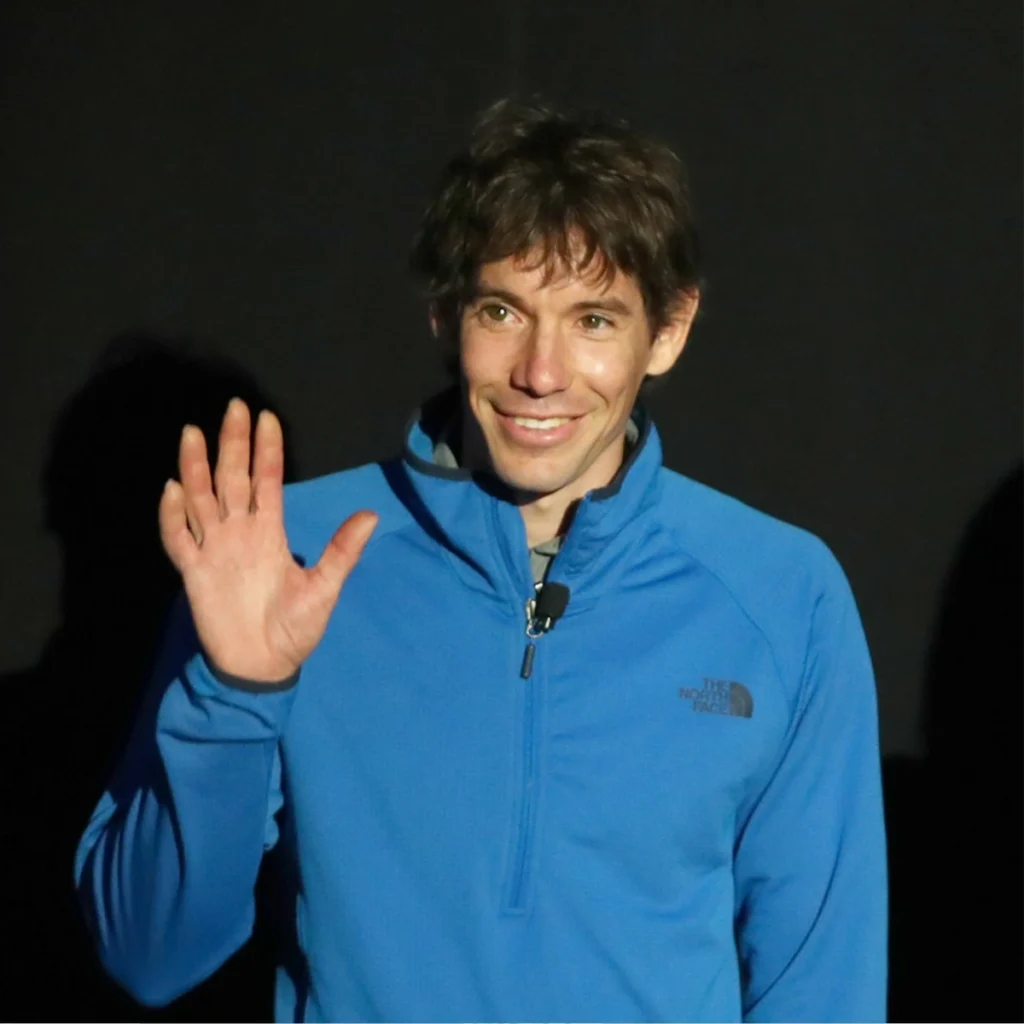
Alex Honnold was born to Charles “Chuck” Honnold, a college professor, and Dierdre Wolownick, a French teacher, in Sacramento, California. He grew up in a middle-class academic household in the Sacramento area alongside his younger sister, Stasia. His upbringing was conventional and comfortable—his parents valued education and intellectual achievement, creating an environment where academic success was expected.
Climbing entered his life at age five when his mother took him to a local climbing gym. Unlike many elite athletes who display prodigious talent from childhood, Honnold’s early climbing was recreational rather than competitive. He enjoyed climbing but showed no particular indication that it would become his life’s defining pursuit.
His father died unexpectedly in 2004 when Alex was 19, an event that profoundly affected him. In interviews, Honnold has described his father as emotionally distant and difficult, suggesting their relationship was complicated rather than supportive. This loss coincided with his increasing focus on climbing as both passion and career, perhaps providing an emotional outlet during a difficult period.
Importantly, Honnold’s mother Dierdre later became a climber herself, starting at age 60. She subsequently became the oldest woman to climb El Capitan—first at age 66, then breaking her own record at age 70. This remarkable achievement by his mother demonstrates that the discipline and determination Honnold exhibits in climbing may have familial roots, even if his parents didn’t initially understand or support his unconventional career choice.
ALEX HONNOLD EDUCATION
Alex enrolled at the University of California, Berkeley in 2003, intending to pursue a conventional academic path consistent with his family’s educational values. He studied civil engineering, a practical field that would have led to stable professional employment.
However, his commitment to climbing increasingly conflicted with academic requirements. During his freshman year, he spent more time climbing than attending classes, prioritizing gym sessions and outdoor climbing trips over lectures and coursework. This tension between conventional expectations and his climbing passion came to a head when he essentially stopped attending classes.
In 2005, after just over a year at Berkeley, Honnold made the decisive choice to drop out and commit fully to climbing. This decision represented a clear break from his family’s expectations and middle-class security—he was choosing an uncertain, financially precarious path with no guaranteed income or success.
His departure from Berkeley wasn’t motivated by academic failure but rather by the recognition that formal education conflicted with his true calling. He realized that continuing in engineering would mean abandoning the pursuit that gave his life meaning. This early willingness to reject conventional success markers in favor of authentic passion would define his entire career trajectory.
ALEX HONNOLD PROFESSION
Alex works across multiple professional capacities:
Professional Rock Climber: His primary identity—specializing in big wall free climbing and free solo ascents of multi-pitch routes.
Environmental Activist: Founder and board member of the Honnold Foundation, which has funded over 70 solar energy projects in 25 countries, helping more than 200,000 people gain access to sustainable electricity.
Public Speaker: Commands $45,000 to $125,000 per speaking engagement, delivering presentations on risk management, mental preparation, and pursuing unconventional paths.
Documentary Subject & Producer: Featured in Free Solo (2018), which won the Academy Award for Best Documentary Feature, and subsequent documentaries including The Devil’s Climb (2024).
Author: Published Alone on the Wall (2015), a memoir detailing his climbing career and free solo philosophy.
Brand Ambassador: Maintains sponsorship relationships with The North Face, Black Diamond, La Sportiva, and Goal Zero, earning $100,000-$150,000 annually from endorsements.
His professional identity reflects an athlete who leveraged climbing achievement into a platform for environmental advocacy and cultural influence beyond his sport.
ALEX HONNOLD CAREER JOURNEY

Early Climbing Years: Living Out of a Van (2005–2010)
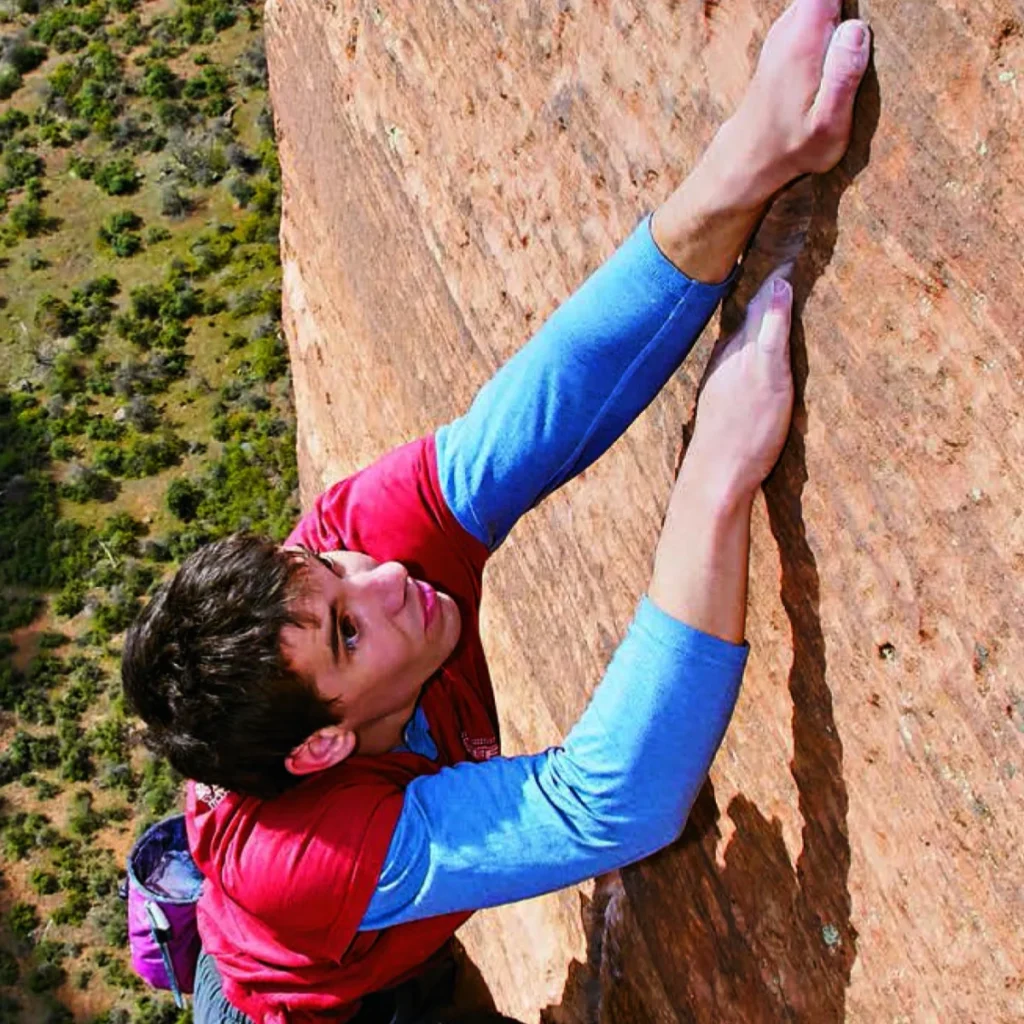
After dropping out of Berkeley in 2005, Honnold committed to climbing full-time despite having minimal financial resources. He purchased a used van—which became his home for the next several years—and lived on approximately $1,000 per month, traveling across the United States to climb at various locations.
This period was characterized by pure focus on climbing development. Without mortgage, rent, or significant expenses beyond food and gas, he spent nearly every day climbing. He wasn’t yet free soloing major routes; instead, he was building the technical skills, physical conditioning, and mental discipline that would later enable his most famous achievements.
His early free solo ascents were relatively modest by his later standards—single-pitch routes and smaller walls where the consequences of falling, while severe, were not as catastrophic as they would be on 2,000+ foot big walls. These climbs allowed him to develop comfort with the psychological demands of climbing without protection while gradually building toward more ambitious objectives.
Breakthrough Achievements: Establishing Reputation (2010–2015)
Honnold’s reputation within the climbing community grew substantially during this period through a series of remarkable free solo ascents:
Moonlight Buttress (2008): Free soloed this 1,200-foot sandstone tower in Zion National Park, Utah—a significant achievement that demonstrated his capability on multi-pitch routes.
Half Dome’s Regular Northwest Face (2008): Completed this 2,000-foot free solo in just 1 hour and 22 minutes, setting a speed record and shocking the climbing community with the audacity and speed of the ascent.
The Rostrum (2010): Free soloed this 800-foot route in Yosemite, further cementing his status as the world’s premier free solo climber.
Yosemite Triple Crown in 18 hours (2012): Free soloed three of Yosemite’s most famous walls (Mount Watkins, El Capitan via Zodiac, and Half Dome) in under 19 hours—an achievement that required not just technical skill but extraordinary physical endurance and mental stamina.
During this period, he also published Alone on the Wall (2015), a memoir that brought his story to audiences beyond the climbing community and provided insight into his psychological approach to risk and fear management.
El Capitan: The Defining Achievement (2017)
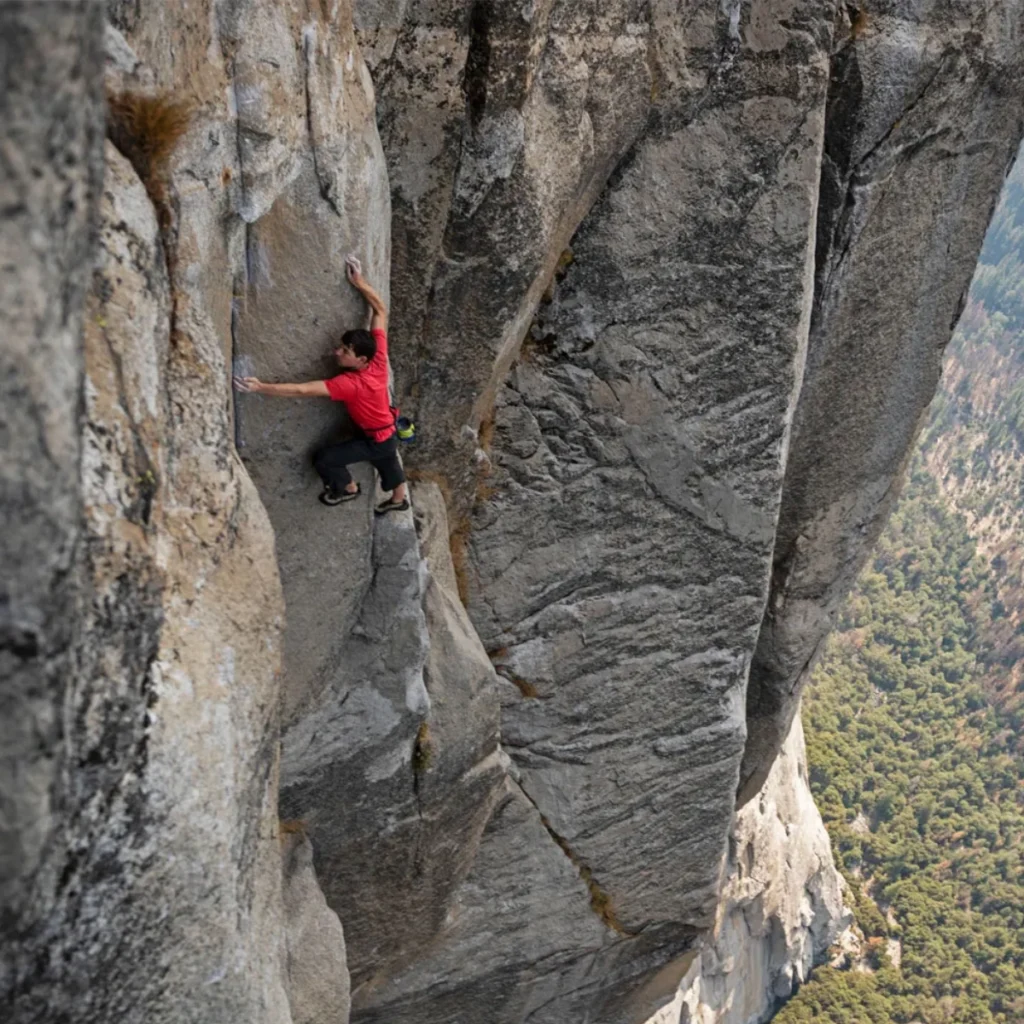
Everything in Honnold’s career built toward June 3, 2017—the day he free soloed El Capitan’s Freerider route. This wasn’t an impulsive decision; it was the culmination of years of meticulous preparation:
Route Familiarity: He had climbed Freerider over 50 times with ropes since 2009, memorizing every handhold, foothold, and body position.
Mental Preparation: He spent months visualizing the climb, sitting alone in his van rehearsing every pitch mentally until he could climb the entire route in his mind without uncertainty.
Physical Conditioning: He trained specifically for the route’s most difficult sections, including the “Boulder Problem”—a 17-move V7 slab sequence 1,700 feet off the ground with no margin for error.
Timing: He waited for the precise mental state where he felt no doubt—not fearlessness, but complete confidence built on absolute preparation.
The climb took 3 hours and 56 minutes. At 31 years old, Honnold had achieved what many considered the greatest athletic feat in climbing history—potentially in all of sport. National Geographic described it as “perhaps the greatest feat of pure rock climbing in the history of the sport.”
Post-El Capitan: Documentary Fame & Life Changes (2018–2020)
The 2018 release of Free Solo, which documented his El Capitan ascent, transformed Honnold from a niche climbing celebrity into a mainstream cultural figure. The film won the Academy Award for Best Documentary Feature and grossed over $10 million—unprecedented success for a climbing documentary.
This fame brought significant changes to his life:
Financial Security: His income increased substantially through speaking engagements, sponsorships, and media appearances, providing financial stability he had never previously experienced.
Public Recognition: He became recognizable beyond climbing circles, appearing on talk shows and becoming a cultural symbol for human potential and calculated risk-taking.
Personal Relationship: He began dating Sanni McCandless in 2015 after meeting her at a book signing. Their relationship, documented in Free Solo, showed Honnold navigating the tension between his solitary climbing pursuits and intimate partnership.
Marriage: On September 13, 2020, Honnold and McCandless married in an intimate ceremony on a lake, surrounded by close family. He announced the marriage on Instagram, describing it as “totally lovely all the way around” with Sanni “radiant as always.”
Fatherhood & Balancing Priorities (2021–Present)
The birth of his first daughter June on February 17, 2022 fundamentally changed Honnold’s relationship with risk. In interviews, he has acknowledged that fatherhood altered his calculus about free soloing—the potential consequences of his death now extended beyond personal loss to devastating impact on his children.
Second Daughter: Alice Summer was born on February 6, 2024, expanding the family and further complicating his relationship with high-risk climbing.
Recent Climbing: In January 2026, at age 40, Honnold completed a rope-free ascent of Taipei 101, Taiwan’s iconic skyscraper. This achievement demonstrated his continued willingness to take on high-profile, dangerous climbs while also revealing how his approach has matured—he acknowledged that age and fatherhood influence his preparation, making him more cautious and deliberate than in his twenties.
Honnold Foundation Growth: His foundation has expanded significantly, funding over 70 solar energy projects across 25 countries, providing electricity access to more than 200,000 people. This philanthropic work increasingly occupies his time and energy, representing his long-term impact beyond personal climbing achievements.
ALEX HONNOLD FAMILY
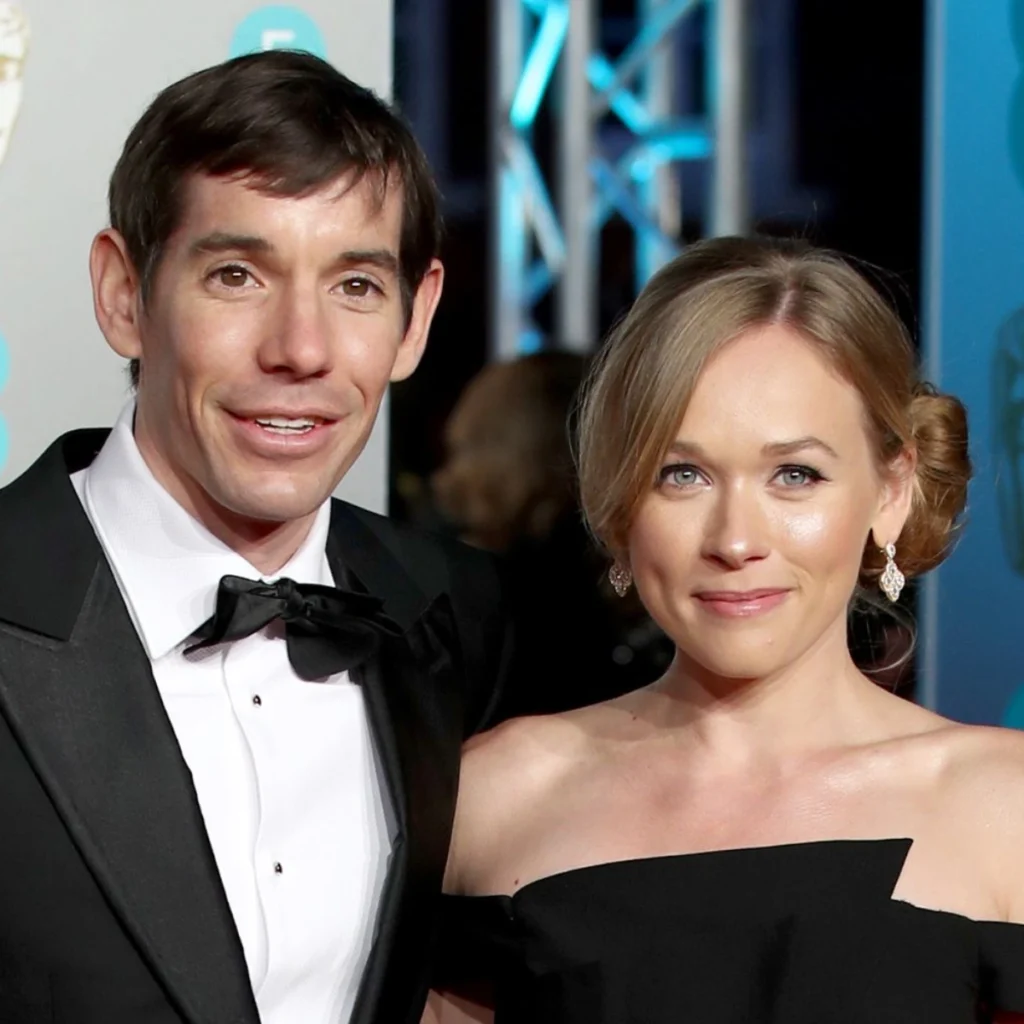
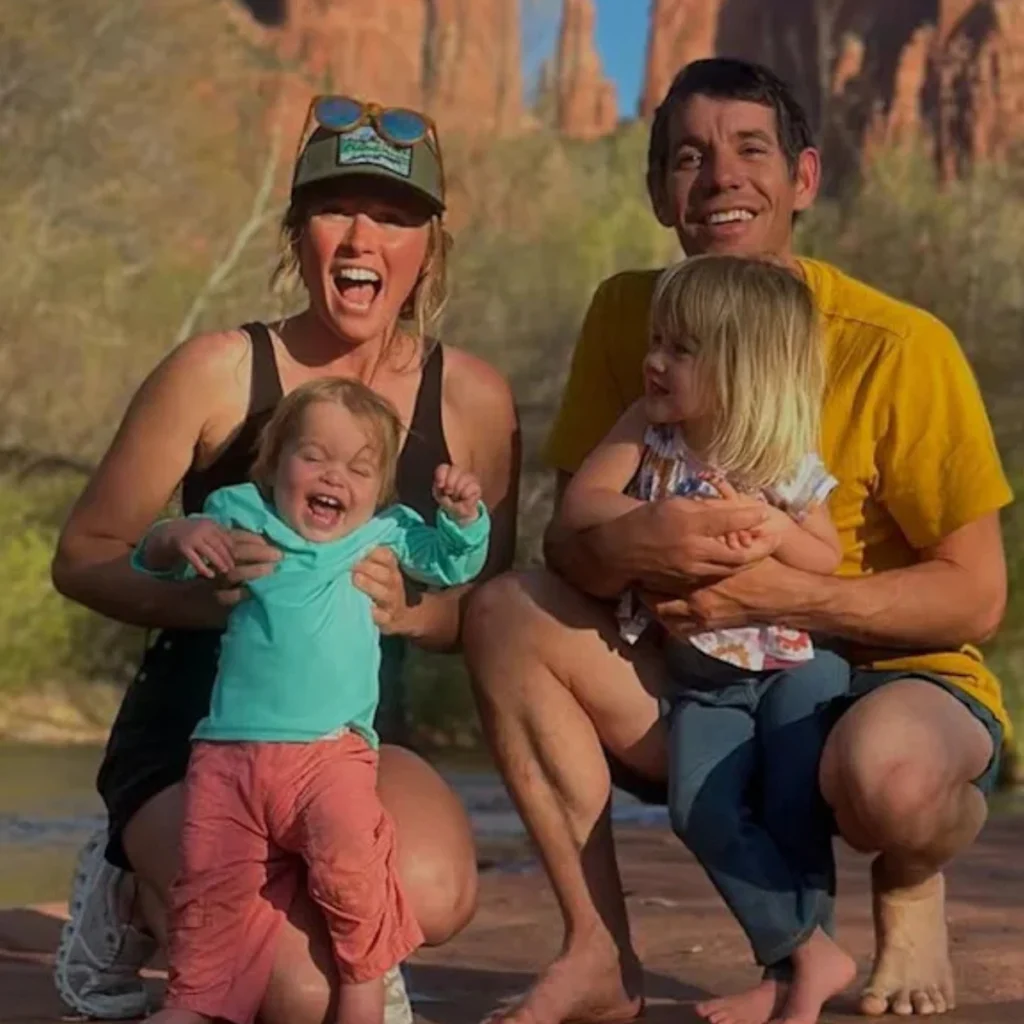
| Relationship | Details |
| Father | Charles “Chuck” Honnold (college professor; died 2004) |
| Mother | Dierdre Wolownick (French teacher; climber; oldest woman to climb El Capitan at ages 66 and 70) |
| Sister | Stasia Honnold (younger sister) |
| Spouse | Sanni McCandless (married September 13, 2020) |
| Daughter 1 | June (born February 17, 2022; age 3-4) |
| Daughter 2 | Alice Summer (born February 6, 2024; age 1-2) |
| Current Residence | Las Vegas, Nevada, USA |
Sanni McCandless: Partner, Life Coach, and Co-Founder
Alex met Sanni McCandless in 2015 at a book signing event in Seattle. Sanni, born in Washington and raised in an outdoor-oriented family, was working as a transition coach helping individuals navigate major life changes. Their initial meeting was brief, but they reconnected and began dating, with their relationship documented partially in the Free Solo documentary.
Sanni’s Background: She is a life coach and entrepreneur who co-founded Outwild, an outdoor adventure retreat company, in 2018. Her professional focus on intentional living and personal growth complemented Honnold’s increasingly reflective approach to his career and life choices.
Their Relationship Dynamic: The Free Solo documentary revealed tensions in their relationship—Sanni’s fear for Alex’s safety during his El Capitan preparation conflicted with his single-minded focus on the climb. Their ability to navigate this tension demonstrated maturity and commitment on both sides.
Marriage: They married on September 13, 2020, in an intimate lakeside ceremony with close family. In a June 2025 Instagram post, Alex reflected on their 10-year relationship: “We’ve been together for 10 years now and have two wonderful babies—life has changed so much but in some ways not at all.”
Parenthood: Sanni discovered she was pregnant with their second daughter while officiating her best friend’s wedding. She recalled to People magazine: “It reminded me of the scene from Friends where Rachel keeps spitting out the champagne at Monica’s wedding.” The couple had decided they wanted their children close in age, making Alice’s 2024 birth consistent with their family planning.
His Mother’s Remarkable Climbing Journey
Dierdre Wolownick’s story is remarkable in its own right. After her husband’s death in 2004, she began climbing at age 60—an age when most people are reducing physical activity. She subsequently became an accomplished climber, ultimately becoming the oldest woman to summit El Capitan at age 66 in 2017 (shortly after Alex’s free solo ascent), then breaking her own record by climbing it again at age 70.
Her achievements provide fascinating context for understanding Alex’s determination and discipline—these qualities appear to have familial roots, even if they manifested differently across generations.
ALEX HONNOLD NET WORTH
Estimated Net Worth: $2 million USD as of 2026
Alex Honnold is the highest-paid professional rock climber in the world, earning approximately $200,000 annually—significantly above the average professional climber’s income of around $15,000 per year.
Income Sources
Climbing Sponsorships: $100,000-$150,000 annually from brand partnerships with The North Face, Black Diamond, La Sportiva, and Goal Zero.
Speaking Engagements: $45,000 to $125,000 per appearance, delivering presentations on risk management, mental preparation, and unconventional career paths.
Documentary Participation: Earnings from Free Solo (which grossed over $10 million) and subsequent films including The Devil’s Climb (2024).
Book Royalties: Ongoing income from Alone on the Wall (2015) and related publications.
Media Appearances: Compensation for television interviews, podcast appearances, and brand campaigns.
Lifestyle & Philanthropy
Despite his wealth, Honnold maintains a notably modest lifestyle. After purchasing his first house in Las Vegas, he initially continued living in his van parked in the driveway because “it felt more like home than an empty house.” This reflects his deep commitment to simplicity and his discomfort with material excess.
Honnold Foundation: Founded in 2012, the foundation has grown significantly, funding over 70 solar energy projects in 25 countries and helping more than 200,000 people gain access to sustainable electricity. Honnold reportedly donates approximately one-third of his income to the foundation, demonstrating his commitment to using his platform for environmental impact.
ALEX HONNOLD SOCIAL MEDIA
| Platform | Username | Followers | Content Focus |
| @alexhonnold | 3 million+ | Climbing adventures, family moments, environmental advocacy | |
| Twitter/X | @AlexHonnold | Active presence | Climbing updates, foundation work, personal reflections |
| YouTube | Featured in National Geographic and other channels | Substantial reach through documentary content | Climbing documentaries, interviews |
His social media presence reflects his authentic personality—posts typically feature climbing content, family moments with Sanni and his daughters, and advocacy for the Honnold Foundation’s solar energy projects. Unlike many professional athletes who curate carefully branded social media personas, Honnold’s accounts feel genuine and unpretentious, consistent with his broader approach to public life.
ANALYTICAL SECTION: THE PSYCHOLOGY OF CALCULATED RISK
What sets Honnold apart from other extreme athletes is not fearlessness but rather an unusual relationship with fear and risk. Neuroscience research conducted on Honnold (featured in Free Solo) revealed that his amygdala—the brain region associated with fear responses—shows remarkably low activation when viewing frightening images. However, Honnold himself rejects the interpretation that he doesn’t feel fear; instead, he describes fear as a signal requiring analysis rather than an emotion demanding immediate response.
This distinction is crucial. Honnold doesn’t approach free soloing through courage overcoming fear; he approaches it through preparation eliminating uncertainty. When he climbed El Capitan without ropes, he had rehearsed every movement so thoroughly that the climb felt more like executing a memorized routine than confronting mortality. The psychological challenge wasn’t overcoming fear in the moment but rather managing the months of anticipation leading up to the climb.
His approach offers broader insights about human achievement: many seemingly impossible feats result not from exceptional emotional responses but from exceptional preparation that transforms extraordinary challenges into manageable tasks. Honnold’s climbing philosophy applies to any domain where high stakes demand high performance—the key isn’t eliminating risk but understanding it so thoroughly that risk becomes calculable.
FREQUENTLY ASKED QUESTIONS
Yes, he has been married to Sanni McCandless since September 13, 2020.
Yes, he has two daughters: June (born February 17, 2022) and Alice Summer (born February 6, 2024).
His free solo ascent of El Capitan’s Freerider route on June 3, 2017—climbing 2,900 feet without ropes in 3 hours and 56 minutes, considered one of the greatest athletic feats ever.
Estimated at approximately $2 million USD as of 2026.
Approximately $200,000 per year from sponsorships, speaking engagements, and media appearances.
A nonprofit founded by Alex in 2012 that supports solar energy access in underserved communities, having funded over 70 projects in 25 countries.
The documentary Free Solo (2018), which featured his El Capitan climb, won the Academy Award for Best Documentary Feature.
CONCLUSION
Alex Honnold’s legacy extends beyond climbing achievements. He has demonstrated that seemingly impossible human feats result from systematic preparation, mental discipline, and willingness to pursue unconventional paths despite social pressure toward conventional success. His transition from living in a van and focusing solely on personal climbing goals to balancing fatherhood, marriage, and environmental philanthropy reveals an athlete who has matured without losing the essential qualities that made his greatest achievements possible.
At 40, with his recent January 2026 Taipei 101 ascent, Honnold continues pushing boundaries while acknowledging that age and fatherhood have changed his relationship with risk. His ongoing work through the Honnold Foundation—providing solar energy access to over 200,000 people—suggests his long-term impact may ultimately be measured not by personal climbing achievements but by the tangible improvements he brings to underserved communities globally.

