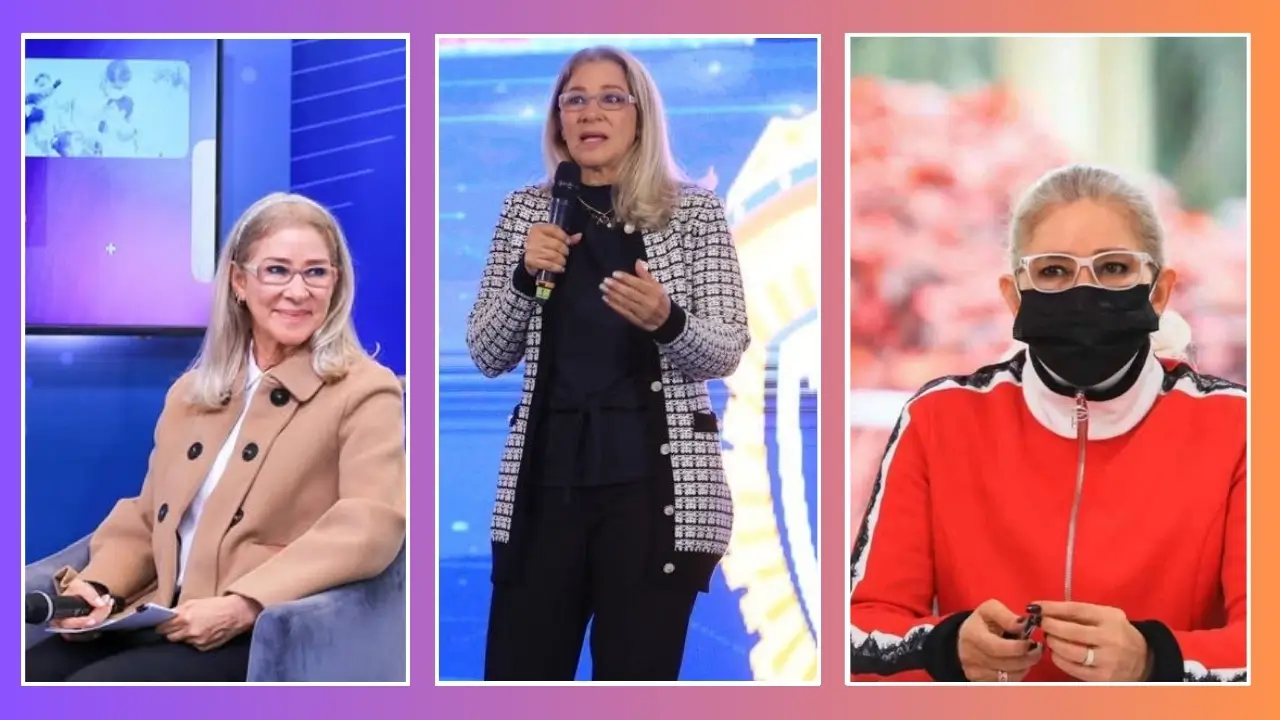
Cilia Adela Flores de Maduro is a Venezuelan lawyer and politician who became a prominent figure in her country’s government over more than two decades. Born in 1956, she rose from humble beginnings to hold some of the highest positions in Venezuela’s political system, including President of the National Assembly and Attorney General. Her influence extended beyond traditional ceremonial roles when she married Nicolás Maduro in 2013, making her First Lady of Venezuela.
This biography covers everything about Cilia Flores age, her political career, family background, children, and her recent capture by U.S. forces in January 2026.
Who is Cilia Flores?
Cilia Flores is a Venezuelan attorney and political leader whose career transformed her from a young defense lawyer into one of the most powerful figures in South American politics. She gained prominence as the legal advisor to Hugo Chávez following his failed military coup in 1992, and later became a trusted political operative within Venezuela’s socialist government.
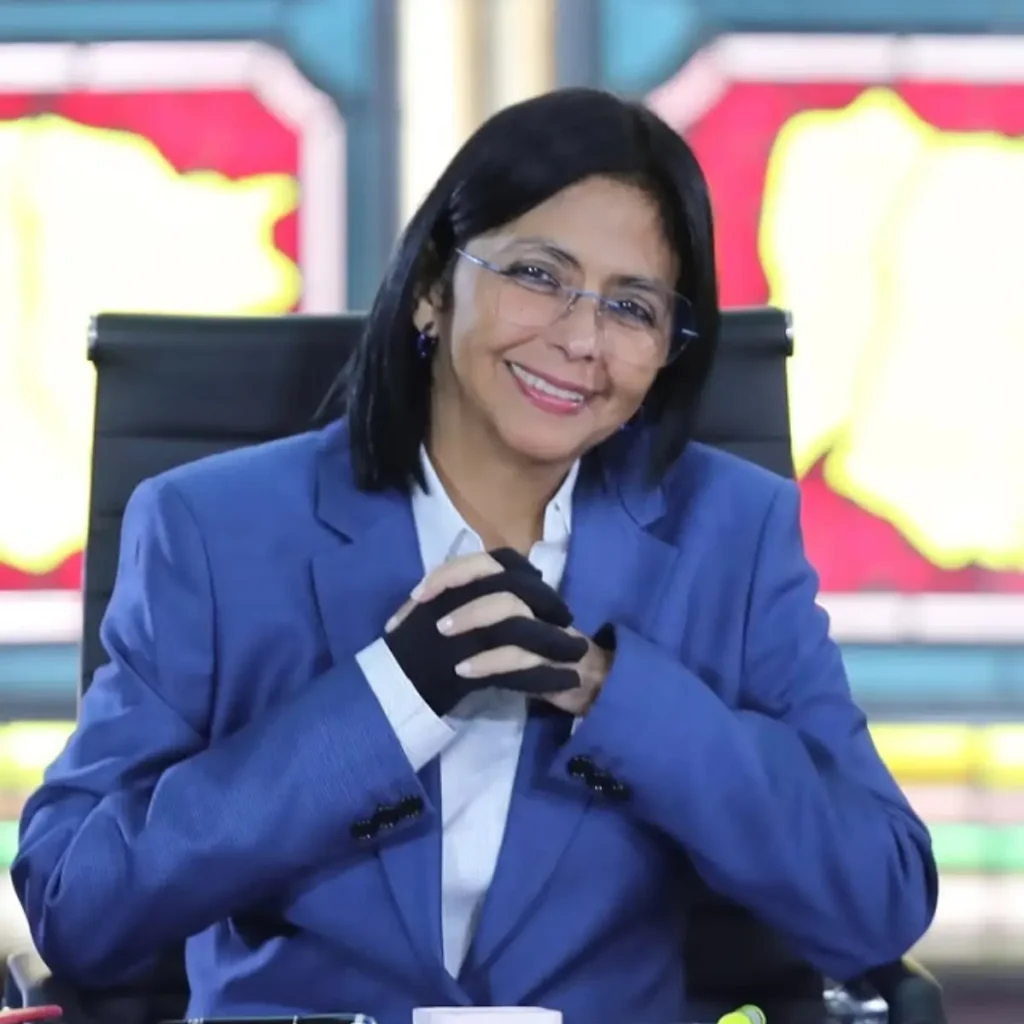
Rather than remaining in the background, she pursued high-profile government positions, becoming the first woman to serve as President of Venezuela’s National Assembly (2006–2011) and later serving as Attorney General of Venezuela (2012–2013). Her political trajectory accelerated further when she married Nicolás Maduro in 2013, a few months after he assumed the Venezuelan presidency. She then assumed the role of First Lady of Venezuela, though she continued her own political work as a deputy in the National Assembly.




Beyond her official titles, she functioned as a key political adviser to President Maduro, earning the title “First Combatant of the Revolution” (Primera Combatiente) from her husband. Her influence spanned legislative, judicial, and executive branches, making her one of the most influential women in Latin American politics.
Cilia Flores Age – How Old is She?
Cilia Flores age is 69 years old as of January 2026. She was born on October 15, 1956, in Tinaquillo, Cojedes, Venezuela.
Her birthplace was a small town in northwestern Venezuela, and she grew up as the youngest of six children in modest economic circumstances. Her zodiac sign is Libra, which those familiar with astrology associate with balance and diplomacy.
Religion and Personal Beliefs
Cilia Flores religion reflects a blend of Catholicism and interests in spiritual philosophies, revealing complexity in her personal worldview.
Catholic Heritage
Flores was raised within Venezuela’s Catholic tradition, which is the dominant religion in the country. However, her political alignment with Hugo Chávez and the Bolivarian Revolution involved a shift away from traditional Catholic institutional support toward more secular socialist ideology.
Spiritual Interests
Notably, both Cilia Flores and Nicolás Maduro visited India in 2005 to meet Sai Baba, a controversial spiritual guru, and to advance establishment of a Sai Baba branch in Caracas. This visit demonstrated their interests extended beyond conventional Catholicism into alternative spiritual teachings and metaphysical practices
Cilia Flores Biography / Wiki
| Category | Details |
|---|---|
| Full Name | Cilia Adela Flores (Cilia Adela Flores de Maduro after marriage) |
| Date of Birth | October 15, 1956 |
| Age (2026) | 69 Years Old |
| Birthplace | Tinaquillo, Cojedes, Venezuela |
| Nationality | Venezuelan |
| Current Status | Captured by U.S. forces (January 3, 2026) |
| Professional Title | Lawyer, Politician |
| Profession Type | Criminal Law Specialist |
| Political Party | PSUV (United Socialist Party of Venezuela) |
| Education | Law degree from Universidad Santa María, Caracas |
| First Husband | Walter Ramón Gavidia Rodríguez (Divorced) |
| Current Husband | Nicolás Maduro (Married July 2013) |
| Marriage Date | July 2013 |
| Children | 3 from first marriage; none with Maduro |
| Adopted Son | Efraín Antonio Campo Flores (nephew) |
| Key Positions Held | President of National Assembly (2006–2011), Attorney General (2012–2013), First Lady (2013–2026), Deputy (2015–2026) |
Early Life and Background
Cilia Flores was born in Tinaquillo, a small town in the Cojedes state of northwestern Venezuela. She came from a lower-middle-class family with limited financial resources. Her father worked as a traveling salesman struggling to support his family, and she lived in a modest mud-brick home with a dirt floor.
Growing up in poverty-stricken circumstances shaped her worldview and contributed to her later attraction to socialist political ideology. As the youngest among six siblings, she developed resilience and determination that would define her professional approach. Despite economic hardship, her family valued education and encouraged her to pursue higher learning.
Her early exposure to economic inequality in Venezuela created sympathy for the poor and working classes—themes that resonated throughout her political career. She often spoke about her humble origins when addressing supporters, framing her rise as evidence that Venezuela’s revolution could uplift people regardless of social background.
Education
Cilia Flores education reflects her commitment to the legal profession. She completed her law degree at Universidad Santa María in Caracas, specializing in criminal law and labor law.
Her university studies in the nation’s capital exposed her to intellectual circles and political activists. During her formative years as a student and young professional, Venezuela was experiencing significant political turmoil, creating opportunities for idealistic lawyers to engage with political movements.
Following her law degree, she worked as a defense lawyer at a private law firm in Caracas for nearly a decade, building expertise in criminal defense and acquiring experience handling complex legal cases. This background prepared her to serve as a defense attorney for political figures, particularly Hugo Chávez, whose legal representation launched her into the political spotlight.
Political Career Journey
Hugo Chávez’s Lawyer (1992–1999)
Cilia Flores’ political prominence began unexpectedly in 1992 when military officer Hugo Chávez led a failed coup d’état against the Venezuelan government. Rather than disappearing, Chávez was imprisoned awaiting trial on serious charges.
Flores stepped in as Chávez’s defense lawyer, defending the military officer who had attempted to overthrow the government. Through this legal work, she developed a close professional relationship with Chávez and became convinced of his political vision for Venezuela. Her defense of a coup conspirator demonstrated courage and showed early political sympathies toward social transformation.
After Chávez’s release and eventual rise to power in 1999, Flores was rewarded with increasing political influence. She helped transition Chávez from military officer to civilian political leader, and she became an early member of the Bolivarian Revolution, the socialist political movement centered on Chávez’s governance.
National Assembly Member (2000–2006)
In 2000, Flores was elected as a deputy in the National Assembly of Venezuela, representing her home state of Cojedes. As a member of the PSUV (United Socialist Party of Venezuela), she participated in legislative debates and served on committees addressing political and social policy.
She quickly established herself as a loyal Chávez supporter and an effective legislator, earning recognition for her legal knowledge and political reliability.
National Assembly President (2006–2011)
In August 2006, Cilia Flores achieved a historic milestone when she was elected President of the National Assembly—a position that made her the first woman ever to hold this role in Venezuelan history.
She assumed this position when her future husband, Nicolás Maduro, resigned to become Minister of Foreign Affairs. During her five-year tenure as Assembly President, she:
- Led legislative sessions and parliamentary procedures
- Promoted legislation supporting the Bolivarian Revolution
- Oversaw the expulsion of critical media representatives from the legislative chamber
- Built powerful networks within the legislature
Her leadership style was described as authoritarian by critics, particularly regarding press freedom, but she maintained strong support among ruling party members.
Attorney General (2012–2013)
After stepping down as National Assembly President in 2011, Flores remained politically active. In 2012, she was appointed Attorney General of Venezuela, the nation’s highest law enforcement official.
As Attorney General, she:
- Oversaw the national prosecutor’s office
- Directed investigations and prosecutions
- Administered justice system operations
- Represented the state in major legal matters
Her tenure as Attorney General was brief, lasting only one year, but it consolidated her power within the judicial branch and demonstrated Chávez’s trust in her legal and administrative capabilities.
First Lady and Political Partner (2013–2026)
Following Hugo Chávez’s death in 2013, Nicolás Maduro assumed the presidency and promptly married Cilia Flores in July 2013—just three months after taking office.
It is worth noting that their relationship had been a long-running partnership since the 1990s, with both having worked closely in Chávez’s political circle before formalizing their marriage through a wedding ceremony verified by multiple credible sources including Wikipedia and major news outlets like the BBC, India TV News, and Times of India.
As First Lady, Flores did not retreat into ceremonial duties. Instead, she:
- Continued serving as a National Assembly deputy from 2015 onwards
- Served as a member of the 2017 Constituent National Assembly, a special legislative body created to rewrite Venezuela’s constitution
- Functioned as a key political adviser to President Maduro
- Maintained influence over legislative and judicial processes
She earned the title “First Combatant of the Revolution” (Primera Combatiente) from President Maduro, reflecting her active political role beyond traditional First Lady responsibilities.
Cilia Flores Family
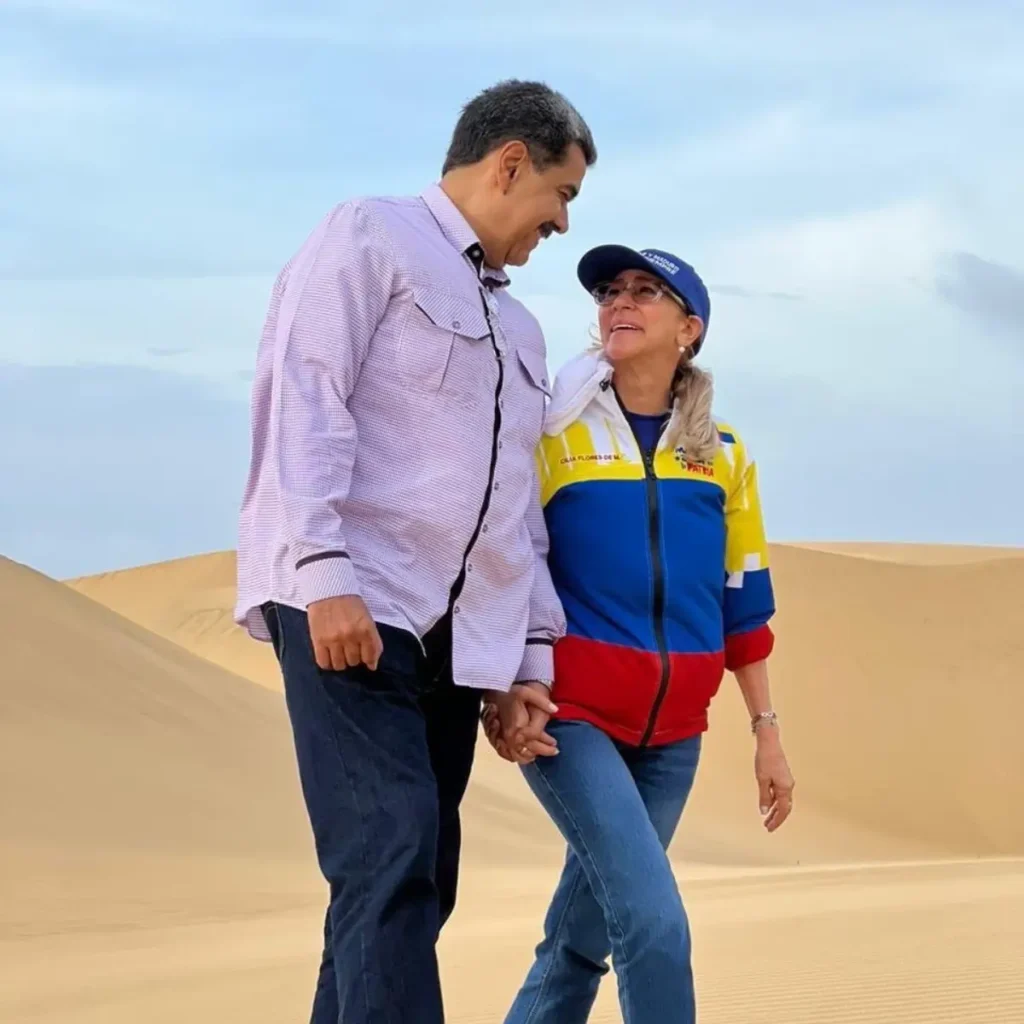
Cilia Flores comes from a working-class family and built her own family through marriage and children.
| Family Member | Relationship | Details |
|---|---|---|
| Father | Parent | Julio Seijar (traveled as salesman); passed away |
| Mother | Parent | Cilia Adela Flores; died in 2016 at age 87 |
| Siblings | Siblings | 5 siblings (she was youngest of 6 children) |
| First Husband | Former Spouse | Walter Ramón Gavidia Rodríguez (divorced) |
| Current Husband | Spouse | Nicolás Maduro (married July 2013); captured January 2026 |
Cilia Flores Net Worth
Cilia Flores net worth remains difficult to quantify precisely due to the absence of official financial disclosures. However, investigative reports have documented significant unexplained wealth connected to her family.
Wealth Sources and Allegations
Investigative journalism has linked the Flores family to:
- Multiple luxury properties in Caracas, including an entire street of high-end homes
- Business interests through family members
- Government positions and salaries accumulated over 25+ years in office
- Questionable financial transactions investigated by U.S. authorities
The U.S. Treasury Department imposed economic sanctions on Cilia Flores in September 2018, specifically targeting her and other Maduro administration officials, citing concerns about the “plundering” of Venezuelan state resources.
Drug Trafficking Allegations
A significant source of legal attention involved her nephews, Efraín Campo Flores and Franqui Flores, both raised by Cilia Flores. In 2015, both nephews were arrested by the U.S. Drug Enforcement Administration (DEA) in Haiti on drug trafficking charges.
They were later convicted in New York for attempting to smuggle 800 kilograms of cocaine into the United States. During court proceedings, the nephews’ attorneys claimed that proceeds from the drug operation were intended to support Flores’s political activities.
Cilia Flores personally denied any wrongdoing and has never been personally convicted in any U.S. court in connection with these cases. However, these allegations complicated her international reputation and contributed to her indictment in 2026.
Also See: Nara Bharath Reddy Biography: Age, Wiki, Family, Relationship and More

