This pina bausch biography explores the life and groundbreaking career of Philippine “Pina” Bausch, a German dancer and choreographer who completely changed the world of modern dance. She is known for creating a powerful, expressive style called Tanztheater (Dance Theater), which blends movement, emotion, and everyday life in a new way.
| Full Name | Philippine Bausch |
| Born | July 27, 1940 |
| Died | June 30, 2009 (Aged 68) |
| Birthplace | Solingen, Germany |
| Known For | Creator of Tanztheater (Dance Theater) |
| Key Company | Tanztheater Wuppertal Pina Bausch |
| Famous Quote | “Dance, dance, otherwise we are lost.” |
| Notable Film | Pina (2011, directed by Wim Wenders) |
Early Life & Education
Pina Bausch was born Philippine Bausch in 1940 in Solingen, Germany, right at the start of World War II. Her parents, August and Anita Bausch, ran a small hotel and restaurant. Growing up, Pina spent a lot of time hiding under the dining tables, quietly watching the guests interact. This early experience of observing human relationships, conversations, and feelings was a huge influence on her work later in life, especially in her famous piece, Café Müller.
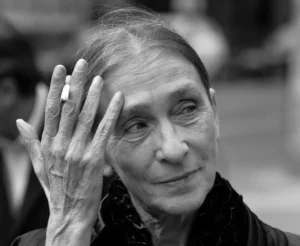
She showed a natural talent for dance early on. At the age of 14, she began her formal training at the Folkwang Academy in Essen, Germany. There, she studied under Kurt Jooss, a pioneer of the earlier German dance movement known as Ausdruckstanz (expressive dance). Jooss taught her technical skill but also emphasized honesty and emotional expression in performance.
After finishing her studies in Germany, Bausch received a scholarship to go to New York City in 1960. She studied at the famous Juilliard School, where she learned from major choreographers like Antony Tudor and José Limón. This time in New York, where she saw many different types of performances, was important for broadening her view of what dance could be. She even danced professionally with Antony Tudor’s company at the Metropolitan Opera.
In 1962, Pina Bausch returned to Germany to work with Kurt Jooss again. She started as a soloist, but quickly began to choreograph her own pieces. This phase was the start of her move away from traditional ballet rules.
Career
Pina Bausch’s career truly began to take off in 1973 when she was hired as the director of the Wuppertal Opera Ballet in Wuppertal, Germany. She immediately renamed the company to Tanztheater Wuppertal, signaling a huge change in approach.
The term Pina Bausch Tanztheater became her signature style. It means “Dance Theater,” and it was a radical break from classical ballet. Instead of focusing only on perfect steps or beautiful movements, her work focused on raw emotion, everyday gestures, and the challenges of human relationships. She used speech, singing, costumes (like high heels or suits), and massive, surprising sets—like a stage covered in soil, water, or carnations—to create unforgettable images.
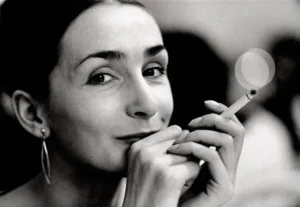
Her working method was also revolutionary. Instead of giving dancers steps, Bausch would ask them open-ended questions about their lives, fears, and memories. These questions often sparked the material for her pieces. She often said, “I’m not interested in how people move, but what moves them.” This focus on the inner emotional life of the dancer made her work feel deeply human and personal.
Despite initial shock and criticism from audiences who expected traditional ballet, her style quickly gained international attention. The company started touring globally, becoming famous for its powerful and unique performances. Over her 35-plus years leading the company, she created more than 40 different pieces.
Her influence also extended to film. She had a role in Federico Fellini’s movie And the Ship Sails On (1983) and her choreography, including excerpts from Café Müller, was featured in Pedro Almodóvar’s acclaimed film Talk to Her (2002).
Notable Works
Among her many creations, a few pieces stand out as her most Pina Bausch famous works, defining the Pina Bausch dance style:
- The Rite of Spring (Frühlingsopfer) (1975): This piece, set to music by Igor Stravinsky, was a huge turning point. It shows a powerful, almost ritualistic dance performed on a stage covered entirely in dark soil. It explores the idea of sacrifice and violence in society, especially towards women.
- Café Müller (1978): Considered one of her masterpieces, this melancholic piece is based on Bausch’s childhood memories of her parents’ café. Dancers, some appearing to be sleepwalking, stumble through a stage filled with wooden tables and chairs, bumping into them or collapsing. It deals with loneliness, failed connections, and the painful search for love. This piece is often shown in Pina Bausch movies and on Pina Bausch – youtube videos.
- Kontakthof (1978): The title means “Contact Courtyard.” It is a piece about social rules, awkwardness, and attempts to find tenderness. It has been staged three times with different casts: the original company, then a cast of people over 65, and later, a cast of teenagers, showing how themes of contact and love stay the same at every age.
Achievements and Recognition
Pina Bausch received numerous high honors and awards throughout her life for her groundbreaking art, including the German Dance Prize (1995), the Praemium Imperiale (Japan, 1999), and the Goethe Prize (2008). Her biggest achievement, however, was creating and establishing a whole new genre of dance that others worldwide now copy and use. Her work made dance a truly theatrical art form that could talk about deep, complex human experiences.
She inspired many artists outside of dance. After her unexpected Pina Bausch death in 2009, just five days after being diagnosed with cancer, filmmaker Wim Wenders completed the famous 3D documentary Pina (2011). This film celebrated her life and work, introducing her powerful legacy to millions of new viewers around the world.
Pina Bausch quotes, such as “Dance, dance, otherwise we are lost,” capture her belief that movement is necessary for understanding life. The many books written about her, like Marion Meyer’s Pina Bausch book Pina Bausch: The Biography, continue to explore her profound impact on the arts. She leaves behind a legacy of emotional honesty, fearless staging, and a company that continues to perform her timeless works.
Also Read: Guru Tegh Bahadur Biography – The Ninth Sikh Guru