

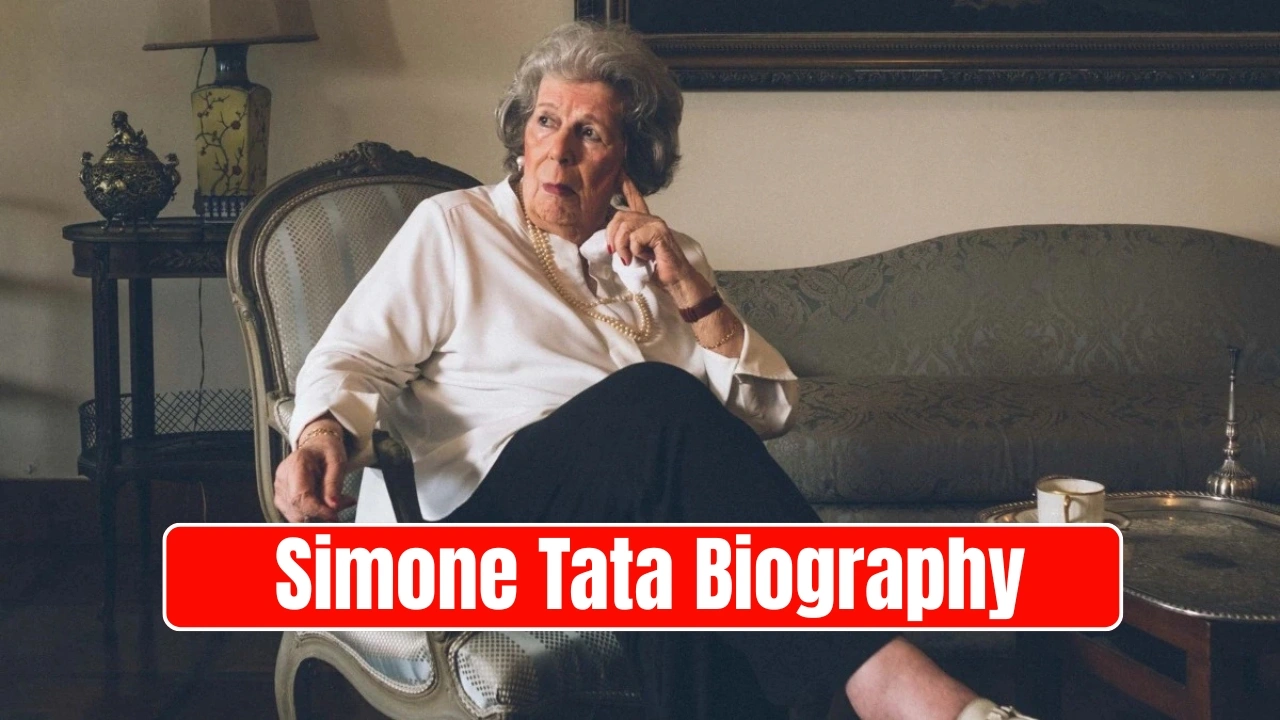
Read Simone Tata Biographyy on farhanabhatt.com
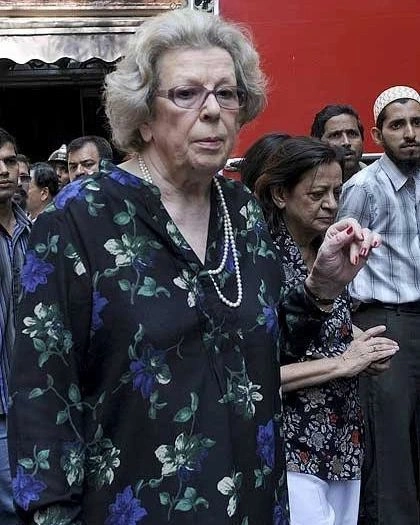
Simone Tata had been more than a business leader for many Indian women. She was quietly present on their dressing tables and in their wardrobes much before they knew her name. Her life proves that success knows no borders, and that vision combined with dedication can transform entire industries.
From a young Swiss tourist to the architect of India’s modern beauty and retail sectors, Simone Tata’s journey remains an inspiration. She showed that it’s possible to honor traditions while embracing change, to build profit while serving communities, and to succeed in business while maintaining grace and dignity.
Early Life and Education
Born in March 1930 in Geneva, Switzerland, Simone Naval Tata (née Dunoyer) grew up in a French-Swiss Catholic family. She spent her childhood in Switzerland, receiving her education in one of Europe’s most cosmopolitan cities. After completing her studies, she graduated from Geneva University.
In 1953, at age 23, Simone decided to visit India as a tourist. This trip would change the course of her entire life. During her travels, she met Naval H. Tata, a prominent member of the Tata family and a leading figure in the Tata Group. Despite a 26-year age gap, they fell in love. Naval was divorced from his first wife, Soonoo Commissariat.
Two years later, in 1955, Simone and Naval married. Following their wedding, she permanently moved to Mumbai, leaving behind her life in Switzerland. This decision marked the beginning of an extraordinary chapter, both personally and professionally. She would go on to build businesses worth billions while becoming an integral part of one of India’s most influential families.
Simone Tata Career
Entering the Business World
When Simone joined her husband’s family business in the early 1960s, she had no prior business experience. However, she possessed something equally valuable: a keen understanding of beauty products and international market trends. In 1962, she joined the board of Lakmé, a small cosmetics company that had been founded in 1952 by J.R.D. Tata.
At that time, Lakmé was merely a minor subsidiary of Tata Oil Mills. The company had been created at the request of India’s first Prime Minister, Jawaharlal Nehru. He envisioned an indigenous cosmetics brand for Indian women who were spending money on foreign products. The French name “Lakmé” (after Lakshmi, the Hindu goddess of wealth and prosperity) reflected this blend of international appeal and Indian roots.
Building Lakmé into a National Icon
In 1961, Simone became managing director of Lakmé. By 1982, she rose to become its chairperson. Under her leadership, the brand underwent a remarkable transformation. She understood something crucial: Indian women needed beauty products designed specifically for their skin tones and preferences.
During the early 1960s, fashion shows in India were still a novelty, mostly organized by textile mills. Simone would attend these events, not for the fabrics but to see how Lakmé could gain visibility. She recognized early on that brands needed presence, not just products.
Her marketing strategies were revolutionary for that era. In a country where wearing lipstick could still invite disapproval, she positioned Lakmé as both aspirational and accessible. The brand’s first ambassador, 1980s supermodel Shyamoli Verma, became the “Lakmé girl.” Early advertisements showed her playing traditional Indian instruments while styled in Lakmé products. The message was clear: beauty didn’t contradict Indian identity.
Over the years, celebrities like Rekha and later Aishwarya Rai Bachchan embodied this evolving image. Simone’s approach blended modernity with cultural familiarity. Consequently, Lakmé grew into one of India’s most recognized beauty brands. For an entire generation of Indian women, Lakmé wasn’t just makeup—it represented confidence, modernity, and self-expression.
Strategic Vision: From Lakmé to Trent
By the mid-1990s, global giants like L’Oréal and Revlon were entering India’s liberalizing market. Simone recognized the changing landscape. In 1996, she initiated a 50:50 joint venture with Hindustan Unilever (HUL). This alliance aimed to strengthen Lakmé’s technological capabilities and tap into HUL’s vast distribution network.
Two years later, in 1998, the Tata Group sold its 50 percent stake to HUL for Rs 200 crore. Rather than viewing this as a retreat, Simone saw it as an opportunity. She used the proceeds to acquire the sole Bengaluru store of Littlewoods International. Then, she merged it with Lakmé’s export business to create Tata Retail Enterprise, which later became Trent Limited.
This strategic move proved visionary. Trent launched Westside, a department store chain inspired by global models like Marks & Spencer. The first Westside store opened in Bangalore in 1998. Under her guidance, the brand grew steadily. Today, Trent operates hundreds of outlets across major Indian cities. As of December 2023, the company had a market capitalization of Rs 1 lakh crore (approximately $12 billion USD).
Trent now includes popular brands like Westside, Zudio, Utsa, and Star Bazaar. Many experts credit Simone as the strategic mind behind this retail empire. She served as non-executive chairman of Trent Limited until her retirement on October 30, 2006.
Expanding Influence
Beyond Lakmé and Trent, Simone’s influence extended throughout the Tata Group. In 1989, she joined the board of Tata Industries, the group’s strategic investment company. This position gave her input into the conglomerate’s expansion into emerging areas.
During the 1980s and 1990s, she served on boards of various Tata subsidiaries. Her Swiss upbringing and Geneva education provided valuable insights into consumer goods and international markets. This expertise helped bridge global best practices with Indian market needs, particularly during India’s economic liberalization starting in 1991.
Throughout her career spanning over four decades, Simone became known as the “cosmetics czarina of India.” Industry observers recognized her as one of the country’s most powerful businesswomen. She transformed the tabla from a supporting instrument to a centerpiece in modern retail and beauty.
Simone Tata Personal Life
Simone’s marriage to Naval Tata created a blended family. Naval had two sons from his first marriage: Ratan Tata (born 1937) and Jimmy Tata. Simone became their stepmother, playing a supportive role in their lives. The family maintained close ties that endured throughout their lives.
In December 1957, Simone and Naval welcomed their son, Noel Naval Tata, in Mumbai. Noel would eventually follow in his parents’ footsteps, becoming a key figure in the Tata Group. He currently serves as managing director of Trent and was appointed chairman of Tata Trusts following Ratan Tata’s death in October 2024.
The family resided in Mumbai, where Simone integrated fully into Indian life. Tragically, Naval died from cancer on May 5, 1989, at a relatively young age. This loss altered the family structure, but their unity remained strong.
Despite being born into a Catholic family in Switzerland, Simone embraced her new home completely. She learned to navigate Indian business culture while bringing international perspectives to the family enterprise.
Relationship with Ratan Tata
Simone and her stepson Ratan Tata maintained a cordial and respectful relationship throughout their lives. Although Ratan was already 18 when Simone married his father, they developed mutual respect over the decades. When Ratan passed away on October 9, 2024, at age 86, Simone attended his funeral at Mumbai’s Breach Candy Hospital. This was her last public appearance before her own passing two months later.
Philanthropy and Social Work
Beyond her business achievements, Simone dedicated significant time to philanthropic causes. After Naval’s death, she became chairperson of the Sir Ratan Tata Institute. This organization has combined craft, charity, and community work in Mumbai for decades. Under her guidance, it continued supporting children, the downtrodden, and the needy.
She was one of the founder trustees of the Children of the World India Trust, an organization focused on improving children’s lives. Additionally, she served as a trustee of the India Foundation for the Arts, supporting cultural initiatives across the country.
Her philanthropic philosophy aligned with the Tata Group’s long tradition of giving back to society. She believed that business success carried with it a responsibility to uplift communities.
Simone Tata Death
On December 5, 2024, Simone Tata passed away at Mumbai’s Breach Candy Hospital at the age of 95. Her family revealed that she had been battling Parkinson’s disease, the same condition that affected her stepson Ratan Tata. In August 2024, she was airlifted from Dubai to Mumbai’s Breach Candy Hospital when her symptoms worsened. After treatment, she was discharged, but her condition deteriorated again in early December.
A Tata Group spokesperson said in a statement, “She also guided the work of many philanthropic organisations, including the Sir Ratan Tata Institute”, highlighting her contributions beyond the business world.
Simone leaves behind a colossal legacy as the co-founder of Lakme, one of the most famous cosmetics brands to come out of India, and later laying the foundation for Trent Limited, the group behind popular retail chain Westside. Her journey from a Geneva-born tourist to one of India’s most influential businesswomen remains an inspiring story of vision, adaptability, and determination.
After her retirement in 2006, Simone made very few public appearances. She attended the opening of the renovated flagship Westside store in South Mumbai in October 2019. In September 2022, she attended the funeral of former Tata Group chairman Cyrus Mistry. Her final public appearance was at Ratan Tata’s funeral in October 2024.
Impact on Indian Business
Simone’s legacy extends far beyond the companies she built. She fundamentally changed how Indian women viewed beauty and self-care. In the 1960s and 1970s, wearing makeup was often considered inappropriate in many Indian communities. Through Lakmé’s thoughtful marketing and product development, she helped normalize beauty products as part of everyday life.
Her retail vision was equally transformative. Before Westside, India lacked modern department stores that offered quality fashion at accessible prices for the middle class. Trent filled this gap, creating a shopping experience that felt both premium and attainable.
Her strategic leadership and sharp understanding of consumer needs helped Lakmé grow from a fledgling venture into a powerful national name. Her contribution to the Tata Group and Indian enterprise continues to be remembered as path-breaking, laying the foundation for modern brand-building in India.
Awards and Honours
While Simone Tata did not receive India’s highest civilian honors like the Padma awards, her recognition came through business success and industry respect. She was widely acknowledged as one of India’s most powerful businesswomen during her active years.
Her greatest honor, perhaps, was the enduring success of the brands she built. Lakmé remains India’s leading homegrown cosmetics brand even after being sold to Hindustan Unilever. Meanwhile, Trent has become one of the country’s most successful retail companies, with a market value exceeding Rs 1 lakh crore.
Industry publications frequently featured her as a pioneering woman in Indian business. She received recognition for breaking barriers in a male-dominated corporate world and for successfully navigating both Indian classical business traditions and Western management practices.
Simone Tata Net Worth and Business Empire
While Simone’s personal net worth was never publicly disclosed, the business empire she helped create is valued in billions. Trent Limited alone had a market capitalization of Rs 1 lakh crore (approximately $12 billion USD) as of December 2023.
Her son Noel Tata, who followed in her footsteps, has built upon this foundation. He serves as managing director of Trent and holds key positions across multiple Tata companies. As chairman of Tata Trusts, he now oversees philanthropic work worth billions of dollars.
The Tata family’s overall wealth and business holdings span numerous sectors—from automobiles and steel to technology and hospitality. Simone’s contributions to the consumer-facing businesses helped diversify the group’s portfolio beyond its traditional industrial base.
Simone Tata Nationality and Identity
Simone held dual Swiss-Indian nationality. Born Swiss, she became an Indian citizen after marrying Naval Tata in 1955. Throughout her life, she balanced both identities gracefully. Her Swiss background gave her a European perspective on quality, design, and consumer preferences. Meanwhile, her adopted Indian identity helped her understand local markets and cultural nuances.
This unique position—neither fully foreign nor born Indian—may have been one of her greatest assets. She could see opportunities that others might miss, bringing fresh eyes to established practices while respecting Indian traditions and values.