
A mother’s love is infinite, yet the pain of separation—whether through distance, silence, or loss—cuts deeper than any wound. Consequently, sad shayari about mothers captures the raw vulnerability that prose cannot. Furthermore, these verses honor not only the joy of having a mother, but also the anguish of missing her, misunderstanding her, and ultimately, letting her go.
This collection explores the darker, more introspective side of the mother-child relationship through classical Urdu shayari tradition. Therefore, each sher has been chosen for its poetic depth, emotional authenticity, and the way it acknowledges grief as a form of love. Moreover, these are not generic verses—they are couplets that resonate with readers who have felt the weight of mother-separation in its many forms.
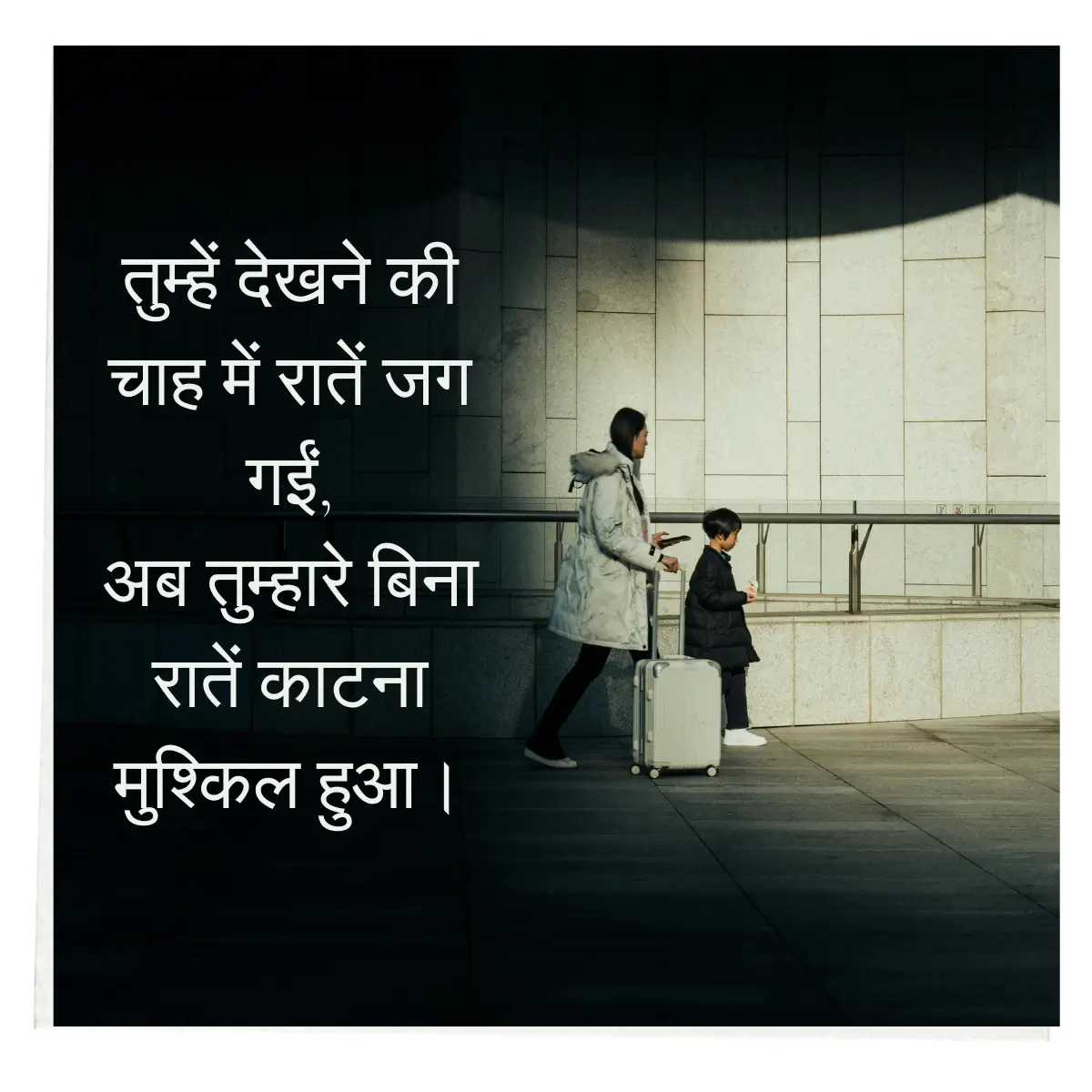
The Silent Pain of Absence
The Weight of Words: Understanding Mother Grief Through Shayari
Why Shayari for Maternal Loss?
Sadness in Hindi-Urdu poetry serves a purpose beyond mere lamentation. Therefore, when you read a true sher about a mother, you’re not simply processing grief—you’re witnessing the poet transform private anguish into something universal. Moreover, this transformation itself becomes therapeutic.
The radeef (refrain) and qaafiya (rhyme) create a rhythmic structure that mirrors the cyclical nature of grief. Additionally, each time these sound patterns repeat, they emphasize how the loss returns again and again. Consequently, readers find that shayari doesn’t ask them to “get over” their sadness; instead, it validates the sadness and gives it shape, meaning, and dignity.
Classical Shayari on Mother Loss & Separation
1. The Ache of Absence
The following shers capture the specific pain of a mother’s absence—not death necessarily, but the emotional or physical distance that makes presence impossible.
अब तुम्हारे बिना रातें काटना मुश्किल हुआ।
Now spending nights without you has become unbearable.
| Radeef | मुश्किल हुआ (became difficult) |
|---|---|
| Qaafiya | काटना (to pass/spend) |
Commentary: This sher uses the metaphor of sleeplessness—a common symbol of both longing and anxiety. Therefore, the progression from “nights stayed awake with hope” to “nights are now impossible” illustrates how absence transforms waiting into suffering.
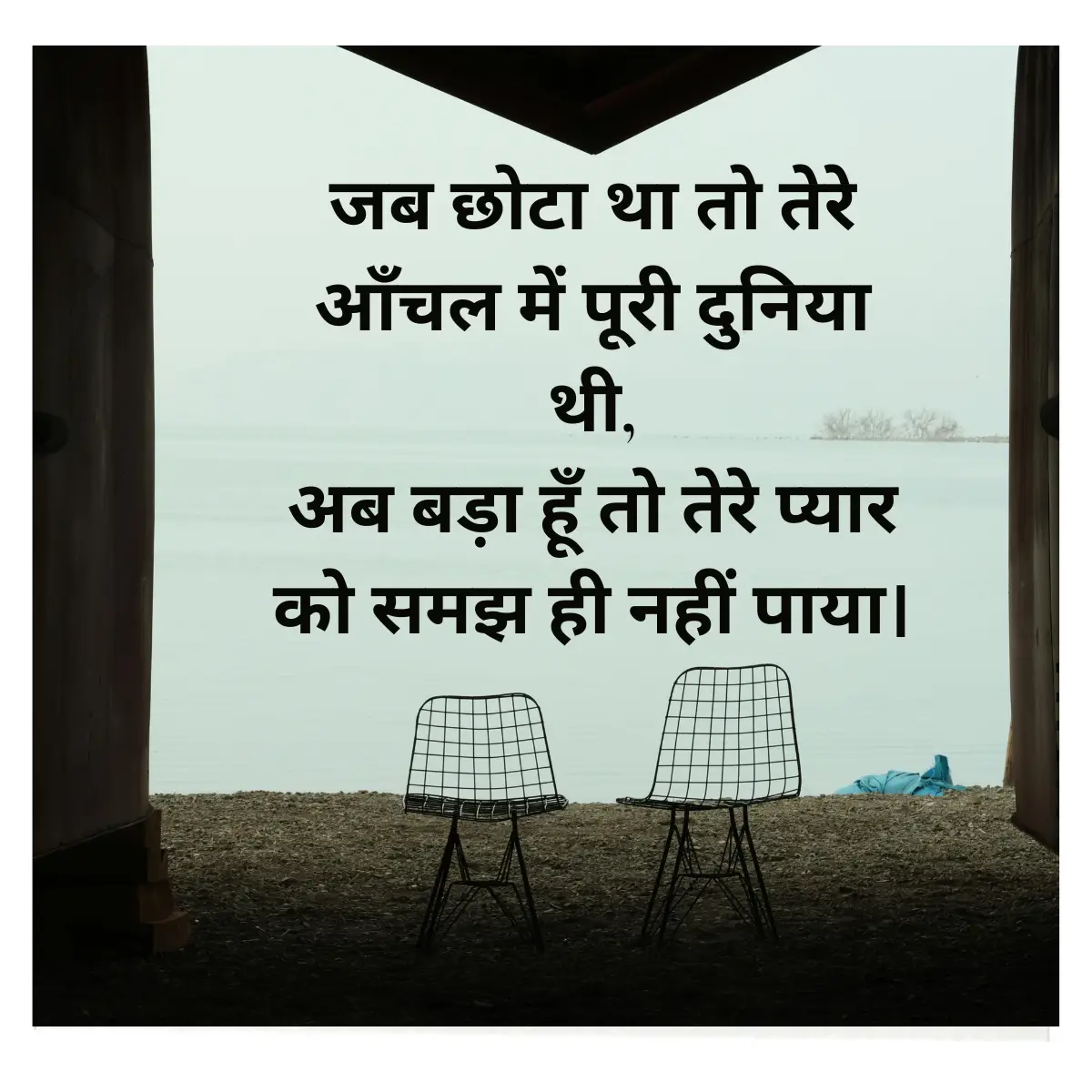
The Void Left Behind
2. The Guilt of Growing Apart
अब बड़ा हूँ तो तेरे प्यार को समझ ही नहीं पाया।
Now grown, I never learned to understand your love.
Commentary: This sher captures a specific kind of maternal grief—not the mother’s loss, but the child’s realization of what was taken for granted.
3. The Regret of Unspoken Words
और अब ये चुप्पी हमेशा के लिए रह जाएगी।
And now this silence will remain forever.
4. The Pain of Duty Without Presence
तूने दिया सब कुछ, मैं दे न सका कुछ भी, बस समय।
You gave everything, I gave nothing but time.
Shayari on Maternal Grief: When the Mother Grieves
5. A Mother’s Loneliness
रात भर मैं सुनती हूँ, सीढ़ियों पर उसके पैर न सुनती हूँ।
All night I listen, never hearing his footsteps on the stairs.
6. The Unhealed Wound of Misunderstanding
पर जब मैंने अपना दर्द दिखाया, वो मुझे समझ ही न सके।
But when I showed him my pain, he couldn’t understand me.
Shayari on Death: When the Separation Becomes Final
7. The Irreversibility of Loss
पर यह साल ही आखिरी साल था उसका।
But that year was her last.
8. When Grief Makes You Understand Too Late
जब उसकी जगह खाली पा के मैं समझा।
When I found her place empty and understood.
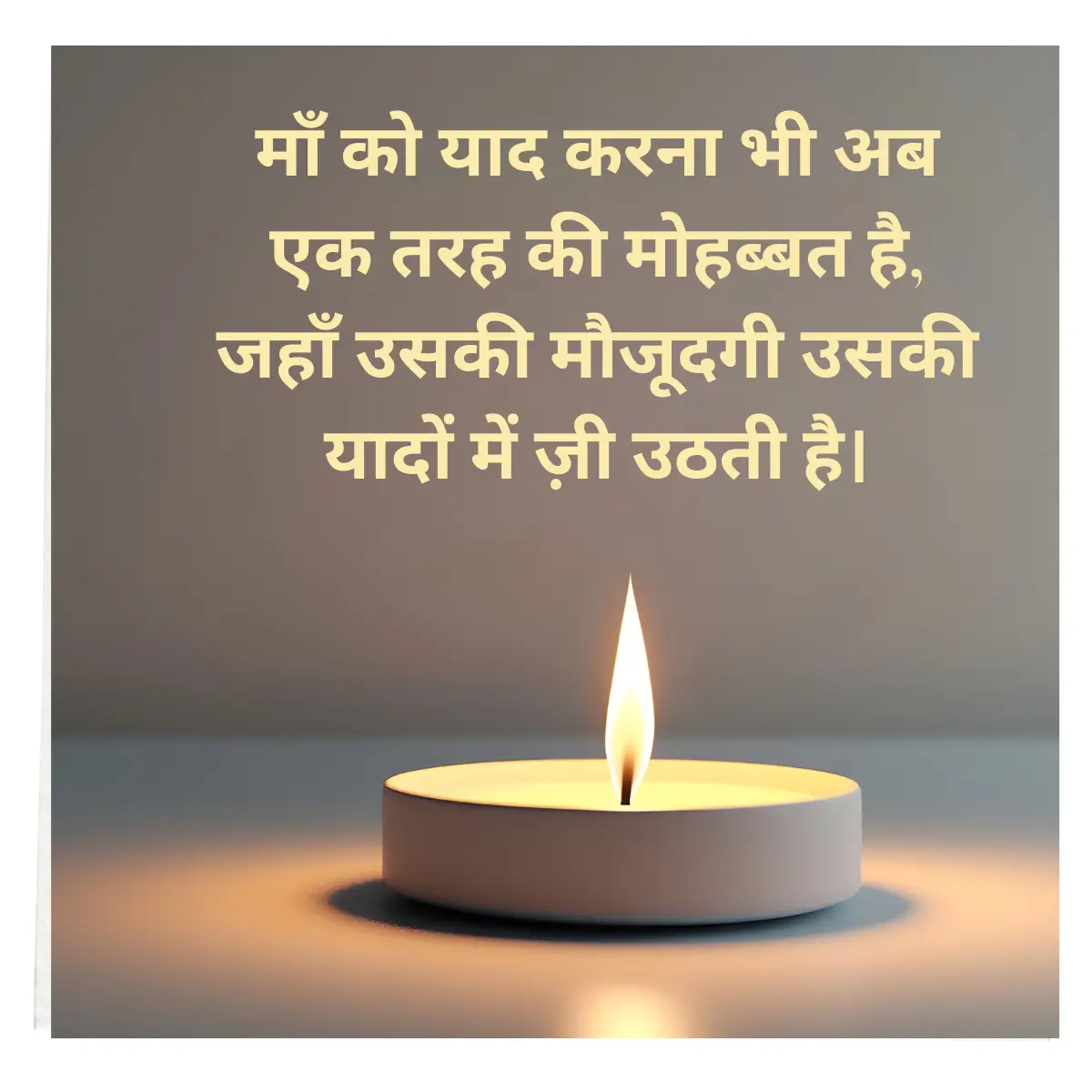
Finality and Remembrance
9. The Rituals of Mourning
और पहली बार महसूस किया कि वो सच में नहीं रही।
And for the first time, I felt that she was truly gone.
10. The Impossibility of Making Amends
और अब जब वो न दिखेगी कभी, ये बात गलत लगती है।
And now that she’ll never show her face, it feels wrong.
The Transcendent Moment: Acceptance Through Shayari
11. When Grief Becomes Love Again
और ये यादें ही हैं वो आखिरी तोहफ़े जो उसने छोड़ गए।
And these memories are the final gifts she left behind.
How to Read Sad Shayari: A Small Guide
- The Radeef-Qaafiya Structure: Understand that the repeated word (radeef) acts like waves of grief returning.
- The Pause Between Misras: Read slowly. Let the first line settle before moving to the second.
- The Personal & Universal: A sher about a mother’s loss is simultaneously about your mother and the archetypal mother.
The Broader Tradition: Classical Voices
Contemporary Urdu poet Bashir Badr wrote extensively on family separation. Similarly, Mirza Ghalib transformed personal anguish into philosophical inquiry. Sadness, when articulated through the precision of shayari, becomes wisdom.
Final Reflection
Mother-sadness is not something to “heal” in the conventional sense. Therefore, these shayaris are not presented as a cure but as companionship. Moreover, grief is the price we pay for love, and sad shayari is the language through which we honor both.
A Final Sher
जहाँ उसकी मौजूदगी उसकी यादों में ज़ी उठती है।
Where her presence comes alive again in memory.